Top Things to See in Lanzarote
Lanzarote is small, 60 km top to bottom, so even in a week you can see almost everything that matters. What sets the island apart is the combination of an active volcanic landscape, the architectural work of César Manrique, and beaches that still feel wild. These are the places we send guests to first, with driving times from Casa Los Alisios in Costa Teguise and directions links you can open on your phone.
How do you plan a week of Lanzarote sightseeing?
Group the sights geographically, not by ticking off lists. The island splits naturally into three zones: the north (Haría, the CACT centres, the cliffs of Famara), the centre (Tahíche, San Bartolomé, La Geria’s vineyards), and the volcanic south (Timanfaya, El Golfo, Los Hervideros, Playa Blanca). Costa Teguise sits on the east coast in the middle, which makes it a practical base for any of the three. Most of the places below are 15 to 45 minutes by car from the villa.
What is the CACT network?
CACT stands for Centros de Arte, Cultura y Turismo, the group of six centres designed or inspired by César Manrique and run by the island council. Five of them appear in this guide: Jameos del Agua, Cueva de los Verdes, Mirador del Río, Jardín de Cactus and Casa Museo del Campesino. The sixth is Montañas del Fuego, inside Timanfaya National Park, covered in our dedicated Timanfaya guide. Combined tickets at cactlanzarote.com save a few euros if you plan to visit three or more.
Jameos del Agua
The most photographed interior on the island. Jameos del Agua is a section of the lava tube left by the eruption of the Corona volcano more than 20,000 years ago. César Manrique turned it into a cultural centre in the 1960s, preserving the natural cave and adding a saltwater pool, a restaurant, gardens and a concert hall with extraordinary acoustics. The underground lake is home to the jameitos, tiny blind albino crabs (Munidopsis polymorpha) that live only here. Do not throw anything into the water, they are the official animal symbol of Lanzarote.
About 30 minutes from the villa on the LZ-1 north. Opens daily from 10:00, with later evening hours on Tuesdays and Saturdays. Adults around 9 euros.
Get directions from Casa Los Alisios · cactlanzarote.com
Parque Nacional de Timanfaya
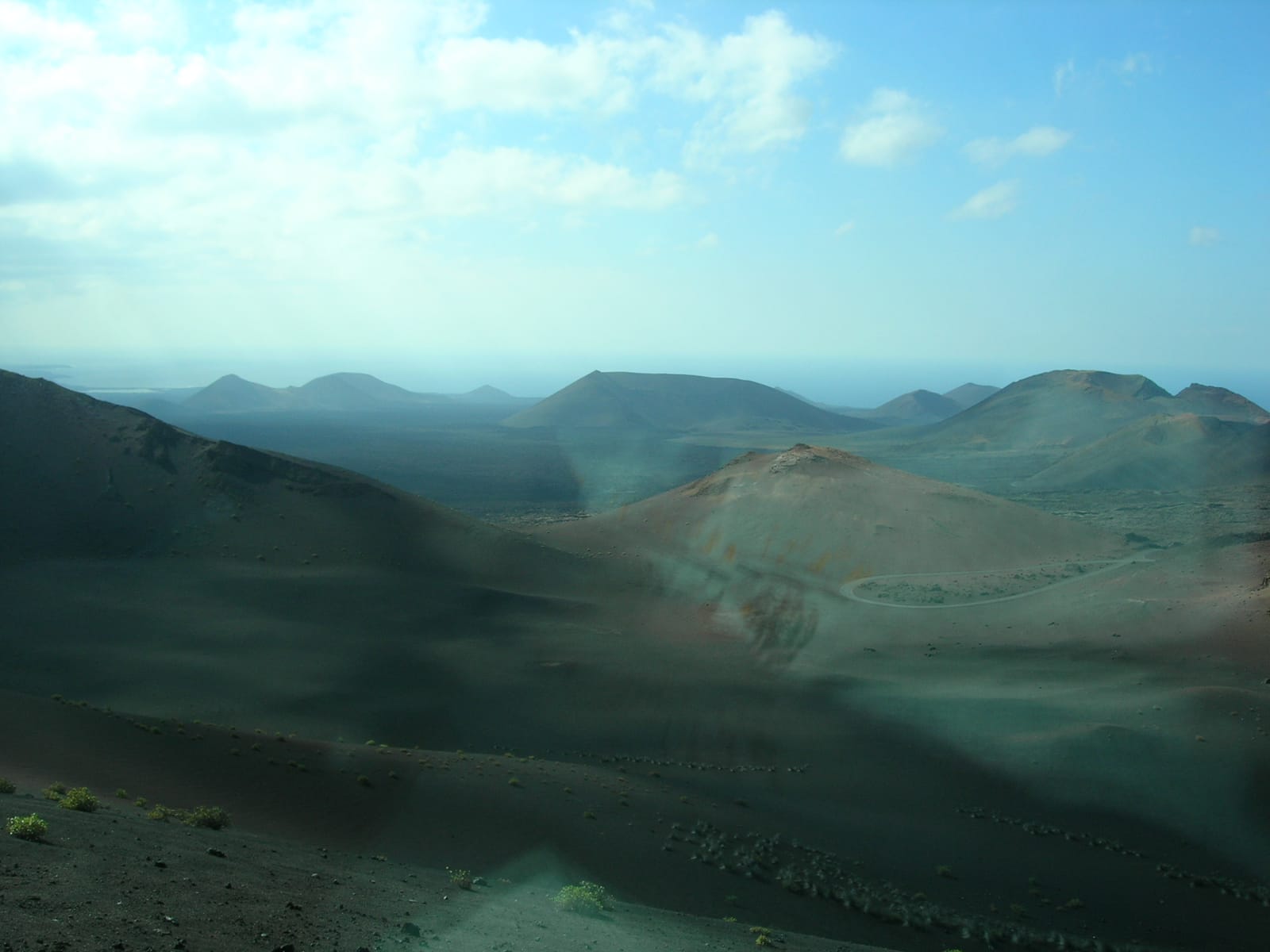
The 51 km² volcanic park created by the eruptions of 1730 to 1736. You visit by guided bus along the Ruta de los Volcanes, stopping at Islote de Hilario for the geothermal demonstrations where park rangers pour water into a tube and it returns as a steam geyser seconds later. The ground is still 400 to 600 °C a few metres down. El Diablo restaurant cooks food over a volcanic pit.
Around 30 minutes by car on the LZ-2 and LZ-67. Buy tickets online in advance, the gate queue gets long from 11:00. Full details, hiking routes and practical tips in our Timanfaya guide.
Get directions from Casa Los Alisios
Jardín de Cactus
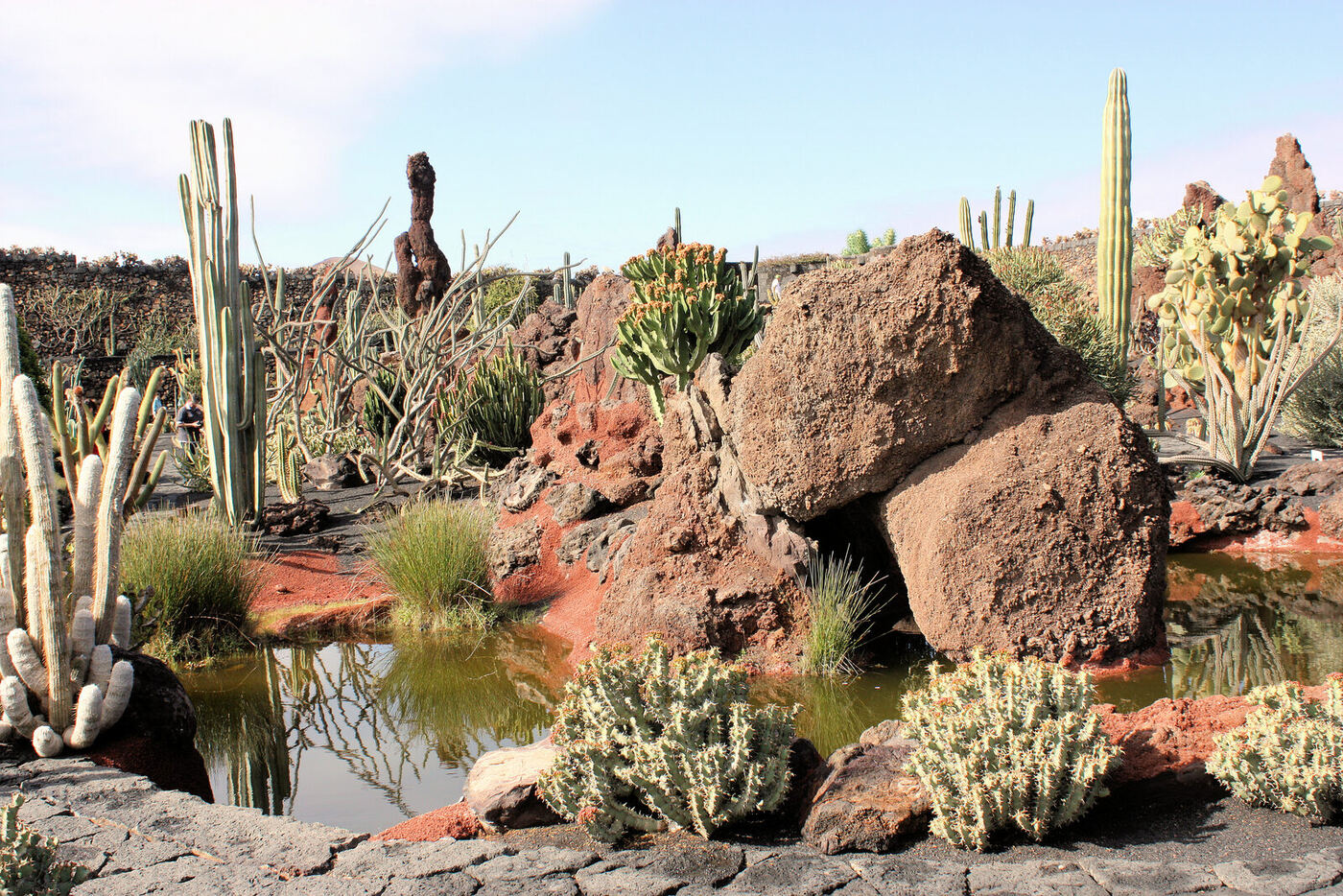
Manrique’s last big project, finished in 1991 and set in an old volcanic quarry near Guatiza. The garden terraces down into the amphitheatre in the style of a lunar crater and holds about 4,500 cacti from 450 species across five continents. A restored windmill sits at the top. Go late afternoon when the light catches the cacti and the crowds thin out.
15 minutes from Costa Teguise on the LZ-1. Open daily 10:00 to 17:00, last entry 16:30. Adults around 8.50 euros. Café with a good tortilla.
Get directions from Casa Los Alisios · cactlanzarote.com
Los Hervideros
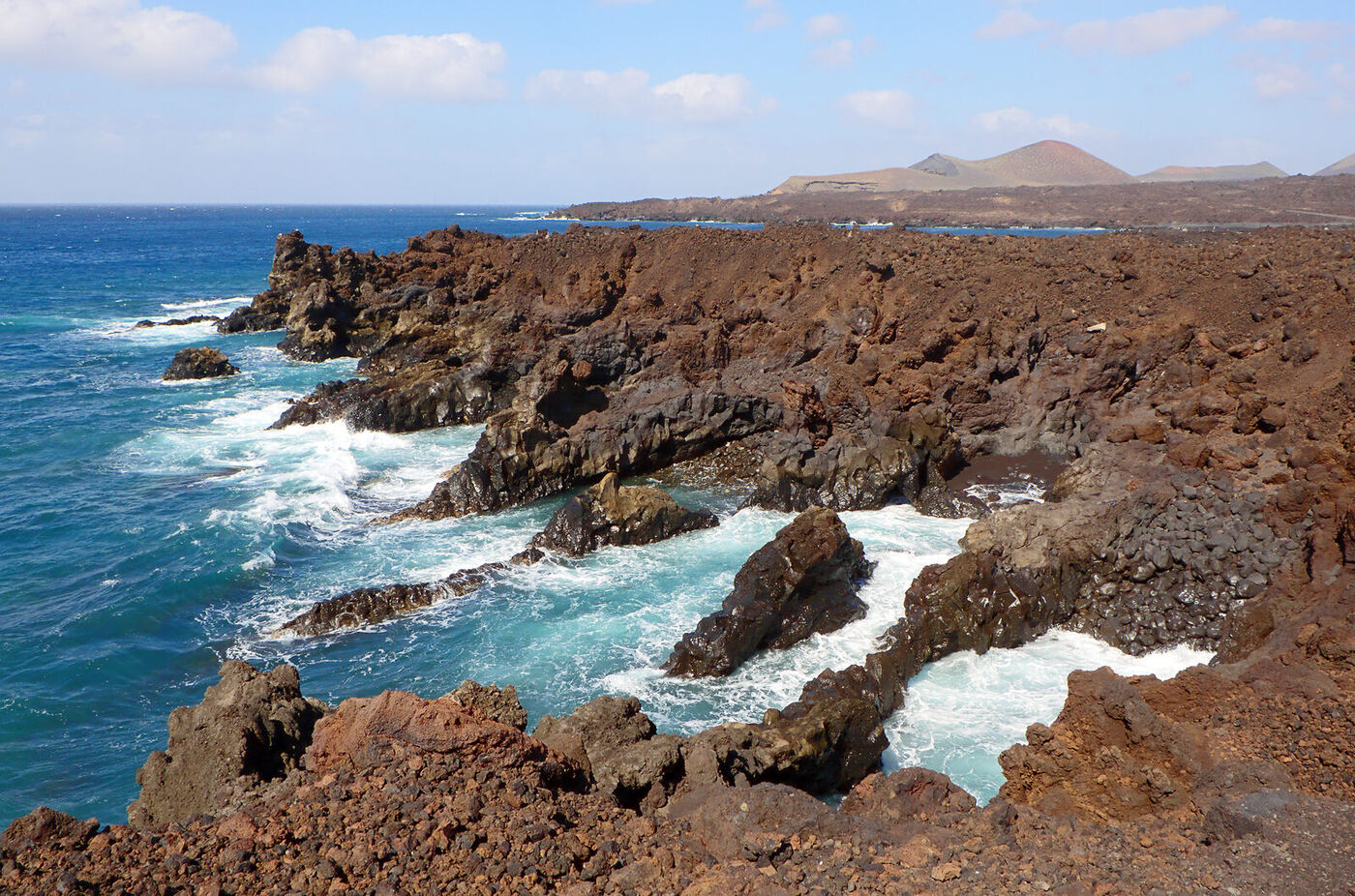
Sea cliffs on the southwest coast where the Atlantic rushes into caves hollowed out of old lava flows. On a windy day the water blows up through holes in the cliff top, which is how the place got its name (hervir means to boil). A short network of paths runs along the cliff edges with viewpoints built into the rock. No ticket, large free car park on the LZ-703 between Yaiza and El Golfo.
About 40 minutes by car. Stop here on the same day you do Timanfaya or El Golfo, they are all within 15 minutes of each other. Hold on to your hat, the wind at the cliffs is serious.
Get directions from Casa Los Alisios
Playa de Papagayo
The best beach on the island, at the southern tip inside the Monumento Natural de los Ajaches. Actually a string of small coves with fine golden sand, clear water, and low cliffs sheltering each bay. You reach it via a dirt track from Playa Blanca. There is a 3 euro toll per car at the park barrier, pedestrians and cyclists go free. Limited parking on the clifftop, so arrive before 11:00 in summer. Bring water and shade, there is a small chiringuito but nothing else.
About 45 minutes’ drive plus the dirt track. Worth the effort. For a closer beach day, our Costa Teguise beaches guide covers Playa El Ancla (10 min walk from the villa) and Las Cucharas.
Get directions from Casa Los Alisios
Mirador del Río
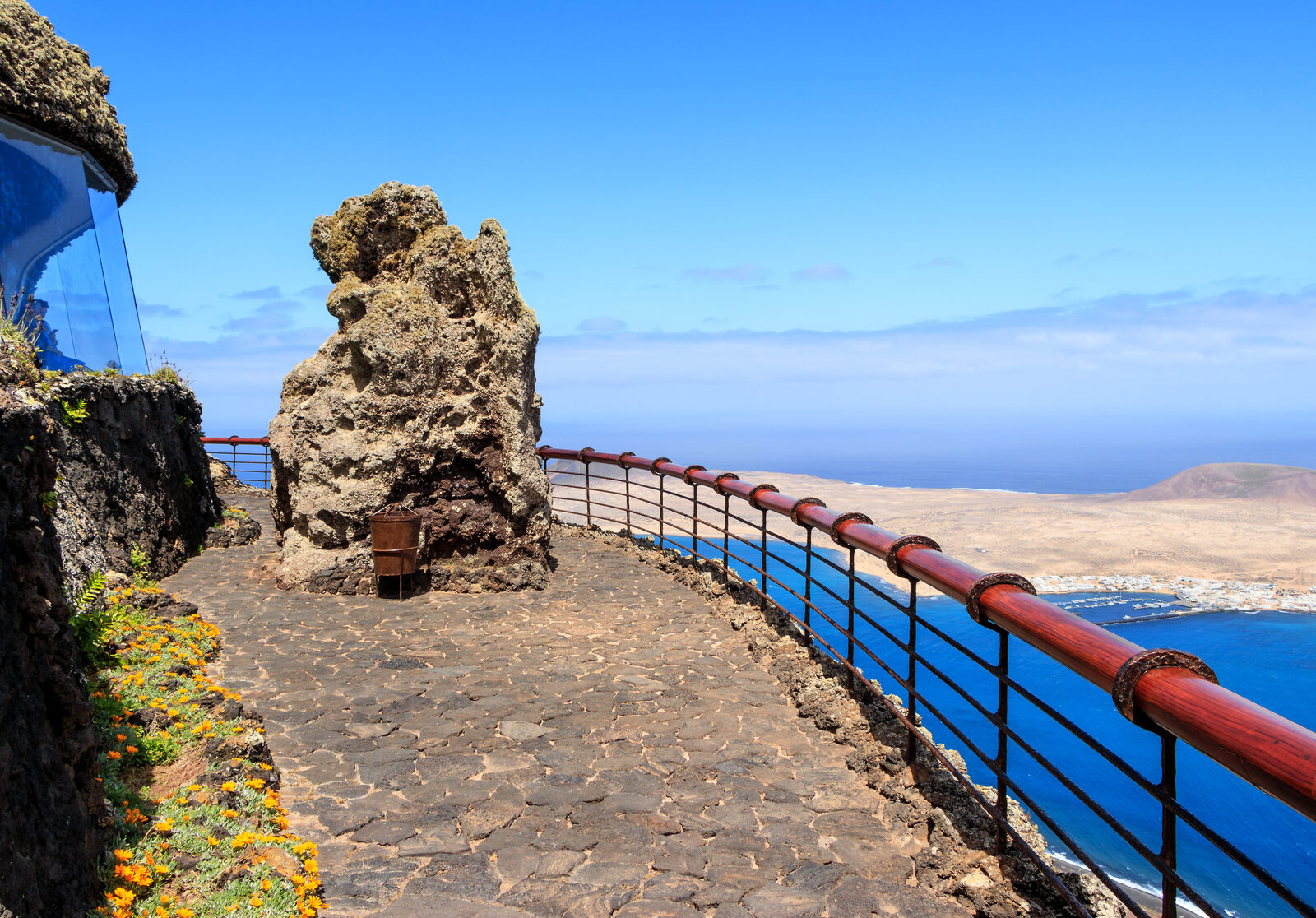
Manrique’s cliff-top viewpoint on the Risco de Famara, 475 metres above the sea, looking straight across the strait at La Graciosa and the smaller islands of the Chinijo Archipelago. The building is cut into the volcanic rock with two curved glass windows shaped like eyes, a café and a terrace above. On a clear day you can see five islands from the terrace. Go late morning when the light is on the water.
About 35 minutes north on the LZ-1 then the LZ-201. Open 10:00 to 17:00, adults around 8.50 euros. Combine with Jameos del Agua and Cueva de los Verdes for a full day in the north.
Get directions from Casa Los Alisios · cactlanzarote.com
Fundación César Manrique
Manrique’s own house in Tahíche, built in 1968 on a lava flow from the Timanfaya eruptions of 1730 to 1736. The lower floor sits inside five natural volcanic bubbles linked by tunnels cut through the basalt, each bubble a room with its own tree, pool or fireplace. The upper floor draws on traditional Canarian farmhouse design with large windows and whitewashed walls. It is now a museum and art foundation holding his paintings, sketches and personal collection including works by Picasso, Miró and Tàpies.
Only 10 minutes from the villa, so this is the easiest half-day trip on the list. Open daily 10:00 to 17:30. Adult ticket around 10 euros.
Get directions from Casa Los Alisios · fcmanrique.org
Museo Lagomar
A house built into the cliffs of Nazaret in the early 1970s, with corridors carved through the rock, a hidden bar reached by a tunnel, and terraces that drop down in layers. Omar Sharif, the Egyptian actor best known for Lawrence of Arabia and Doctor Zhivago, bought it on a visit to the island while filming The Mysterious Island (and Captain Nemo), and lost it in a bridge game to the English developer Sam Benady within days (Benady was the reigning European bridge champion at the time, and Sharif, himself a serious card player, did not know). The story is half the fun. The rest is the architecture, which is unlike anything else on the island.
10 minutes from the villa, in the hillside just above the village of Nazaret. Open 10:00 to 18:00, guided tours from 11:00 on the half hour.
Get directions from Casa Los Alisios
Cueva de los Verdes
The other half of the Corona lava tube, a few minutes uphill from Jameos del Agua. The tube runs nearly 8 km from the crater to the sea, and the guided tour covers about 1 km of it. The path winds through a sequence of chambers at different levels, with minimal lighting and music that uses the acoustics. There is one classic trick near the end that guides do not warn you about, which is the point. Used as a hideout from pirate raids in the 16th and 17th centuries.
30 minutes north. Open 09:30 to 16:15, adult ticket around 10 euros. Tours in Spanish and English run back to back.
Get directions from Casa Los Alisios · cactlanzarote.com
El Golfo
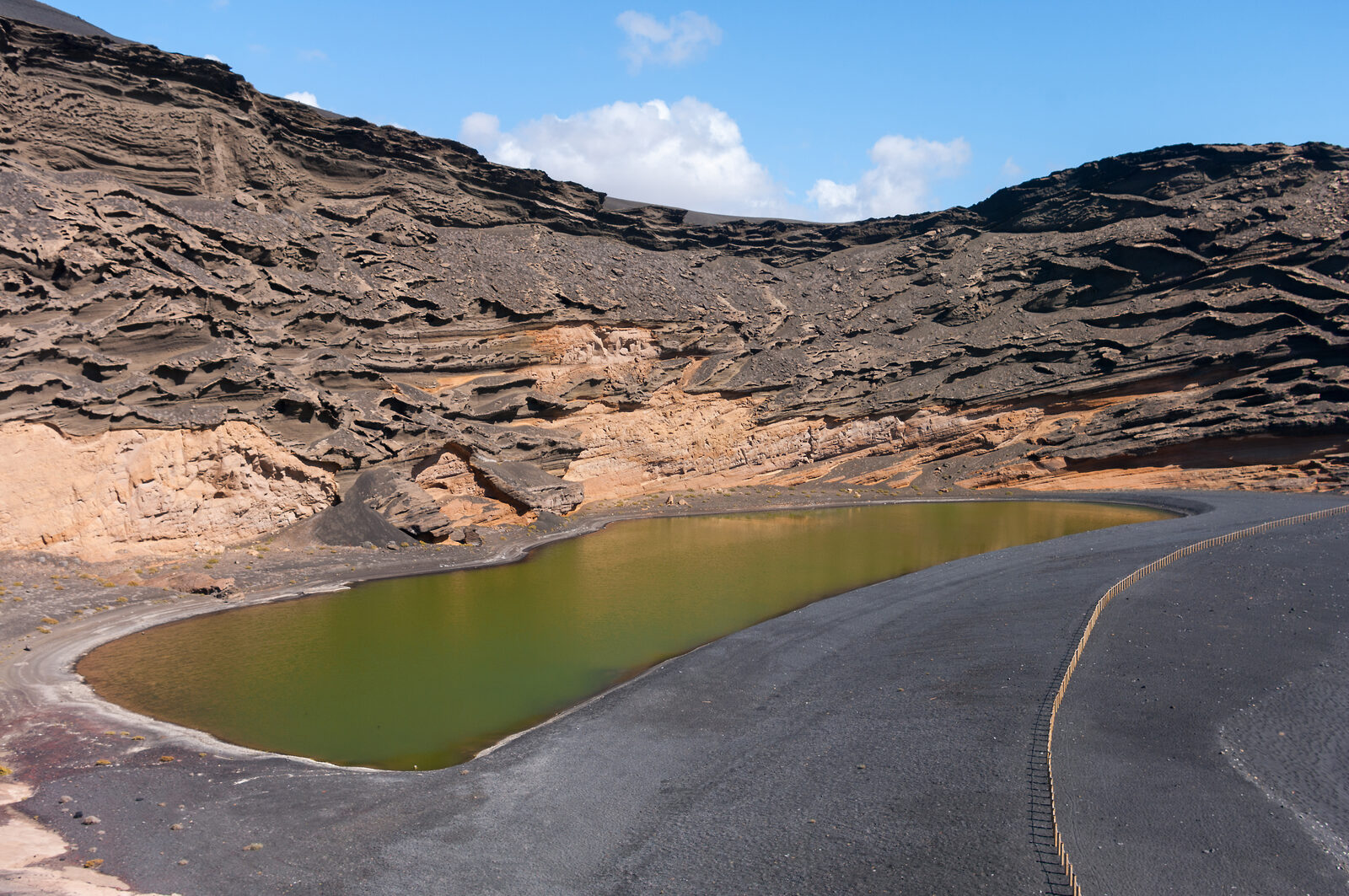
The green lagoon known locally as Charco de los Clicos. A half-collapsed volcanic crater fills with seawater that filters in through the porous rock, and microalgae in the water turn the surface a vivid green. The contrast with the black sand beach and the red walls of the crater is the reason everyone comes. You view from above, there is no access down to the water itself.
The south access was closed some years ago, so drive into El Golfo village, park in the free dirt car park at the north end, and walk about five minutes along a signed path to the viewpoint. No ticket. Combine with Los Hervideros, they are 10 minutes apart. The village has a row of small fish restaurants if you stay for lunch.
Get directions from Casa Los Alisios
Echadero de los Camellos
Camel rides on the slopes of the Macizo del Fuego, right on the LZ-67 just before the Timanfaya gate. The “camels” are actually dromedaries and have worked the land on Lanzarote since the 15th century, hauling volcanic soil before the island had roads. The ride lasts about 20 to 25 minutes along the volcanic ridge and costs roughly 11 euros per person. You do not need a Timanfaya ticket for this part.
30 minutes from the villa. Go first thing, the queues build fast when the coaches arrive from the resorts mid-morning. If you are already heading into the national park, this is a natural five-minute stop on the way.
Get directions from Casa Los Alisios
Casa Museo del Campesino
Manrique’s tribute to the island’s farmers, built in the geographical centre of Lanzarote near Mozaga. The complex is a working museum of traditional rural architecture: whitewashed walls, green wooden doors, a craft workshop, a bodega and a restaurant serving Canarian dishes. Outside stands the Monumento a la Fecundidad, a 15 metre sculpture Manrique designed in 1968 with Jesús Soto, assembled from old ship water tanks, iron and concrete to represent the farmer with his dromedary.
15 minutes from the villa on the LZ-20. Free entry to the museum and the monument, you only pay if you eat or buy crafts. A good short stop if you are driving across to Timanfaya or La Geria.
Get directions from Casa Los Alisios · cactlanzarote.com
How do you see all of this in a week?
A simple seven-day plan from Costa Teguise:
- Day 1, north: Jameos del Agua + Cueva de los Verdes + Mirador del Río. One long day, pack lunch or eat at Mirador del Río’s café.
- Day 2, Manrique close to home: Fundación César Manrique and Museo Lagomar in the morning. Afternoon at the villa pool or on one of the Costa Teguise walks.
- Day 3, volcanic south: Casa Museo del Campesino on the way out, Timanfaya with camels at Echadero de los Camellos, lunch in Yaiza or El Golfo, end at Los Hervideros for the wind and waves.
- Day 4, beach day: Drive south to Playa de Papagayo, or stay local at Playa El Ancla and Las Cucharas.
- Day 5, vineyards and pottery: La Geria and the Jardín de Cactus in one loop, ideally not in the same order (Jardín de Cactus closes at 17:00).
- Days 6 and 7: Flex days for what you liked enough to return to, or for hikes like Montaña Corona or the Famara cliffs.
Most guests underestimate how spread out the north is and overestimate how close the south is. A rental car makes all of this realistic. Public buses run between resorts but rarely stop at the attractions themselves.
Practical tips before you go
- Book CACT tickets online a day or two ahead in peak season (December to March, Easter, summer). The official CACT shop is at ventaonline.cactlanzarote.com and has e-tickets for Jameos del Agua, Cueva de los Verdes, Mirador del Río, Jardín de Cactus and Montañas del Fuego (Timanfaya).
- Arrive early. Most attractions are quiet until 11:00, then the coaches from Puerto del Carmen and Playa Blanca arrive.
- Fuel up on the way out. There are petrol stations in Tahíche, San Bartolomé and Yaiza, which covers most of the south-west loop.
- Bring water and sun cover. Shade is rare away from the centres. A hat and factor 50 are not optional in summer.
- Drive defensively. The LZ-2 is fine but the secondary roads have loose gravel, lava walls close to the tarmac and occasional goats. Speed limits are strictly enforced.
Casa Los Alisios sits 15 minutes from Lanzarote airport and is within a 45-minute drive of every attraction above. The villa is single level with a gear room for bikes and boards, a communal pool, and the Spar supermarket three minutes on foot for picnic supplies before a day out. Between trips, Playa El Ancla is 10 minutes from the door.
Frequently Asked Questions
- What is the number one attraction in Lanzarote?
- Timanfaya National Park and Jameos del Agua are the two most visited places on the island. Timanfaya is the dramatic volcanic landscape in the southwest, and Jameos del Agua is César Manrique's lava tube concert hall and blue lagoon in the north.
- What is the CACT in Lanzarote?
- CACT stands for Centros de Arte, Cultura y Turismo. It is the network of six César Manrique centres run by the island government: Jameos del Agua, Cueva de los Verdes, Mirador del Río, Jardín de Cactus, Casa Museo del Campesino and Montañas del Fuego in Timanfaya. You can buy combined tickets for several centres at cactlanzarote.com.
- How many days do you need to see Lanzarote?
- A week covers everything comfortably. Three days is enough for the main sights if you group them: one day for Timanfaya and the volcanic south, one day for the Manrique centres in the north, and one day for the beach at Papagayo. Slower travellers will use a full 7 days.
- Are the Manrique centres worth the money?
- Yes, if you visit at least two. Jameos del Agua and Mirador del Río are the two most striking and very different from each other. Jardín de Cactus and Fundación César Manrique in Tahíche add more context if you want to understand his style. Combined tickets at CACT save a few euros.
- What can you see for free in Lanzarote?
- Los Hervideros (lava sea cliffs), El Golfo green lagoon, Casa Museo del Campesino, and almost all the miradores (viewpoints) are free. Papagayo beach is free on foot or by bike, 3 euros per car.
Planning your trip? Book Casa Los Alisios