Scuba Diving in Costa Teguise, Lanzarote
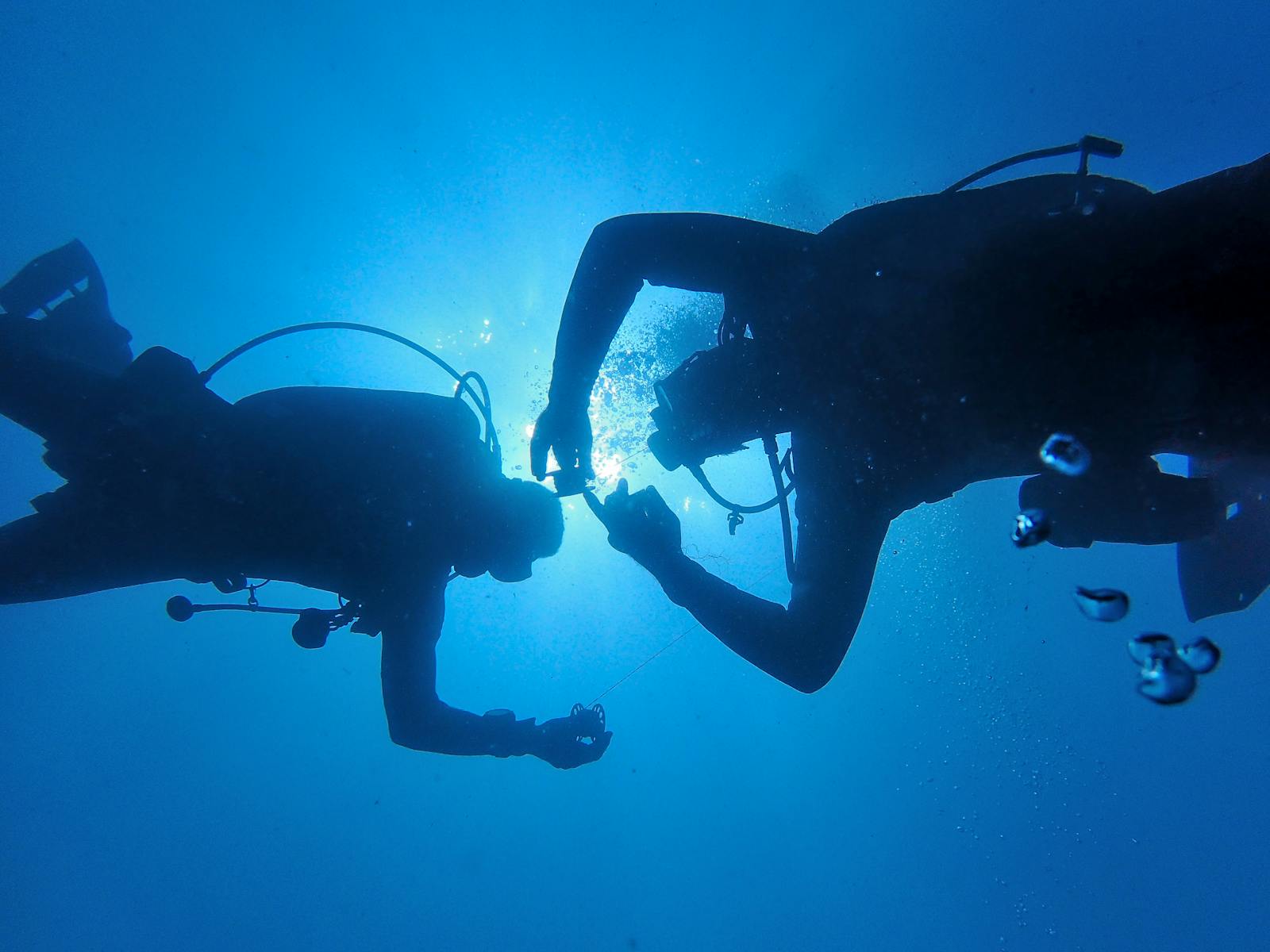
Costa Teguise is the easiest place to go diving on Lanzarote. Two long-running dive centres operate from town, the house reef is a 20 minute walk from Casa Los Alisios, and the island’s signature dive sites are 20 minutes up or down the coast by car. This is the guide we give to guests who want to book a Try Dive, a PADI course or just some straightforward shore snorkeling during their stay.
What’s the diving like in Costa Teguise?
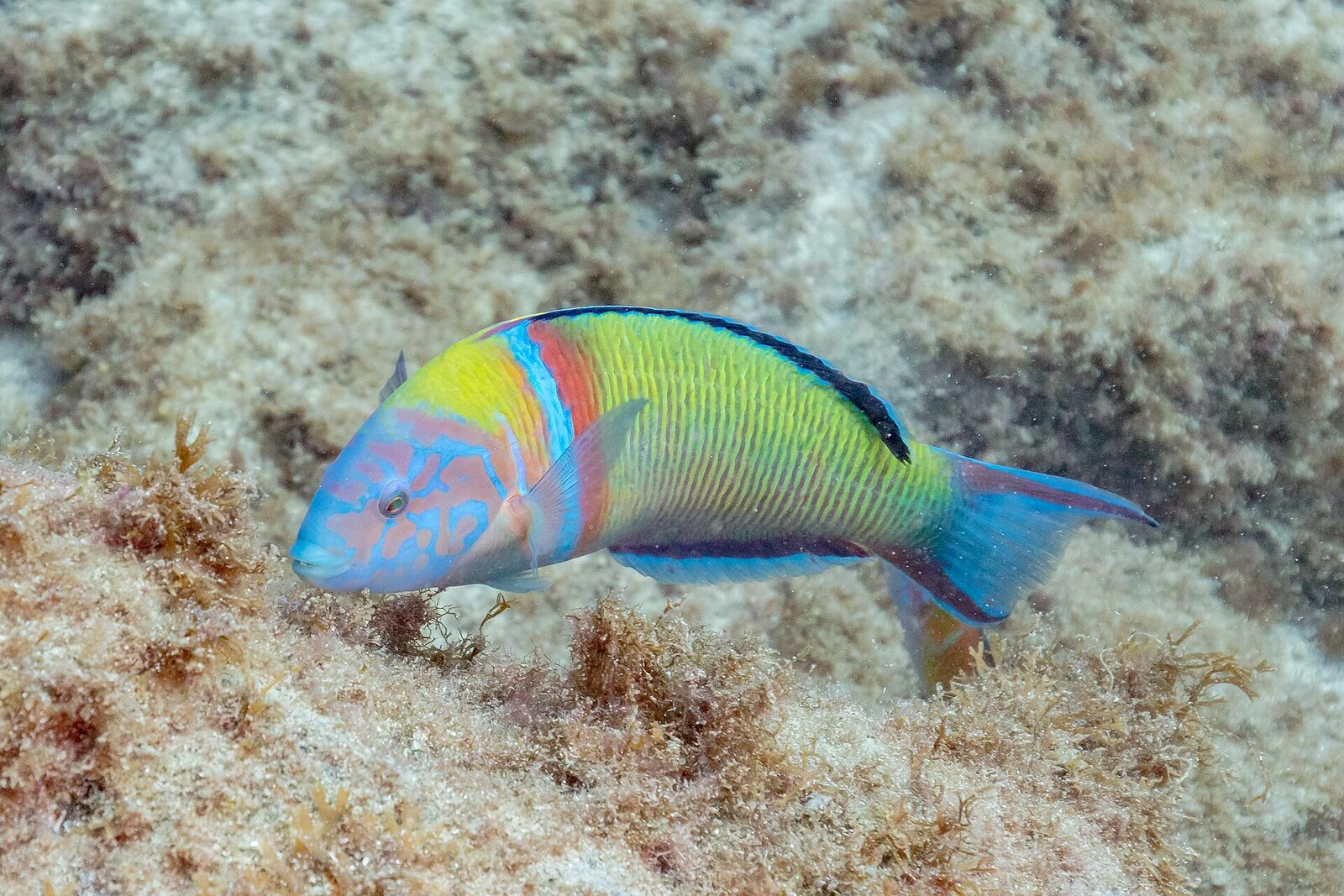
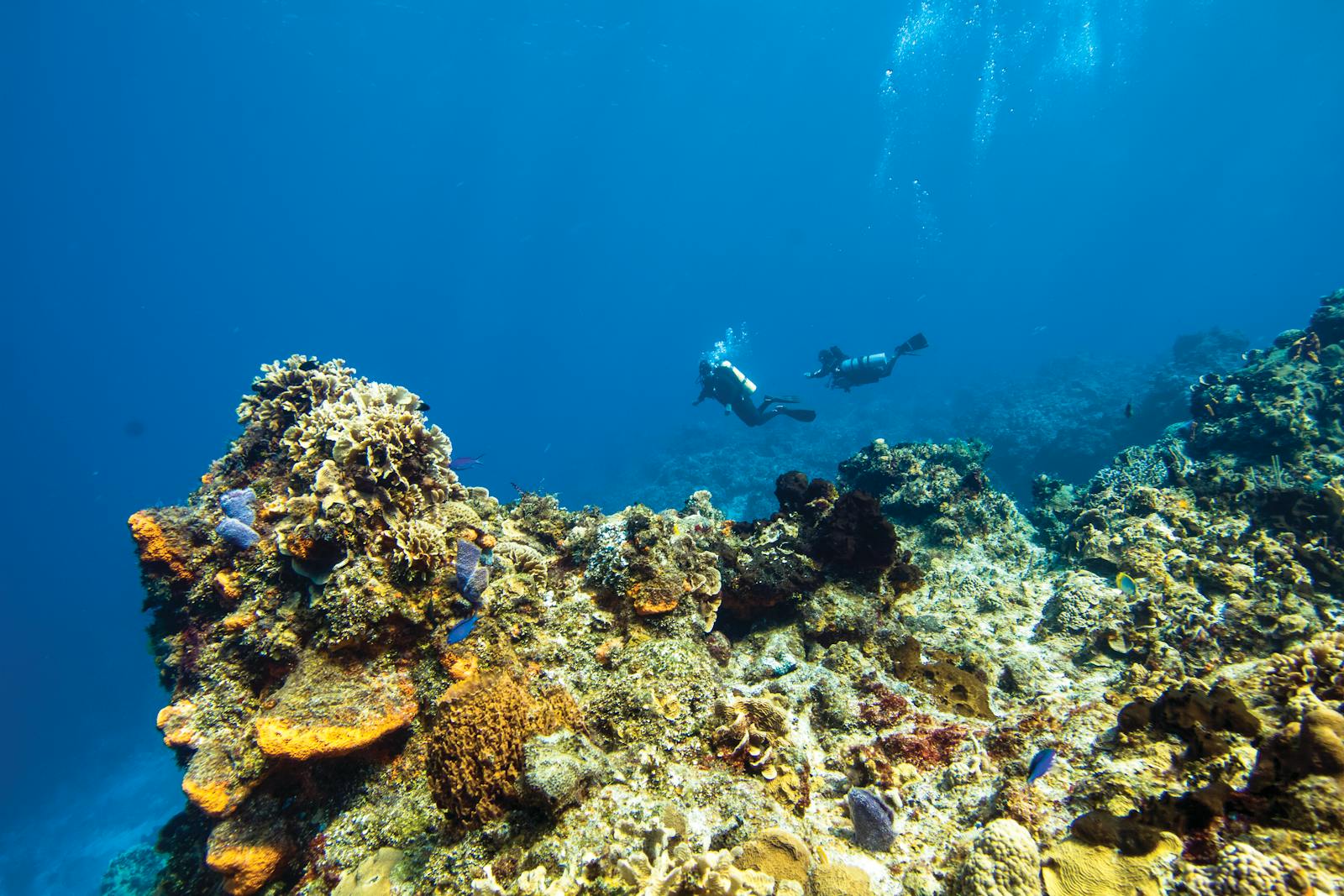
Lanzarote sits on a volcanic shelf in open Atlantic, which means the diving looks nothing like the tropical reefs most first-time divers picture. The terrain is black basalt, dropping in walls, arches, caves and lava flows from the shoreline out to 40 m and beyond. Water temperature runs from about 18 C in February to 23 to 24 C in late September, visibility is typically 15 to 25 m in every month, and the marine life is centred on species that like cold, nutrient-rich water: parrotfish, ornate wrasse, salemas, barracuda, yellowfin tuna, trumpetfish, moray eels and octopus. The island is also one of the last strongholds of the critically endangered angel shark (Squatina squatina), which rests on sandy patches from October through February and is the single best reason to dive here in winter.
Costa Teguise sits roughly in the middle of the diveable coast. Puerto del Carmen and its famous Playa Chica shore dives are 20 minutes south. Charco del Palo and the Mala lava coast are 20 minutes north. Museo Atlántico, Europe’s only underwater sculpture museum, is 40 minutes south in Playa Blanca. The dive centres in town will happily build a week around all four.
Where to go: two dive centres in town
Costa Teguise has two dive centres that sit at the top of Google reviews for the whole island, both within walking distance of the promenade. Either is a safe pick. Personality, timetable and language preference are the main reasons to choose one over the other.
Native Diving Lanzarote
Native Diving sits directly on Playa del Jablillo and has been running since December 1999, making it one of the longest-established operators on the island. SSI and PADI 5 Star Dive Resort, instructors in Spanish, English, German, French and Polish. A single guided dive with full rental gear is 45 EUR; a 6-dive package is 210 EUR and a 10-dive package is 320 EUR. Bring your own kit and those prices drop to 35, 150 and 230 EUR respectively. The Discover Scuba Diving session (Try Dive) is 75 EUR and the full SSI or PADI Open Water course runs 420 EUR. They also offer Sea Trek (an underwater helmet walk at 70 EUR) and a guided snorkel tour at 45 EUR, both worth knowing about if someone in the group does not want to dive.
Get directions from Casa Los Alisios
Pro Dive Lanzarote
Pro Dive runs out of Avenida del Mar 22, a few minutes walk from Pueblo Marinero. SSI Dive Center with both SSI and PADI course options. A single guided boat dive is 50 EUR with full gear, transport, guide, water and snacks included; 5 to 10 dives drop to 40 EUR per dive and 10+ drops to 35 EUR per dive. The Try Dive is 70 EUR, the SSI Basic Diver course (two open-water dives plus theory) is 100 EUR, and the full SSI Open Water course is 445 EUR with online theory. The website is in English, Spanish and Italian, which is a reasonable proxy for the languages actually spoken in the shop.
Get directions from Casa Los Alisios
Prices are fluid on both sites, so treat the numbers above as ballpark. Message WhatsApp the day before you want to dive for current availability.
The local house reef: Playa del Jablillo
Jablillo is the small bay at the northeast end of the Costa Teguise promenade, a 20 minute walk from the villa. A curved stone sea wall cuts off almost all of the swell, which turns the bay into a natural diving classroom: 1 m at the shore line, dropping to a maximum of about 6 m near the wall, sandy bottom with scattered rock patches. Every dive centre on the coast uses it for Try Dives, the confined-water portion of Open Water courses and the first ocean dive of a certification programme.
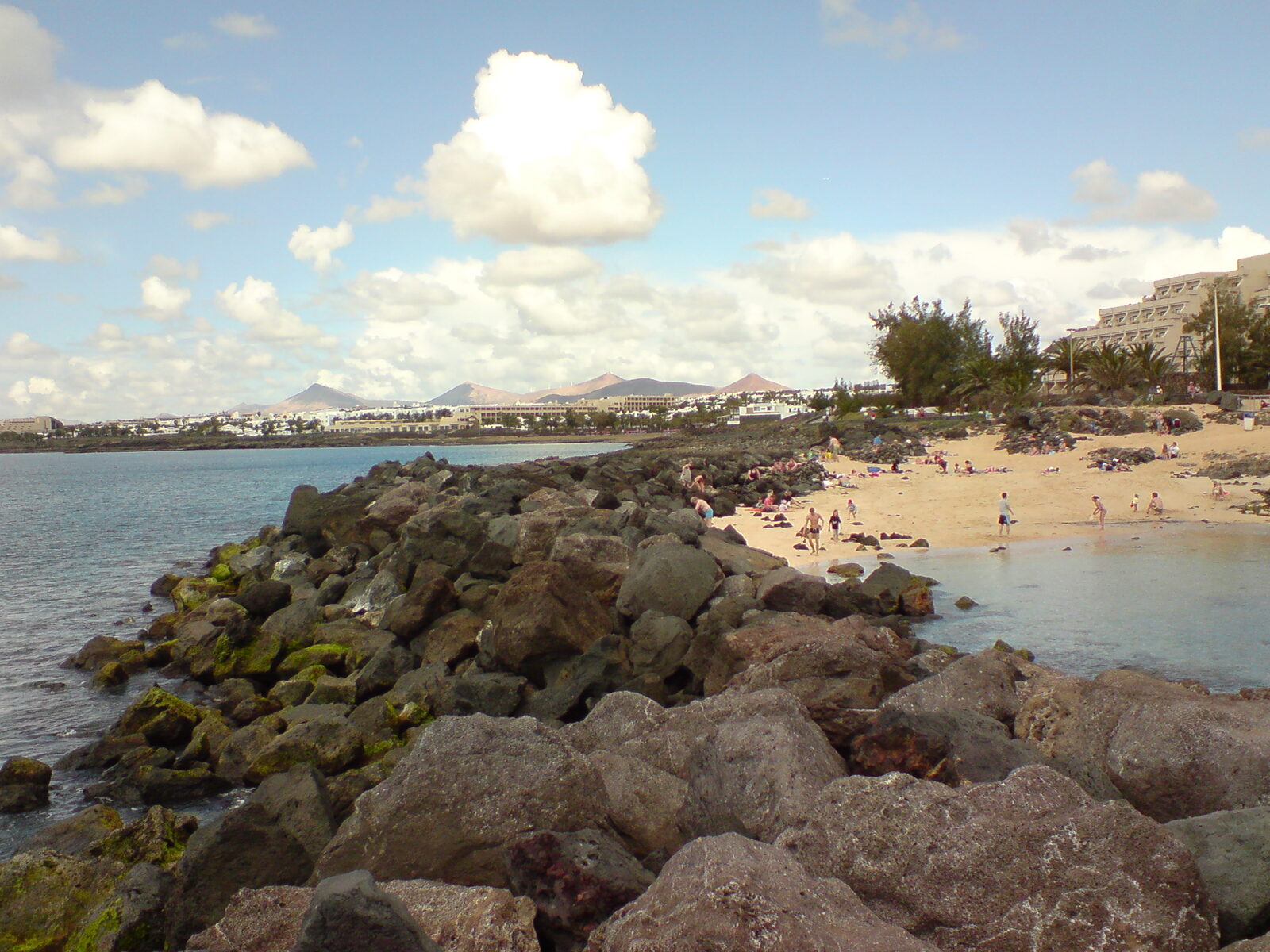
For a recreational guided dive, Jablillo is still worth one slot. You are not there for depth or dramatic topography, you are there for the marine life that uses the bay as a nursery: juvenile bream, ornate wrasse, salemas, cuttlefish, octopus hiding in the rocks at the seaward edge and, between October and February, angel sharks lying on the sand between the groups. The maximum depth keeps bottom time long, which makes it a good camera dive.
Get directions from Casa Los Alisios
Snorkeling 10 minutes from the villa: Playa El Ancla
If you just want to float with a mask and snorkel, El Ancla is the best walk-from-the-door option and the one we point guests to most often. The cove is a 10 minute walk from Casa Los Alisios, sheltered by two rocky walls and a natural underwater reef at the bay mouth, so conditions stay calm even when the trade wind is punishing everywhere else. Entry is over rock rather than sand, so water shoes or fins make a difference.
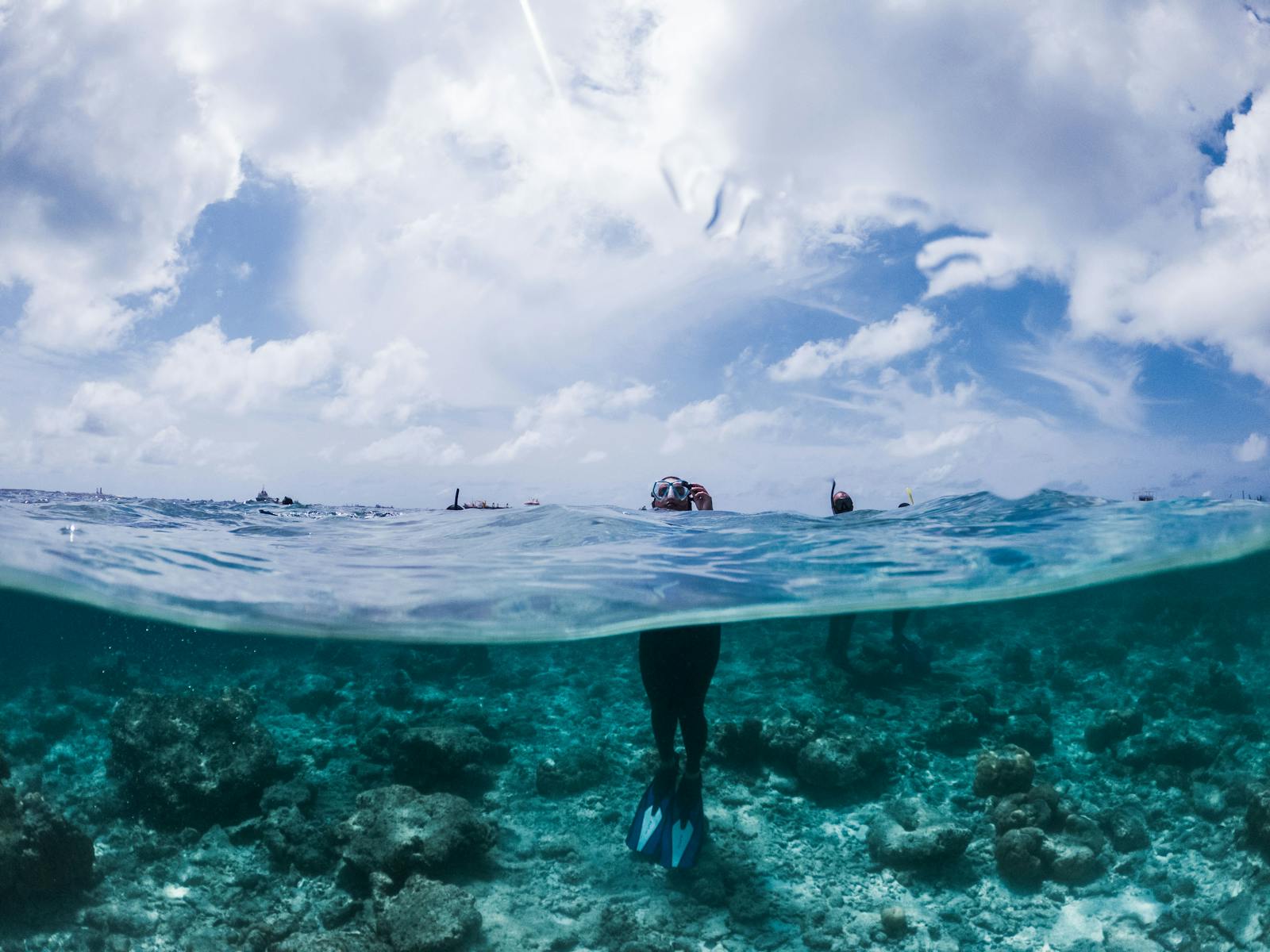
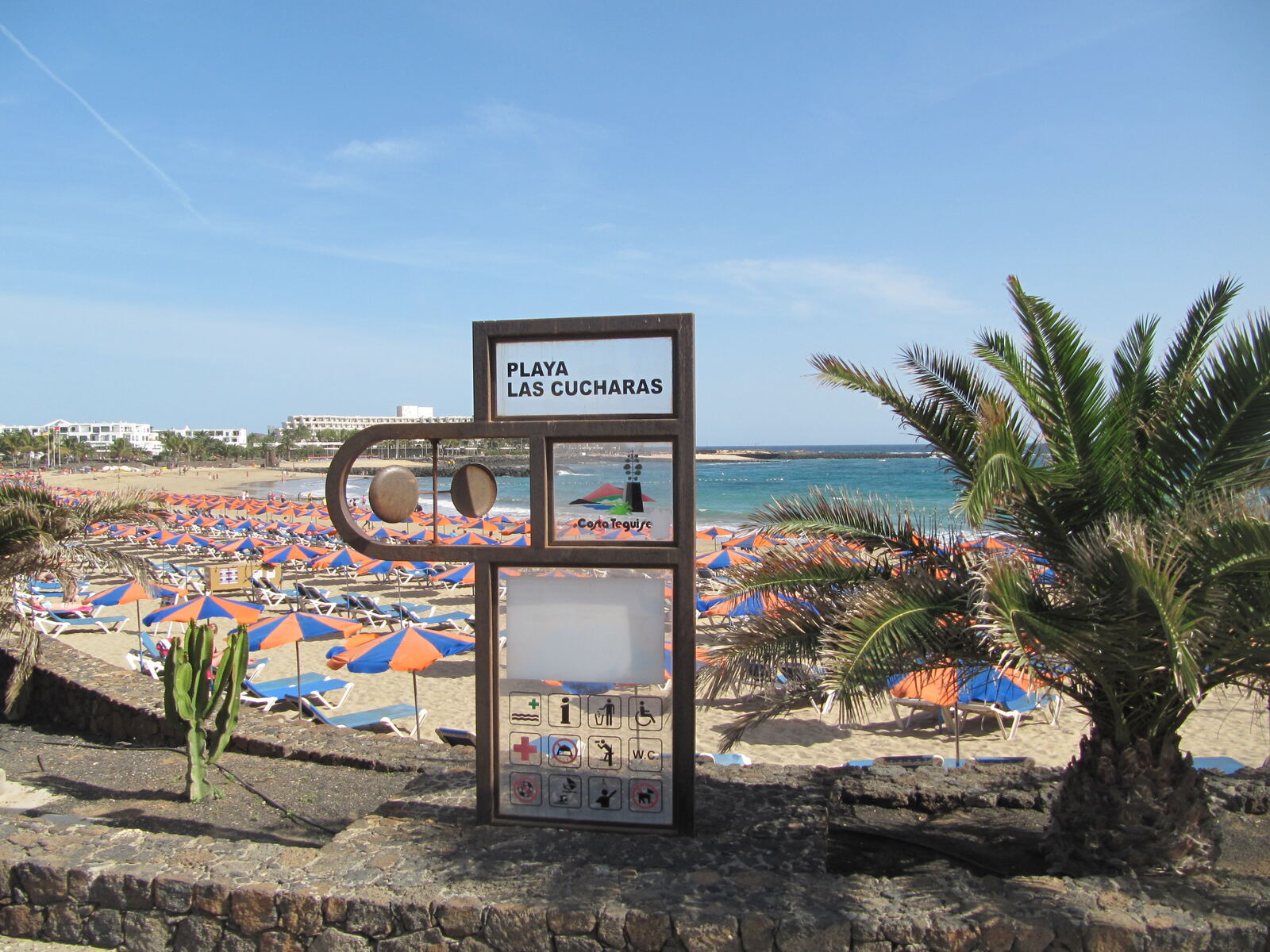
The snorkeling happens along the rocky edges of the cove: parrotfish grazing the algae, damselfish in the shallows, the occasional octopus folded into a crevice, and if you are patient, a cuttlefish in the deeper corners. The sunrise from the eastern wall of the cove is one of the quieter reasons to come back early. For a longer snorkel with a deeper bay and a bigger sandy entry, keep walking along the promenade to Jablillo (about 10 more minutes) or down to Playa de Las Cucharas. The full beach guide to Costa Teguise covers the rest.
Get directions from Casa Los Alisios
What will you actually see?
Black rock, shoals of small fish, and if you time the trip right, something big and flat sitting on the sand. The headline species:
- Angel shark (Squatina squatina). Critically endangered across most of its range, locally common in Lanzarote between October and February. Flat, sand-coloured, usually motionless, often spotted on Jablillo, Playa Chica and Charco del Palo. Do not touch.
- Octopus and cuttlefish. In every month, in the rocks at almost every dive site on this coast. Dawn and dusk are best.
- Parrotfish, ornate wrasse, damselfish, salemas, bream. The default school-of-fish backdrop.
- Barracuda, yellowfin tuna, jacks. Reef edges and blue water, especially at Playa Chica.
- Rays (common stingray, marble ray, eagle ray). Sandy patches and cleaning stations.
- Moray eels and groupers. In the caves at Playa Chica and on wall dives.
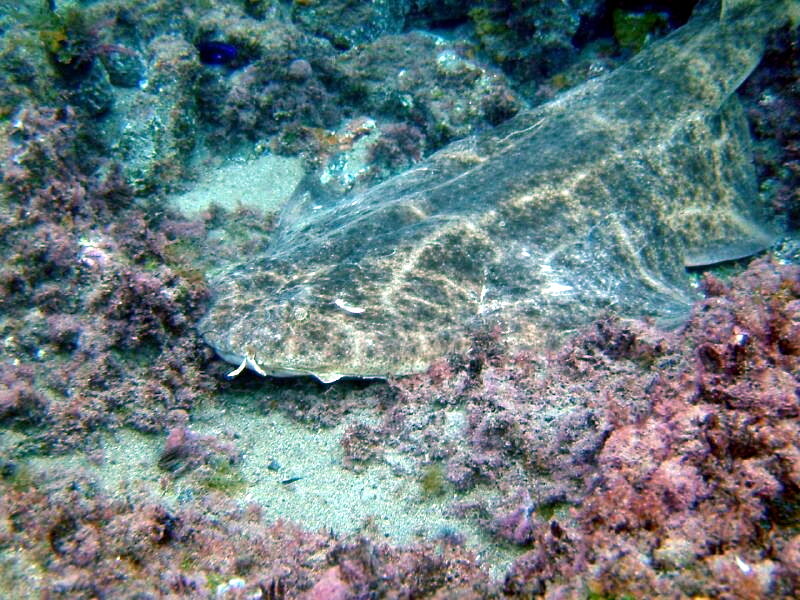
No coral reefs, no sharks of the Jaws variety, no whales or turtles as a reliable sighting. What Lanzarote has is clean, cold-blue Atlantic water over lava terrain, and enough of it to fill a dive holiday.
Day trip: Playa Chica and The Cathedral
For a signature Lanzarote shore dive, the 20 minute drive south to Puerto del Carmen is unavoidable. Playa Chica is a tiny cove beside the main Playa Grande with a concrete ramp straight into the water and around ten named dive sites in one small area.
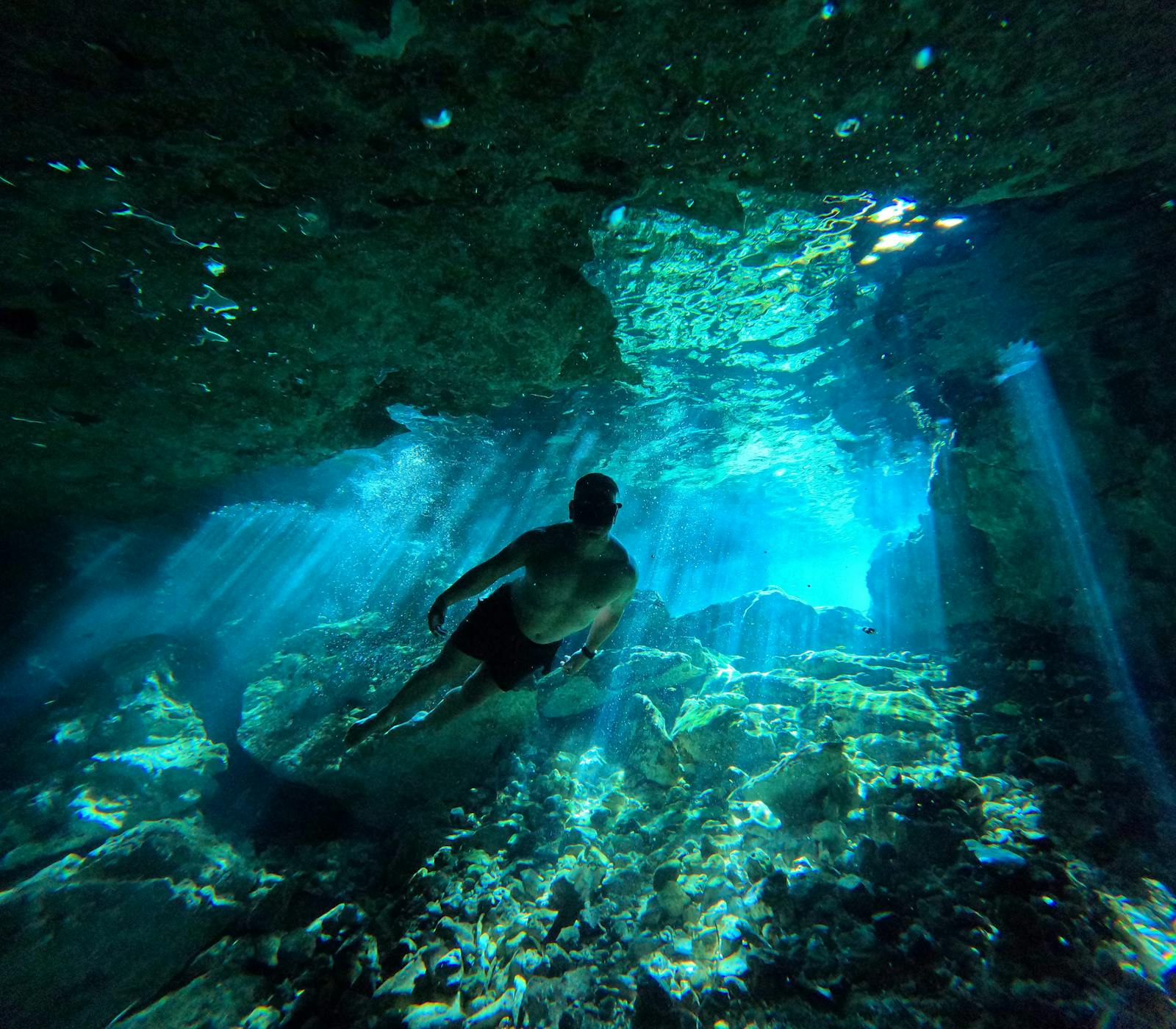
The two most famous are The Cathedral, a vaulted lava cave that runs from about 18 m at the entrance down to 30 m inside, home to large dusky groupers and shoals of bream, and Blue Hole, a tunnel connecting the sandy bottom at 30 m to a rock wall at 18 m, named for the intense blue glow from inside. Other sites in the cove include the Harbour Wall (18 m, angel shark territory in season), Little Wreck, Orange Coral and the shallow House Reef (good for a second dive).
Playa Chica is unguided-friendly for qualified divers, but if you are new to the coast, book a guided pair of dives with one of the Costa Teguise centres; transport, gear and guide are included and you get a briefing on the site.
Get directions from Casa Los Alisios
Further afield: Museo Atlántico and Charco del Palo
Two more sites worth building a day around if you have the certification.
Museo Atlántico, 40 minutes south in Playa Blanca, is Europe’s only underwater sculpture museum, opened in 2016 by British artist Jason deCaires Taylor. More than 300 life-sized figures stand on the sea floor at 12 to 14 m, 300 m off the coast, including “The Rubicon” (35 walking figures) and “The Raft of Lampedusa”. The site is accessible to Open Water divers with at least 12 m certification. Dives are run from Marina Rubicón, typically 2.5 hours round-trip from the marina for certified divers and cost around 57 to 67 EUR per person including full gear and boat transfer. A full-day introductory programme for non-certified divers runs around 149 EUR over roughly 5 hours. Most Costa Teguise centres will add it to your dive package on request.
Charco del Palo, 20 minutes north of Costa Teguise on the Mala lava coast, is a volcanic shore site reached by a short walk over rock. Maximum depth is around 40 m with a platform at 20 m, so Open Water qualification is the minimum. Expect swim-through tunnels, caves, angel sharks in winter, stingrays and the occasional eagle ray.
How do you choose between snorkeling, Try Dive and Open Water?
If you have never breathed through a regulator, a Try Dive / Discover Scuba Diving is the right place to start. A morning at the shop, an hour in the pool or shallow bay, one short open-water dive with an instructor holding your hand. 70 to 75 EUR, no paperwork beyond a medical self-declaration, and you surface knowing whether you want more.
If you already know you like being underwater, the SSI or PADI Open Water course is three to four days, 420 to 445 EUR, and produces a lifetime certification good anywhere in the world. Worth doing on a week’s holiday if diving is why you came. Both Native Diving and Pro Dive run courses every month.
If you just want a casual afternoon with a mask and no tank, snorkeling at El Ancla or Jablillo costs nothing but a 15 EUR mask rental, and you can still see parrotfish, octopus and the occasional ray.
When is the best time of year to dive in Lanzarote?
Any month. For warmest water, September through November (23 to 24 C, 5 mm wetsuit is plenty). For the clearest visibility, the same window, with October often the peak. For angel sharks, book between October and February; some operators run winter sightings tours specifically for them.
Storms occasionally close Playa Chica and Jablillo for a day or two, usually in January or February, but the Costa Teguise centres can almost always find a diveable site somewhere on the coast.
Gear storage, rinsing and logistics at Casa Los Alisios
A few practical things that matter over a week of diving:
- Gear storage. Casa Los Alisios has a secure, locked storeroom specifically for bikes, dive gear and boards. Hang wetsuits, pack BCDs away from the sun and leave them ready for the morning.
- Rinsing. There is an outside hose in the community area. Wetsuits, masks, fins and booties all rinse fine; just be aware we do not have a dedicated outdoor shower.
- Drying. The terrace gets sun and trade wind most of the day, which is perfect wetsuit-drying weather. Black rubber on a line is ready for the next dive by evening.
- Parking. One reserved space at the front door. Loading a weight belt and a pair of tanks into the car takes 30 seconds instead of the usual hotel car park trek.
- Supermarket. Spar is 3 minutes on foot and Lidl is 10, so restocking electrolytes and post-dive snacks is easy.
- Late meals. Full kitchen means you can eat properly after an afternoon dive instead of chasing a restaurant kitchen that closed at 22:00.
If your trip is built around other activities too, the best things to do in Costa Teguise guide covers the walks, surf schools and non-diving days, and the top things to see in Lanzarote round-up is the one to read on your first rest day. Triathletes training between dives will find the practical notes in the Ironman Lanzarote accommodation guide useful.
Casa Los Alisios is 20 minutes walk from the first shore dive and 20 minutes drive from Playa Chica, with a locked gear room, an outside hose, parking at the door and a full kitchen for the evenings after. Check availability on Airbnb or Booking.com and message us if you want help coordinating with one of the dive centres before you arrive.
Frequently Asked Questions
- Where are the best places to dive in Costa Teguise?
- Playa del Jablillo is the local house reef, sheltered by a stone sea wall with a sandy bottom to 6 m, used by every dive centre in town for Try Dives and Open Water courses. For a real shore dive most divers drive 20 minutes south to Playa Chica in Puerto del Carmen, which has around ten sites in one cove (The Cathedral, Blue Hole, Harbour Wall). Charco del Palo, 20 minutes north, is the classic day-trip site for Open Water divers who want angel sharks and swim-throughs.
- Do I need to be a certified diver?
- No. Both dive centres in Costa Teguise run a half-day Try Dive (sometimes called Discover Scuba Diving or SSI Initiation) for around 70 to 75 EUR. You get a briefing, a pool or shallow-bay session and one open-water dive under direct instructor supervision. No certification required, just a basic medical self-declaration and being able to swim. If you want to dive independently, a full SSI or PADI Open Water course takes three to four days and runs around 420 to 445 EUR.
- What will I see underwater in Lanzarote?
- Lanzarote sits on a volcanic shelf in open Atlantic, so the diving is about topography and big fish rather than coral gardens. Expect black lava walls, arches and swim-throughs with shoals of ornate wrasse, parrotfish, damselfish and salemas. Angel sharks (Squatina squatina) are the island's star species and spend October to February resting on sandy patches at Jablillo, Charco del Palo and Playa Chica. Octopus, cuttlefish, rays, barracuda, trumpetfish, moray eels and the occasional grouper round out a typical dive.
- Can I snorkel straight from the beach in Costa Teguise?
- Yes. Playa El Ancla, 10 minutes walk from Casa Los Alisios, is the local pick. The cove is sheltered by two rocky walls, the entry is rocky rather than sandy, and the reef along the edges holds parrotfish, damselfish and octopus. Playa del Jablillo, 20 minutes walk further along the promenade, has an even calmer bay thanks to its artificial sea wall and is better for first-time snorkelers and children. Both centres in town rent mask-and-snorkel sets for around 15 EUR a day.
- When is the best time of year to dive in Lanzarote?
- Any month. Water temperature runs from about 18 C in February and March (7 mm wetsuit or semi-dry weather) to 23 to 24 C in September and October (5 mm is plenty). Visibility is typically 15 to 25 m in every month, occasionally dropping in winter swells. Angel shark season is October to February. If you want the clearest water and the warmest sea, aim for late September through November. If you want the sharks, book December or January.
Planning your trip? Book Casa Los Alisios