Windsurfing in Costa Teguise
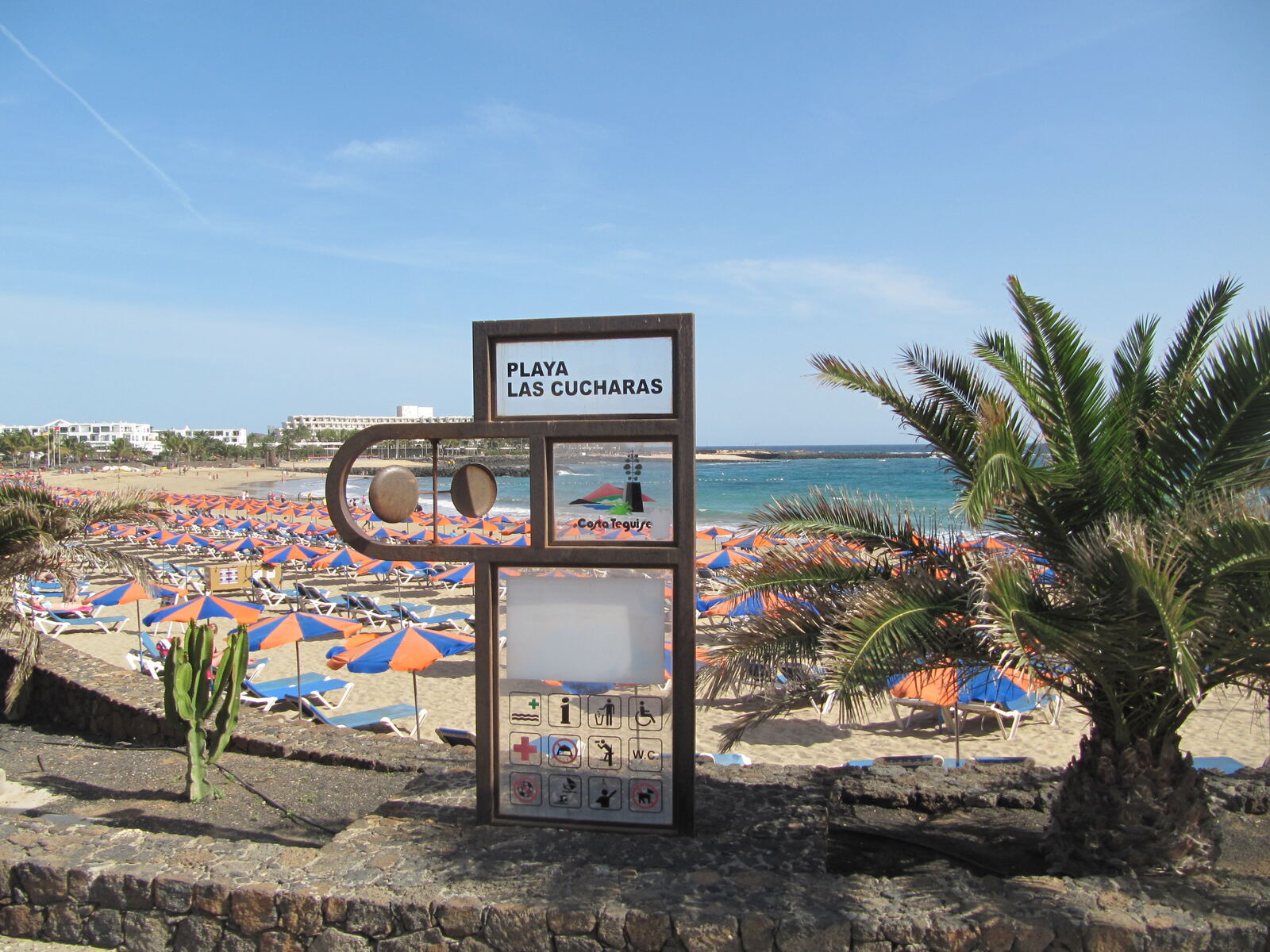
Costa Teguise has two windsurf bays a few hundred metres apart: Playa de las Cucharas and Playa de Los Charcos. Las Cucharas is the famous one, the PWA Freestyle venue and the home of the schools. Los Charcos, just to the north, is the wave and freestyle spot the locals and pros actually prefer once they know what they are doing. Both are a 40 minute walk from Casa Los Alisios along the promenade, or a 5 minute drive. This is the guide we give to windsurf guests when they ask where to rig, which school to book and whether it will actually blow during their week.
Why is Las Cucharas such a good windsurf spot?
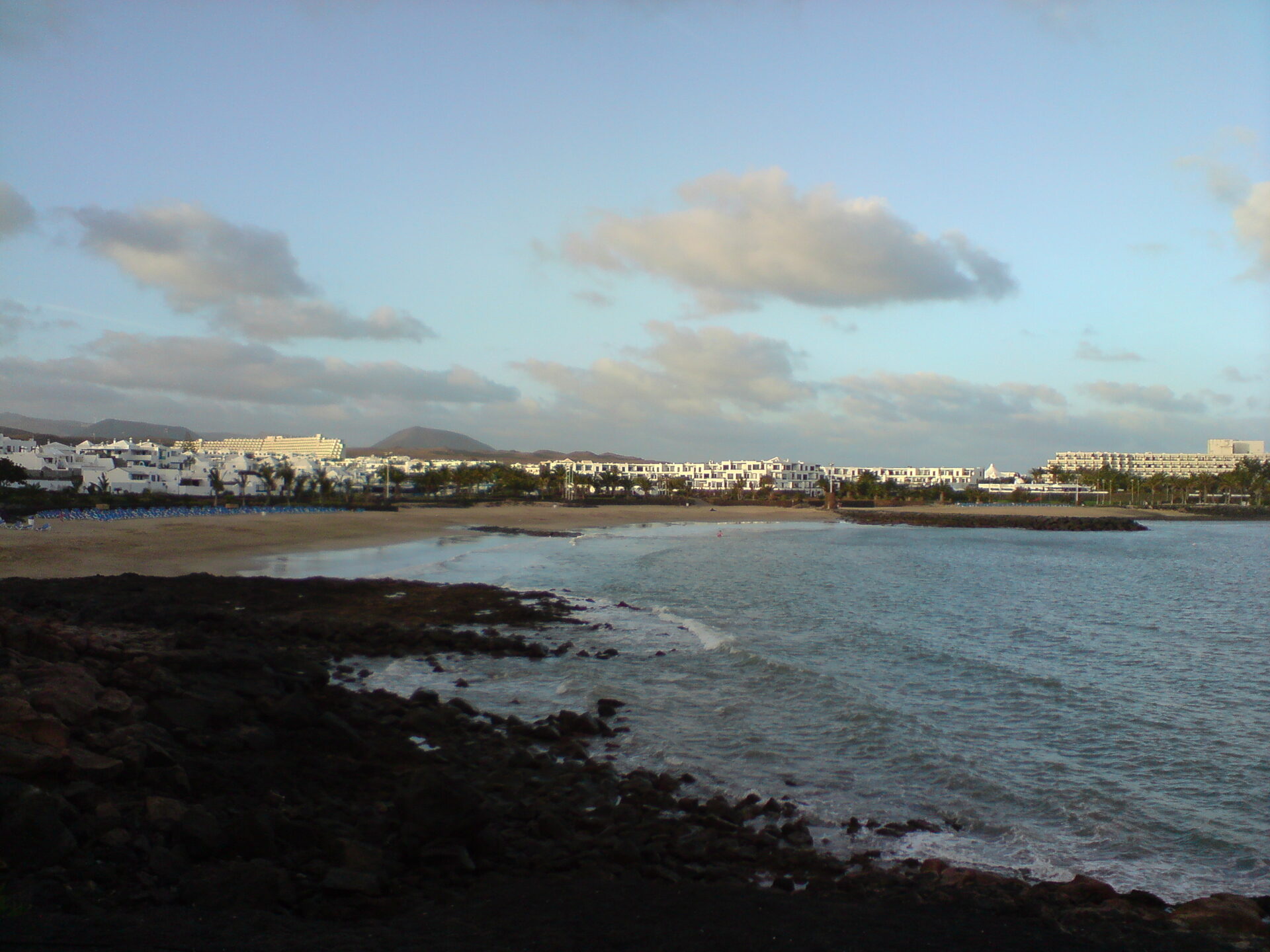
Three things make this bay work for windsurfing. First, the shape: a shallow crescent about 500 m across, with a flat sandy entry and a natural rock reef at the outer edges. The first 100 m or so of water is chest-deep, shielded from the worst of the wind by the land behind the beach, and sits in flat water almost all the time. Beyond 100 m the wind gains strength and the chop builds, and past the outer reef the swell can run over 3 m on a big day, especially when it wraps around into the neighbouring Los Charcos bay.
Second, the wind. Lanzarote sits in the Atlantic trade-wind belt, which pushes a reliable north-east breeze across the island for most of the year. At Las Cucharas the wind comes in cross-shore from the left, which is the friendliest direction for beginners (if you stop sailing, the wind pushes you back along the beach rather than out to sea) and the easiest direction to work upwind in for advanced sailors. Over 80% of days from April to September see more than 15 knots.
Third, the layout of the spot itself. Everything a windsurf day needs is within a few metres of the sand: four schools with rental rigs, a lifeguard tower, a stretch of paved promenade to rig up on, showers, bars and a supermarket 100 m back from the beach. You can walk down from a rental car, sail for two hours, and walk back up for lunch without moving a vehicle.
When is the best time to go windsurfing in Costa Teguise?
The short answer is April to September, with July and August the peak.
- June, July, August. Most consistent. The trade wind is locked in, daily averages of 18 to 25 knots, occasional 30+ knot days. Air 25 C, water 22 to 23 C, a 3/2 mm shorty or just board shorts.
- April, May, September. Still reliable, typically 15 to 22 knots, slightly less consistent. Comfortable in a shorty; some days you will want a full 4/3 mm. Fewer schools are packed.
- October, February, March. Transitional. Wind still happens regularly but with longer flat days mixed in. 4/3 mm full wetsuit most of the time. October is often underrated, with warm water left over from summer.
- November, December, January. The quietest stretch. Trade wind breaks down more often, replaced by variable southerly weather. Also the wave-sailing window, because low-pressure systems in the North Atlantic push a bigger north-westerly swell down the island. 4/3 mm full suit, sometimes with a 3 mm hood.
If you are coming specifically for windsurf holidays, aim for May through September. If you are coming for another reason and want to sail on the days the wind allows, any month works. Local forecasts: Windguru for Las Cucharas, plus the live webcam on SkylineWebcams that the schools use to check conditions before opening.
The two Costa Teguise windsurf bays: Las Cucharas and Los Charcos
Costa Teguise has two distinct windsurf spots, a few hundred metres apart along the same stretch of coast. Most guide-books only mention Las Cucharas, but serious windsurfers use both. They cover different wind directions, different skill levels and different disciplines.
Playa de las Cucharas
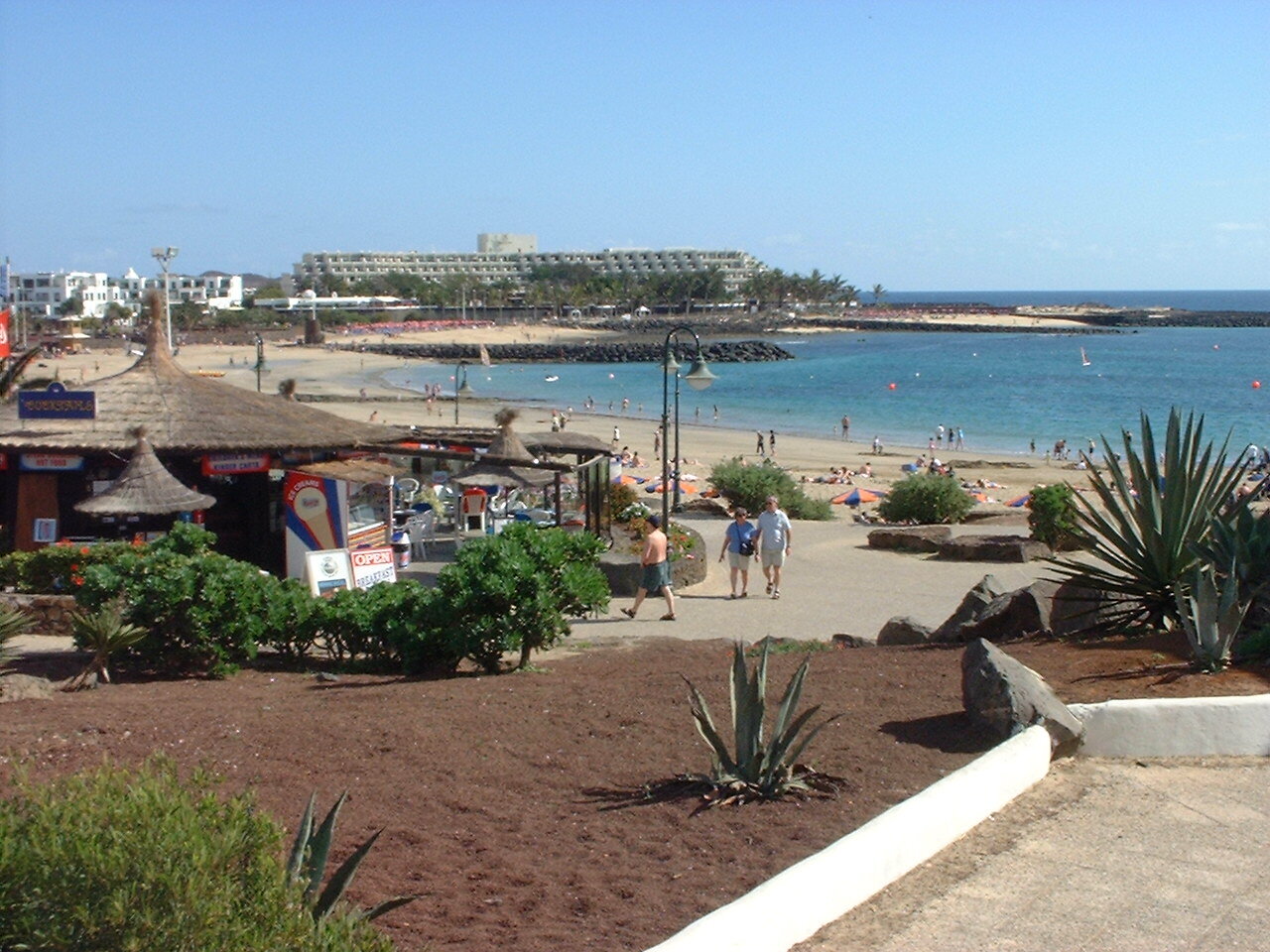
The headline beach. Roughly 500 m long, oriented east-north-east, with two sandy launch zones separated by shallow rock reef. Home to all four schools, all the rental gear and the PWA history.
- Inside bay (first 100 m from the sand). Flat, shallow, sheltered. Beginners, kids, light-wind freeride. The wind here is cleaner than it looks from the promenade, because the beach faces slightly into the gradient.
- Middle bay (100 to 500 m). The working area for most intermediates. Cleaner north-east wind, some chop, enough room to practise jibes and freestyle flat-water moves.
- Outer bay. The wave zone when a real swell runs. Only experienced sailors should go past the reef line here.
Non-windsurf swimmers share the inside of the bay in summer, and the schools mark launch corridors with buoys. Give them space on the way out and in.
Get directions from Casa Los Alisios
Playa de Los Charcos
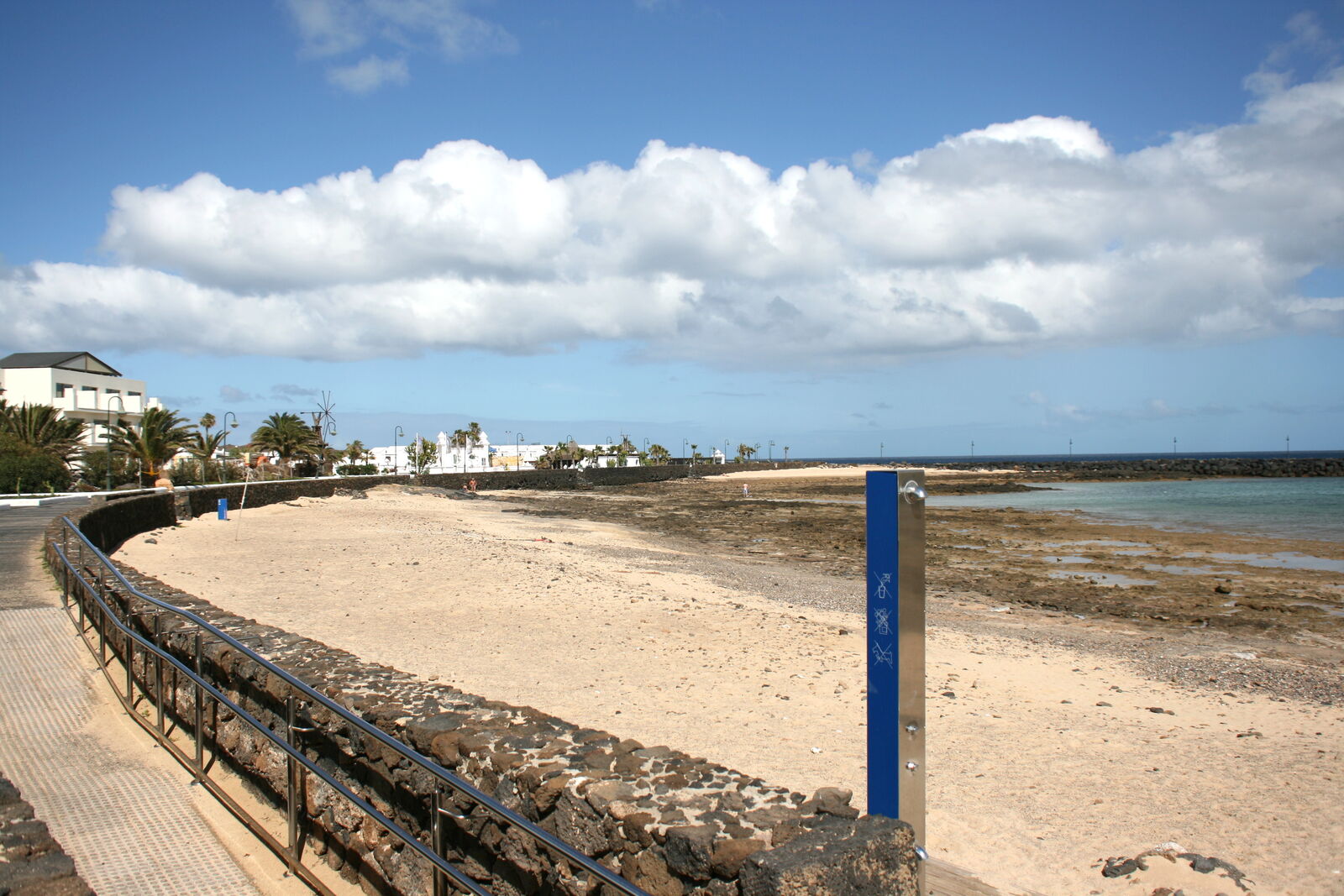
Immediately north of Las Cucharas, separated by a rocky point and a short walk along the promenade. Los Charcos is a small lagoon-and-reef spot that a lot of the local advanced sailors rate above Las Cucharas for wave and freestyle sessions. The reason is geometry: a reef platform outside the bay breaks swell into a clean left-hand wave on the right tide, while the lagoon inside the reef stays flat when the trade wind is up. That combination of flat water close in and a rideable wave just outside is unusual in one beach.
Los Charcos also works on wind directions that go sketchy at Las Cucharas. When the wind goes more north than north-east, Las Cucharas turns offshore-gusty; Los Charcos, which sits behind a slightly different orientation of coast, stays onshore-ish and sailable. Local riders check both spots on the way down the promenade and pick the cleaner one.
What to expect:
- Launch. Rocky at low tide, sandier at higher tide. Reef shoes help. No schools launch from here, so you rig and carry in yourself.
- Parking. A large free car park right behind the spot, popular with windsurfers travelling in motorhomes.
- Tide. The wave works best from about 3 hours either side of high tide.
- Skill. Intermediate and up for the lagoon, experienced only for the reef wave.
- Gear. Freestyle or wave kit rather than pure freeride. Smaller sails (4.2 to 5.7 m²) when the wind is solid.
Beginners and first-time visitors should still book Las Cucharas; Los Charcos is the spot you move to once you can rig yourself, carry a board across uneven ground and handle an offshore launch.
Get directions from Casa Los Alisios
The four windsurf schools at Las Cucharas
All four sit on or within a minute of the sand. Any of them is a safe booking. Personality, teaching language and board inventory are the main differences.
Pro Center Antxon Otaegui
Pro Center Lanzarote is run by Antxon Otaegui, the 2008 EFPT freestyle champion and PWA Freestyle event winner at Sylt the same year. Teaches windsurf, wingfoil, SUP and kayak across all levels, plus private master classes. The school sits right on the sand at Las Cucharas and is the one most returning sailors book when they want coaching rather than just rental. Languages: Spanish, English, French, Basque. Contact WhatsApp before arriving to reserve gear in high season.
Get directions from Casa Los Alisios
Windsurfing Club Las Cucharas / Lanzarote Windsurf
Lanzarote Windsurf operates out of Centro Comercial Las Maretas on Calle del Marrajo, two minutes back from the sand. Windsurf, wingfoil and tow foil rentals and courses. This is the long-running club operation at the beach and a regular stop on the POINT-7 sail test calendar. Good choice if you want a full weekly rental card with a wide quiver of sails and boards.
Get directions from Casa Los Alisios
Surf Lanzarote Windsurf School
Surf Lanzarote has been running since 1998, which makes it the oldest operation at the beach. Around 17 board types and sails from 3.0 to 8.2 sqm, children’s classes in the sheltered inside lagoon, intermediate improver clinics, advanced coaching sessions with video analysis, and flex-booking rental cards for stays between November and March. Languages: English, Spanish, German. Phone and WhatsApp on the website.
Get directions from Casa Los Alisios
Fanatic Boarders Center (FBC)
Fanatic Boarders Center sits 150 m back from the water on the right-hand side of the bay. Windsurf rental and coaching, rest platform and storage in the bay, beginner through advanced courses, kids’ programme for 8 to 12 year olds. Equipment partnerships with Fanatic, Duotone and ION, so the quiver is modern. Languages: English, French, Spanish, German. Strong pick if you are a confident intermediate looking for a coaching week on current gear.
Get directions from Casa Los Alisios
Prices across the four shops sit in a similar band in 2026: around 70 to 90 EUR for a two-hour beginner taster, 250 to 320 EUR for an 8 to 10 hour beginner course, and 150 EUR or so for a 10 hour rental card. Message the one you like before you arrive, especially in July and August.
The PWA years: when Costa Teguise hosted the world’s best
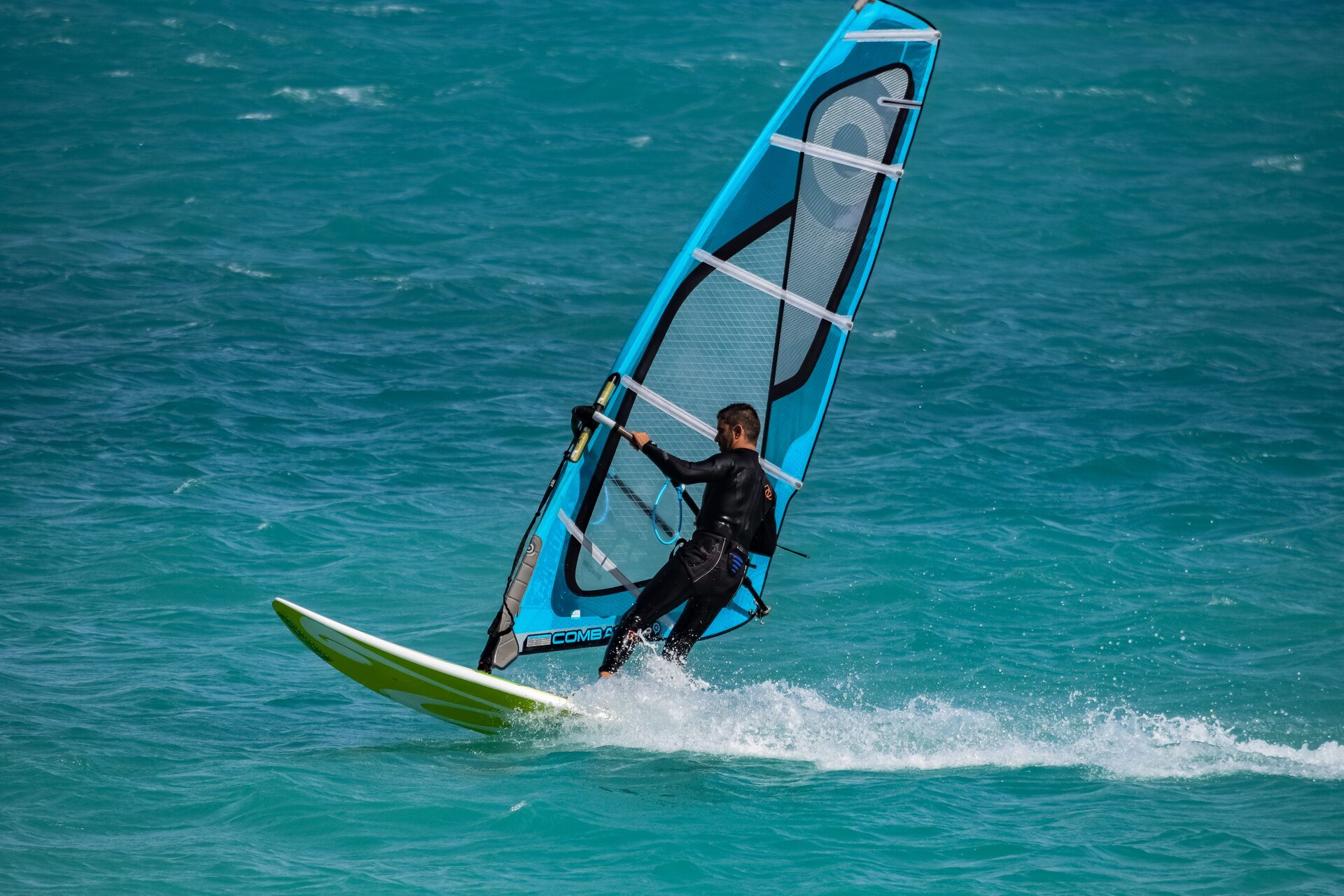
Las Cucharas first hit the international windsurf map in the early 1990s, when the PWA World Cup arrived for a Freestyle stop. For most of the next two decades the bay was a fixture on the circuit, usually in late June or early July, and later an EFPT (European Freestyle Pro Tour) venue between 2014 and 2018. Every big name of the era sailed here:
- Björn Dunkerbeck. 42-time world champion, Dutch-born but raised in Gran Canaria, the most decorated windsurfer in the sport’s history.
- Antoine Albeau. French, 24 Windsurfing World Championship titles across slalom, speed and racing since 1994.
- Philip Köster. German-Canarian, multiple PWA wave world champion, grew up in Gran Canaria and competed on Canarian PWA stops from a young age.
- Iballa Ruano Moreno. Gran Canaria, 10-time PWA wave world champion, one of the defining wave sailors of the last 25 years and a regular on the Costa Teguise finals podium.
The PWA stop has not been held at Costa Teguise since the mid-2010s and is not on the official 2026 PWA calendar, which runs through Gran Canaria, Fuerteventura and Tenerife for the Spanish Canarian leg. What the bay still has is the wind, the lineup and an off-season training scene that brings pros like Lennart Neubauer back every winter. On a blue-sky 25-knot day in July, Las Cucharas looks almost exactly as it did during the PWA years, just without the scoring tent on the sand.
Wingfoiling, the new discipline in town
Every school at Las Cucharas now teaches wingfoiling alongside windsurfing, and the outer bay is as good a wing spot as it is a windsurf spot. The hand-held wing and a hydrofoil board need slightly less wind than a traditional windsurf rig, which has opened up the shoulder months (October, November, March) to new sailors. If you are coming for a week and the forecast looks marginal for windsurfing, ask the school about a wing session instead.
How Casa Los Alisios fits a windsurf trip
Casa Los Alisios is set up for sport guests. A few things that matter for a windsurf week:
- Distance to Las Cucharas. 40 minutes walk along the promenade, 5 minutes drive. Plenty of parking right next to the beach in the morning.
- Gear storage. Secure locked storeroom off the courtyard for dry bags, wetsuits, harnesses and fins. Board bags do not need to come inside the house.
- Hose rinse. Outdoor hose next to the courtyard for rinsing salt off wetsuits and soft gear. We do not have an outdoor shower, so rinse yourself inside after the hose round.
- Communal pool. Outdoor pool in the complex, useful for a cold dunk after a hot session at the beach.
- Kitchen. Full kitchen for feeding a hungry windsurf household. Spar is 3 minutes walk, Lidl 10 minutes.
- Trade-wind shade. North-facing courtyard that keeps its cool through afternoon heat, useful after a mid-day session.
The same setup suits scuba divers and road cyclists, which means you can mix a few windsurf days with a wave dive at Playa Chica, a climb up Tabayesco, or a day-trip up to the Mirador del Río and La Graciosa ferry on a flat-wind afternoon.
Good to know
- Two spots in town, not just one. Las Cucharas is the school-and-freeride bay, Los Charcos 200 m to the north is the wave-and-freestyle bay. Check both before you rig. For north-swell wave days, advanced sailors still drive 20 minutes to Famara, and some pros head to the west coast (Jameos del Agua area) for specific wind directions.
- Cross-shore from the left. If you are learning, ask the school to explain tack priorities before you launch. On the starboard tack (right-hand side forward) you have right of way and you are pointing back to the beach. On port tack you give way and you are heading out.
- Summer crowds. July and August the inside bay is busy with bathers and schools. Launch early (before 11:00) or late (after 16:00) to avoid the worst of it.
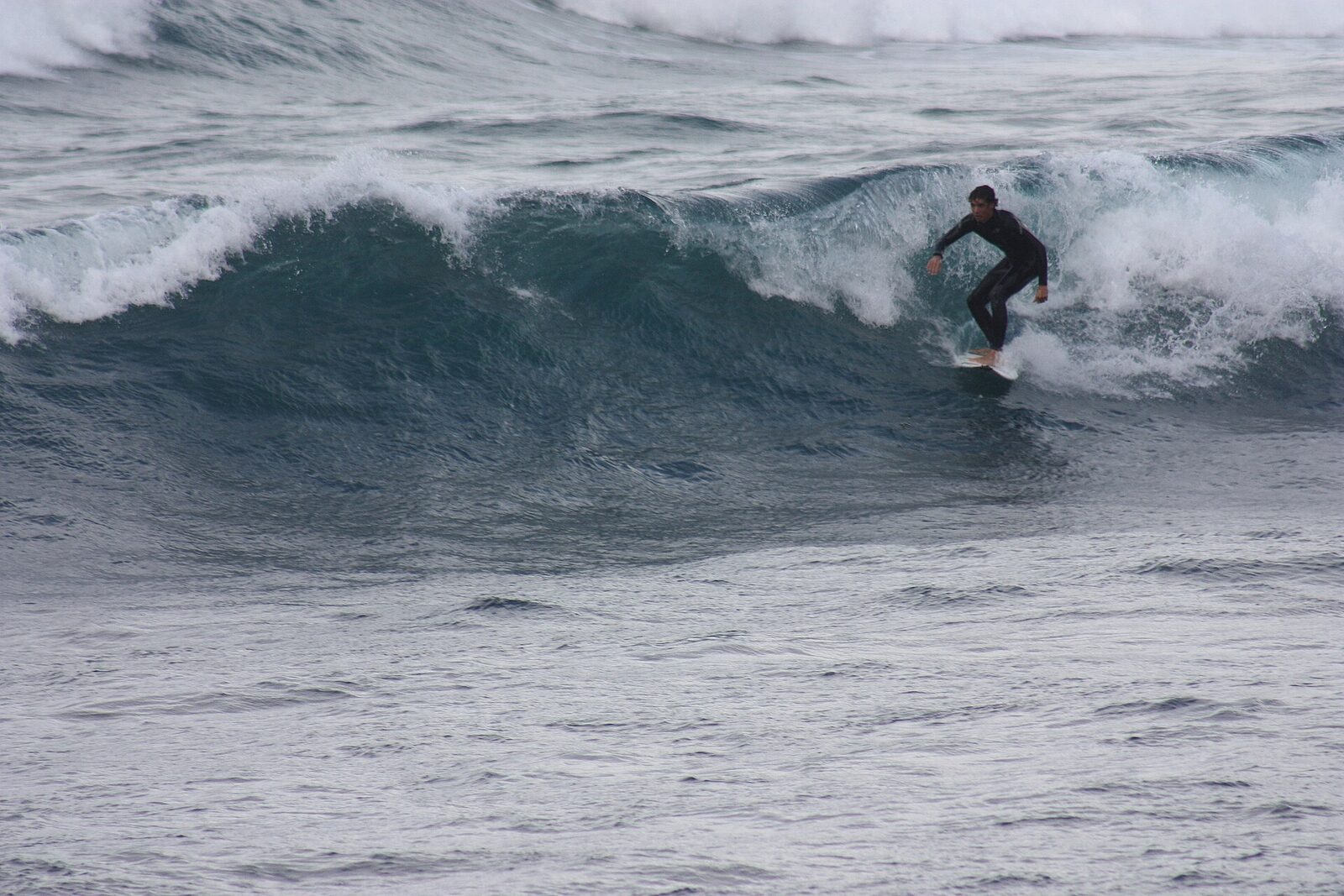
- Swell caution. November to February the outer bay can throw real surf. Read the wave forecast, not just the wind forecast. If it is over 2 m at Los Charcos, stay inside the bay.
If you want a full-picture Costa Teguise stay that includes a few days on the water, the best things to do in Costa Teguise guide covers activities for the non-sailing days, and the best beaches guide walks through the other coves along the promenade. For broader Lanzarote highlights, see top things to see in Lanzarote.
See you on the water.
Frequently Asked Questions
- Is Costa Teguise good for windsurfing?
- Yes, and it has two spots. Playa de las Cucharas is the famous freeride-and-freestyle bay with the schools, the rental gear and the PWA Freestyle history. Playa de Los Charcos, just 200 m to the north, is the wave-and-freestyle reef spot most local advanced sailors prefer: a clean left-hand reef wave outside, a flat-water lagoon inside, and a free car park right behind the spot. Together the two bays cover almost every wind direction, swell condition and skill level between Lanzarote's east-coast points.
- When is the best time of year to windsurf in Lanzarote?
- April to September. The trade wind blows more than 15 knots (force 4+) over 80% of the time in summer, with June, July and August the most consistent. February, March and October are in-between months with less reliable wind. November to January is the quietest stretch, though wind still happens, just less predictably. Water temperature runs from about 18 C in February to 23 C in late September, so a 3/2 mm shorty is fine most of the year and a 4/3 mm full suit covers winter.
- How much does a windsurf course cost in Costa Teguise?
- Expect roughly 70 to 90 EUR for a two-hour beginner session with board, sail, rig and wetsuit included, and around 250 to 320 EUR for a full beginner course of 8 to 10 hours spread across several days. Weekly rental cards (10 hours) start at around 150 EUR. Private coaching with video analysis for intermediate and advanced riders runs about 60 to 80 EUR per hour. Prices vary between the four schools at Las Cucharas, so message WhatsApp ahead for current rates and board availability.
- Are there any windsurfing competitions in Costa Teguise in 2026?
- Not on the official PWA World Tour. The 2026 PWA calendar lists Gran Canaria, Fuerteventura and Tenerife as the Canarian stops, with no Lanzarote event. Costa Teguise hosted a PWA Freestyle event almost every year from the early 1990s through the mid-2010s and EFPT events in 2014 to 2018, but the stop has not returned. Pro riders still train at Las Cucharas in the off-season, and the local schools run their own club-level events and clinics through the summer.
- Which famous windsurfers have sailed at Las Cucharas?
- The PWA years brought most of the modern era's biggest names through Las Cucharas. Björn Dunkerbeck, Antoine Albeau, Philip Köster and Spain's 10-time PWA wave world champion Iballa Ruano Moreno all competed here. The Pro Center school at Las Cucharas is run by Antxon Otaegui, the 2008 EFPT freestyle champion and a PWA Freestyle event winner at Sylt that same year. German freestyle rider Lennart Neubauer is among the current pros who still use the island for winter training.
Planning your trip? Book Casa Los Alisios