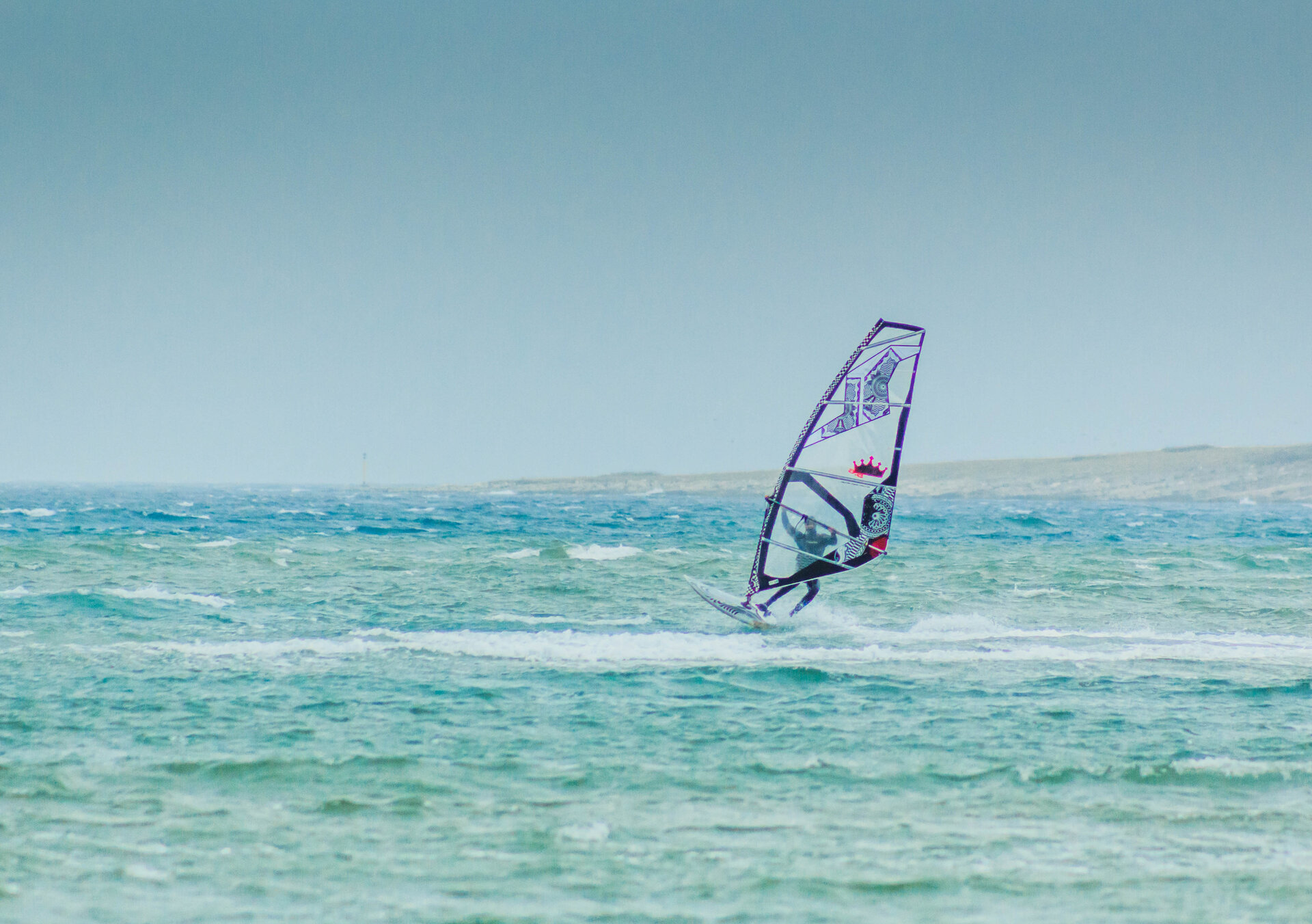
Digital Nomad Lanzarote: An Honest Local Guide for 2026
Lanzarote keeps showing up on digital nomad shortlists alongside Madeira, Tenerife and Gran Canaria, and the reasons are obvious enough: four-hour flights from northern Europe, no time-zone offset from the UK and Ireland, Spain’s Digital Nomad Visa, near-universal fibre in the main towns, and the kind of weather where the words “Sunday in February” do not produce a wince. The reasons it does not show up higher on those shortlists are quieter and more important. This guide is a local take from hosts who run a vacation rental for remote workers in Costa Teguise: what Lanzarote is and is not for a digital nomad in 2026.
Five possible bases on the island, the actual internet speeds at the spaces we know about, the monthly cost of living, the Spanish DNV in plain English, the community and the cons. If you are deciding between Lanzarote and Madeira or between Lanzarote and Las Palmas, the comparison table on our Workation Lanzarote landing page covers it more briefly. This post goes deeper.
Why Lanzarote keeps showing up on nomad lists
A short list, in order of how much each one matters once you are here.
- Time zone. Lanzarote runs on Western European Time, the same as the UK and Ireland. An English working day stays an English working day, no offset to manage. For US East Coast clients, the overlap window is 13:00 to 18:00 local. Workable.
- Flights. ACE (Lanzarote Airport) takes direct flights through every month from London Gatwick, Stansted and Luton, Manchester, Dublin, Berlin, Hamburg, Düsseldorf, Munich, Amsterdam, Brussels, Paris, Milan, Rome and Madrid, with seasonal additions from Belfast, Edinburgh, Stockholm, Oslo and Copenhagen. Most are inside four hours.
- Tax regime. Sales tax in the Canary Islands is the IGIC at 7%, not mainland Spain’s 21% IVA. You feel it most at restaurants, in the gear shops and at the rental car desk. Combined with the DNV’s flat 24% IRPF for the first four tax years, the Canaries are a structurally cheaper place to be a non-EU remote worker than Madrid or Barcelona.
- Climate. Air sits between 18°C and 28°C across the year. The trade winds are persistent in summer but the absence of mainland-style humidity makes 28°C feel like 24°C. Winter is mild and dry. Rain is rare; calima (Saharan dust) is occasional in February and March.
- Infrastructure. FTTH fibre is the standard in Costa Teguise, Puerto del Carmen, Playa Blanca and Arrecife. Public hospitals and pharmacies are easy to access. The municipal bus network connects the main towns; a hire car opens up the island.
Lanzarote is not Bali on a budget and it is not Madeira with a nomad village. It is a working European island with an unusual landscape and good infrastructure, where a remote worker can do a normal week without it being a project.
The five possible bases for a digital nomad
The choice of town matters more here than on a bigger island, because the towns are genuinely different in character.
- Costa Teguise: residential, quiet at night, fibre everywhere, four walkable beaches, 15 minutes from the airport. The everyday choice for nomads who want calm and a working week that does not get derailed by holiday-strip noise. This is where we host. Detail in our Costa Teguise for digital nomads post.
- Arrecife: the capital. Urban, the densest community and the highest concentration of coworking and coliving on the island. The right answer if you want to live inside a proper Spanish city with a beach (Playa del Reducto) inside it.
- Famara: surf town in the north, 30 minutes by car from the airport. A coliving-and-coworking culture has grown around the surf scene. Spottier fibre, fine for emails, gambly for video calls. The right answer if surfing is a non-negotiable part of your week.
- Puerto del Carmen: the longest tourist strip on the island, the closest town to the airport (10 minutes), and where the swim and finish line of IRONMAN Lanzarote sit. Strong fibre, plenty of cafés, busier nightlife than Costa Teguise.
- Playa Blanca: quiet south-coast resort, 40 minutes from the airport, the launch point for the Fuerteventura ferry. Family-friendly, calmer beaches than the east coast, lower density of coworking.
For a head-to-head, Costa Teguise vs Puerto del Carmen and Costa Teguise vs Playa Blanca for families cover the two most common decisions. The Workation Lanzarote landing page has a five-row town comparison table with fibre, beaches, vibe and airport time.
Internet reality
Lanzarote is mostly fine on internet, with one exception.
- Costa Teguise, Puerto del Carmen, Playa Blanca, Arrecife: FTTH fibre is the standard. Home connections from major Spanish ISPs (Movistar, Vodafone, Orange and the cheaper resellers) start around 600 Mbps and top out at 1 Gbps. Cat6 ethernet at the desk is the difference between “fast” and “holds up on a call”.
- Arrecife coworking: Pitaya Coliving & Coworking advertises 300 Mbps fibre at the desks. Lanzarote Coworking (the longest-running on the island, founded 2015, 20 metres from Playa del Reducto) runs 100 Mbps symmetrical. The Square in central Arrecife runs fibre with private offices and shared spaces.
- Teguise town: Coworking Guru operates a 200 m² space in the historic centre with 1 Gbps symmetrical fibre, the fastest publicly advertised number on the island.
- Famara: the weak link. Fibre coverage is patchy outside the resort centre and most colivings (including Coworksurf) rely on bonded mobile data as a backup. Fine for email and Slack, occasionally frustrating for video calls.
A redundant connection (main fibre plus a bonded 5G mobile failover, or a second ISP) matters more here than it does in a city, because Canary ISP outages happen a couple of times a year and they tend to take the whole island offline at once. At our villa we run a backup line for this reason.
Coworking and coliving directory
The shortlist nomads use, with a one-line description each. Day passes run €12 to €18, monthly memberships €120 to €180.
- The Square (Arrecife). Central, fibre, private offices and shared spaces. Hosts the largest community of remote workers in Arrecife. coworkingthesquare.com.
- Lanzarote Coworking (Arrecife). Founded 2015, the longest-running on the island. Every desk has a sea view, 20 m from Playa del Reducto, 100 Mbps symmetrical fibre, 24/7 keycard access.
- Pitaya Coliving & Coworking (Arrecife, El Charco de San Ginés). Boutique coliving with a 300 Mbps coworking floor. Ergonomic chairs, standing desks, external monitors. Weekly community events (yoga, group hikes, surf trips). Coworking passes from around €70/week or €180/month at time of writing.
- Coworking Guru (Teguise town). 200 m² in the historic centre, 1 Gbps symmetrical fibre, Web3 and digital-art workshops. Eleven minutes from Famara beach.
- Coworksurf (Famara). Coworking-and-surf coliving packages. The right choice if you want surf in your week and you can accept the Famara fibre constraints.
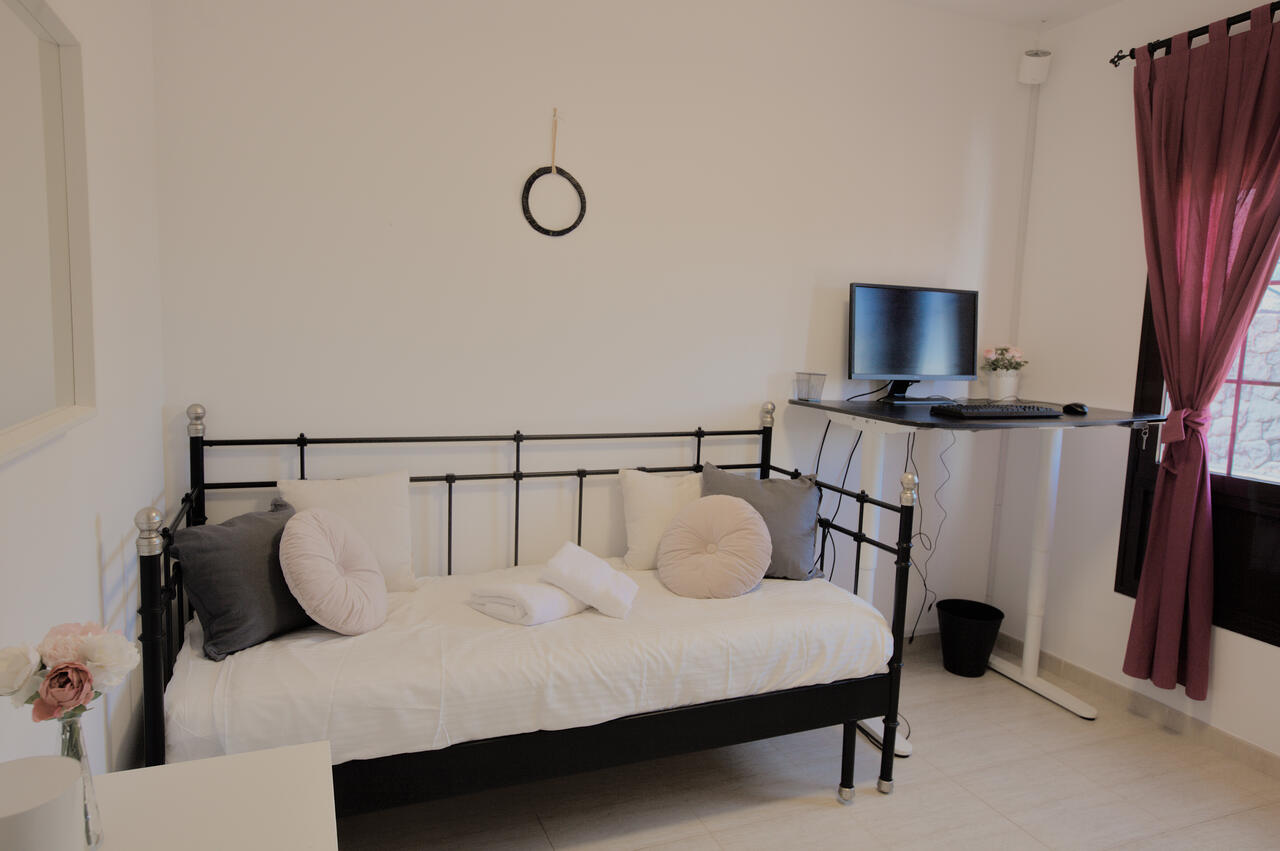
- The villa option (Costa Teguise). For longer stays where you want a private office instead of a shared one, our workation villa at Casa Los Alisios has a closed-door room with a motorised sit-stand desk, an Ikea Markus chair, 1 Gb fibre, Cat6 at the desk, mesh Wi-Fi and a backup connection. Not a coworking; a quiet alternative when calls matter.
For café-only days, the seafront promenades in Costa Teguise and Puerto del Carmen have stretches of cafés with decent Wi-Fi for an hour or two of focused work. Arrecife’s El Charco neighbourhood has the same.
Monthly cost of living, 2026
Realistic ranges for a working nomad, not the absolute cheapest the island can be done for.
| Item | Range |
|---|---|
| Medium-term accommodation, one person | €1,200–2,000 / month |
| Long-term flat (12-month contract) | €700–1,000 / month |
| Groceries (Spar, Lidl, Hiperdino, Mercadona) | €250–350 / month |
| Eating out, 2–3 times a week | €120–250 / month |
| Coworking day pass | €12–18 |
| Coworking monthly membership (Arrecife) | €120–180 |
| Unlimited-data mobile SIM | €15–25 / month |
| Hire car, mid-range, full month | €500–800 |
| Petrol, ~600 km with a hire car | €80–110 / month |
| Gym monthly | €30–50 |
One person, no hire car, eating mostly from the kitchen, using a coworking as a change of scene: roughly €1,800 to €2,500 a month all in. Two people in a one-bed: roughly €2,400 to €3,200 with two memberships and a shared car. The Canary Islands 7% IGIC instead of mainland Spain’s 21% IVA is the structural reason eating out and gear shopping feel cheaper than Madrid.
Spanish Digital Nomad Visa in plain English
EU and EEA citizens do not need it; freedom-of-movement rules apply. Non-EU citizens (UK, US, Canada, Australia, most of the world) need it if staying longer than 90 days. The basics:
- Eligibility: at least three months of work history with the employer or clients, a written contract or commercial relationship, a degree or three years of professional experience, max 20% Spanish-source income if self-employed.
- Income threshold: roughly 200% of the Spanish minimum wage, proven across the previous three months. Add around 75% per dependent. The SMI is set annually; confirm the current figure before applying.
- Tax: flat 24% IRPF on Spanish-source income up to €600,000 for the first four full tax years, instead of the standard progressive rates. Foreign-source income is generally not taxed in Spain during this window.
- Permit: three years initial validity, renewable for two more, then a path to long-term residency at five years. Family members can be added.
- Health insurance: required. Spanish public coverage if you contribute to social security, comprehensive private otherwise.
A standalone deep-dive on the DNV (with the current SMI figure, the document checklist, the typical timeline and the common mistakes) is the next post on our list. Until then, confirm current requirements with a Spanish immigration lawyer or gestor before you commit. Visa rules change.
Community and events
Smaller than Las Palmas (Gran Canaria) or Funchal (Madeira), but real.
- lanzarotedigitalnomads.com: the island-wide community hub with a public Facebook group, listings of activities and an active newcomer flow.
- Coworking Guru (Teguise town): runs Web3 and digital-art workshops, the closest thing to a regular “tech community” event on the island.
- Pitaya Coliving (Arrecife): weekly community programme inside the coliving (family dinners, yoga, group hikes, surf trips). Open to non-residents through their event pages.
- The Square (Arrecife): central enough that the “largest community of remote workers in Lanzarote” descriptor used in industry press is plausible. Day-pass community days every so often.
- Community shaped by sport: if you cycle, you will find your group within a week. The IRONMAN training scene runs through Puerto del Carmen and the LZ-1 corridor in spring; cycling clubs run weekly group rides out of Costa Teguise. Open-water swim crews meet at Las Cucharas. Trail runners use the Famara cliffs and the Wine Run / Famara Total course.
Realistic expectation: you will find your people but you may have to look for them. Lanzarote does not have a single Slack workspace the way Las Palmas does (yet). Most introductions happen through coworking spaces and sport clubs, not online.
The downsides
The things we tell guests at the kitchen table on day two.
- The community is smaller than Madeira or Las Palmas. If a 200-person nomad meetup every Thursday is what you are looking for, Lanzarote is not the answer. Las Palmas (Gran Canaria) and Funchal (Madeira) are bigger scenes with denser networking.
- Variety of food is limited. Spanish food, Canarian food, some Italian and British pub food in the resort strips. If you want Thai, Vietnamese, Korean and a serious vegan scene inside walking distance, choose Las Palmas or Lisbon.
- The trade winds are persistent. Strong, dry, daily from May to September. Most days are fine; some days they will give you a headache. Costa Teguise gets less of it than Famara or the north coast.
- Calima. Saharan dust events drop visibility and air quality for 24–48 hours, two or three times a year, mostly January to March. Asthma sufferers feel it.
- Public transport is limited. Buses connect the main towns but run on a sparse schedule outside Arrecife. Without a hire car, day trips to Timanfaya, La Geria and the north are a project.
- Distance from family / clients in Europe. Four hours feels short until you do it every six weeks. Domestic Spanish flights are cheap but inter-island flights to Tenerife and Gran Canaria are no longer the bargain they used to be.
- Nightlife is mostly the holiday strip. Costa Teguise is quiet at night. Puerto del Carmen has the Avenida de las Playas strip. Arrecife is real Spanish-city nightlife but it is a different kind of evening from what nomads in Lisbon or Berlin are used to.
Who Lanzarote is not for
If any of these are non-negotiable, choose a different base.
- You want a 500-person nomad community with daily events.
- You need a major city with international restaurants in walking distance.
- You want a low-cost-of-living spot to extend your runway. Lanzarote is reasonable, not cheap.
- You cannot stand wind on your face most afternoons.
- You want a 14-hour-flight-away “complete reset” trip. Lanzarote is short-haul European and structurally European in its day-to-day.
If none of those are dealbreakers, the island works.
If you are coming
A short checklist for the first trip.
- Pick your base: Costa Teguise for residential calm; Arrecife for community; Famara for surf. Most working nomads pick CT or Arrecife.
- Book a place with a real workspace, not a kitchen table. Either a villa with a closed-door office, a coliving with a private room, or a long-stay flat near a coworking.
- Time your visit to October or November if you have flexibility. February and March if you want it quiet and you do not mind cooler evenings.
- Join the Lanzarote Digital Nomads Facebook group two weeks before you arrive. Ask one specific question and you will get five offers of coffee.
- A hire car for the first week unlocks the island; a bus pass works for the second if you do not plan to leave Costa Teguise or Arrecife often.
If a closed-door office, 1 Gb fibre, a quiet residential street and a 10-minute walk to a wind-sheltered cove sound like the right setup for your working month, Casa Los Alisios in Costa Teguise is built for exactly this. For the deeper why and the full setup, see the workation villa post. For the wider picture of Lanzarote beyond the desk, 25 best things to do in Costa Teguise, best beaches in Costa Teguise and the best time to visit Costa Teguise are the three posts our guests read most.
Frequently Asked Questions
- Is Lanzarote good for digital nomads?
- Yes, with caveats. Lanzarote has near-universal fibre in the main resort towns, runs on Western European Time (no offset from the UK or Ireland), is a four-hour direct flight from most of northern Europe, has the Canary Islands' 7% IGIC sales tax instead of mainland Spain's 21% IVA, and offers Spain's Digital Nomad Visa to non-EU remote workers. The trade-offs are a smaller nomad community than Madeira or Las Palmas, an island that is quieter at night than the bigger Canary islands, and persistent afternoon trade winds.
- Where is the best base for digital nomads in Lanzarote?
- Costa Teguise for residential calm and walkable beaches with fibre everywhere; Arrecife for the urban scene and the densest coworking and coliving options; Famara for surf and a coliving-and-co-working culture (but spottier internet); Puerto del Carmen for nightlife and the airport; Playa Blanca for the south coast and a quieter family vibe. Most working nomads pick Costa Teguise or Arrecife.
- How fast is the internet in Lanzarote?
- In the main resort towns (Costa Teguise, Puerto del Carmen, Playa Blanca, Arrecife) FTTH fibre is the standard, with home connections from 600 Mbps to 1 Gbps. Coworking spaces publish their own numbers: Pitaya in Arrecife runs a 300 Mbps fibre, Lanzarote Coworking advertises 100 Mbps symmetrical, Coworking Guru in Teguise town has 1 Gbps symmetrical. Famara is the weak link, with patchy fibre and most colivings relying on bonded mobile data as a backup.
- Is there a digital nomad community in Lanzarote?
- Yes, but smaller than the ones in Las Palmas (Gran Canaria) or Funchal (Madeira). The community hub for the island is at lanzarotedigitalnomads.com, with a public Facebook group and irregular meetups. Coworking Guru in Teguise town and Pitaya in Arrecife both run their own events. The realistic expectation is that you'll find your people but you'll have to look for them. They don't all show up at one weekly happy hour the way they do in Las Palmas.
- What does a month in Lanzarote cost a digital nomad?
- Roughly €1,800 to €2,500 a month for one person living comfortably in 2026: €1,200 to €2,000 for medium-term accommodation, €250 to €350 on groceries, €120 to €250 eating out a few times a week, €15 to €25 for unlimited-data mobile, €120 to €180 for a coworking membership if you use one, plus optional hire car. Long-term annual rentals are cheaper at €700 to €1,000 a month but require a 12-month commitment.
- Do I need the Spanish Digital Nomad Visa to work from Lanzarote?
- EU and EEA citizens do not. Freedom-of-movement rules apply. Non-EU citizens staying more than 90 days need the DNV (or another residency route). The DNV requires proof of remote work for non-Spanish clients, income above roughly twice the Spanish minimum wage, comprehensive health insurance and a clean record. It grants three years initially, renewable for two more, with a 24% flat-rate IRPF on Spanish-source income for the first four tax years. Confirm current requirements with a Spanish immigration lawyer before applying.
- When is the best time of year to come as a digital nomad?
- October and November are the sweet spot. Sea at 22°C, air around 25 to 27°C in the day, trade winds easing from the August peak, and flights cheaper than the school holiday months. February and March are quiet but cool and occasionally hit by calima (Saharan dust). April and May are sport-heavy with IRONMAN Lanzarote. June to August is hot, windy and the most crowded; flights are most expensive.
- Can I just work from a café or do I need a coworking space?
- Both work. Café WiFi in Costa Teguise and Arrecife is generally fine for emails and Slack but variable for video calls. Fine for an hour, frustrating for a full day. A coworking membership (€120 to €180 per month) buys you reliable fibre, ergonomic seating, a community and a place to take serious calls. Most working nomads use a coworking 2-3 days a week and the kitchen table or a café the rest of the time.
Planning your trip? Book Casa Los Alisios