What to Eat in Lanzarote: A Canarian Food Guide
Canarian food is built on what survives the climate: salt-boiled potatoes, salted fish, rabbit, goat cheese, toasted grains and a single white grape that grows in volcanic ash. After the 1730 to 1736 Timanfaya eruption buried a quarter of the island under lava, farmers worked with what was left. Most of what you eat in Lanzarote today still traces back to that landscape.
We host guests at Casa Los Alisios in Costa Teguise and this is the food guide we send when someone asks what they actually need to try, where the dishes come from and where to find the local versions. It pairs with our La Geria wine guide on the drinking side.
Papas arrugadas con mojo
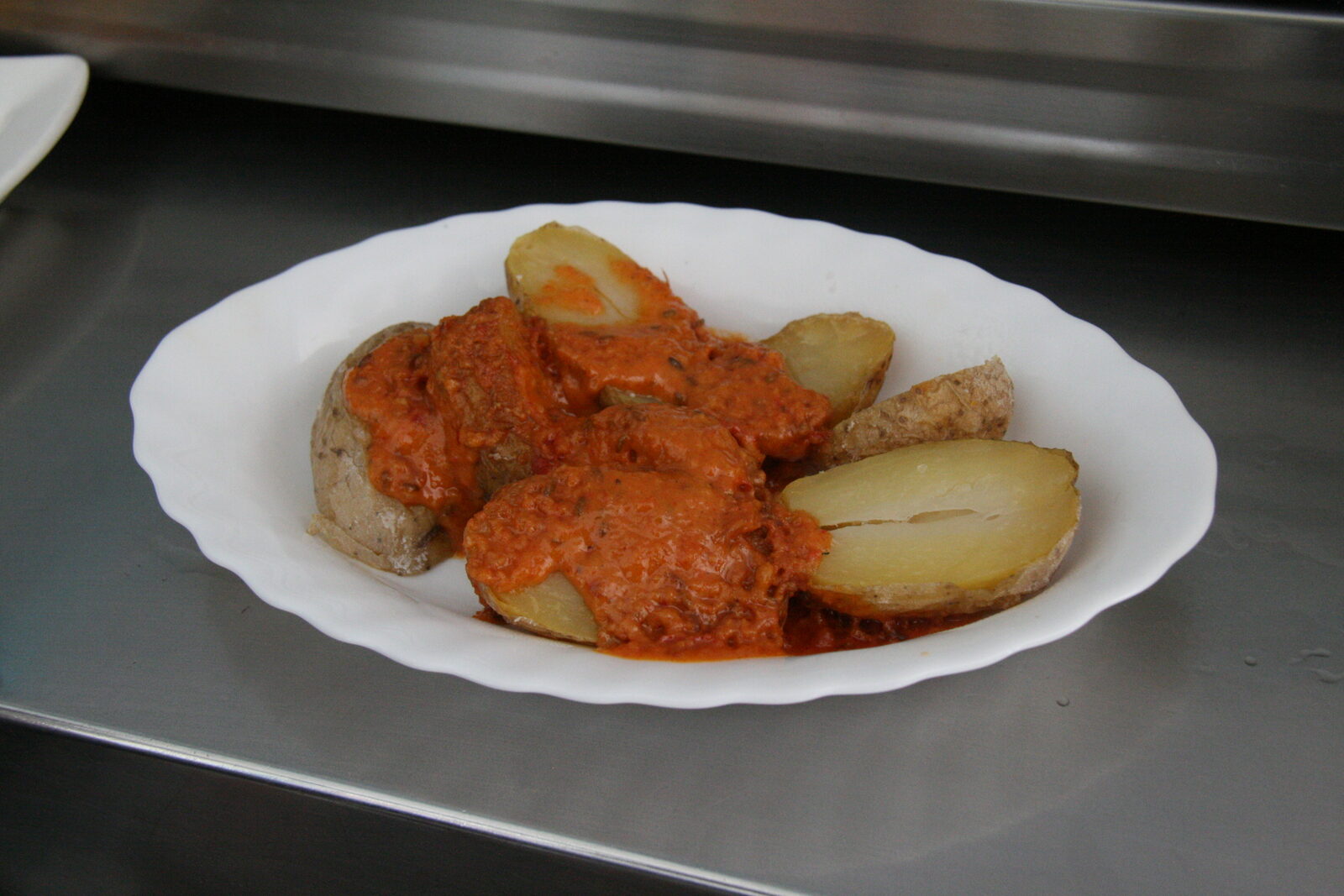
The dish you will see on almost every menu on the island. Small potatoes boiled unpeeled in heavily salted water, then dried in the pan until a fine white salt crust forms on the skin. The traditional varieties are the papas antiguas, particularly papa bonita and papa negra. Since 2011 they hold a Protected Designation of Origin, Papas Antiguas de Canarias, covering 29 varieties across the archipelago, four of them grown on Lanzarote.
The origin story is practical. Potatoes arrived in the Canaries from the Andes in the 1550s, and freshwater was scarce, so islanders boiled them in seawater. Today most kitchens use tap water with a heavy handful of coarse salt. Eaten with two small bowls of mojo on the side.
Mojo rojo and mojo verde
The two sauces that come with almost everything. Mojo rojo is built on dried red pepper (pimienta picona is the local variety, often grown on La Palma), garlic, paprika, cumin, olive oil, vinegar and salt, sometimes with a little ñora or cayenne for heat (mojo picón). Mojo verde swaps in green pepper plus coriander or parsley for a lighter, fresher sauce. The word comes from the Portuguese molho, meaning sauce.
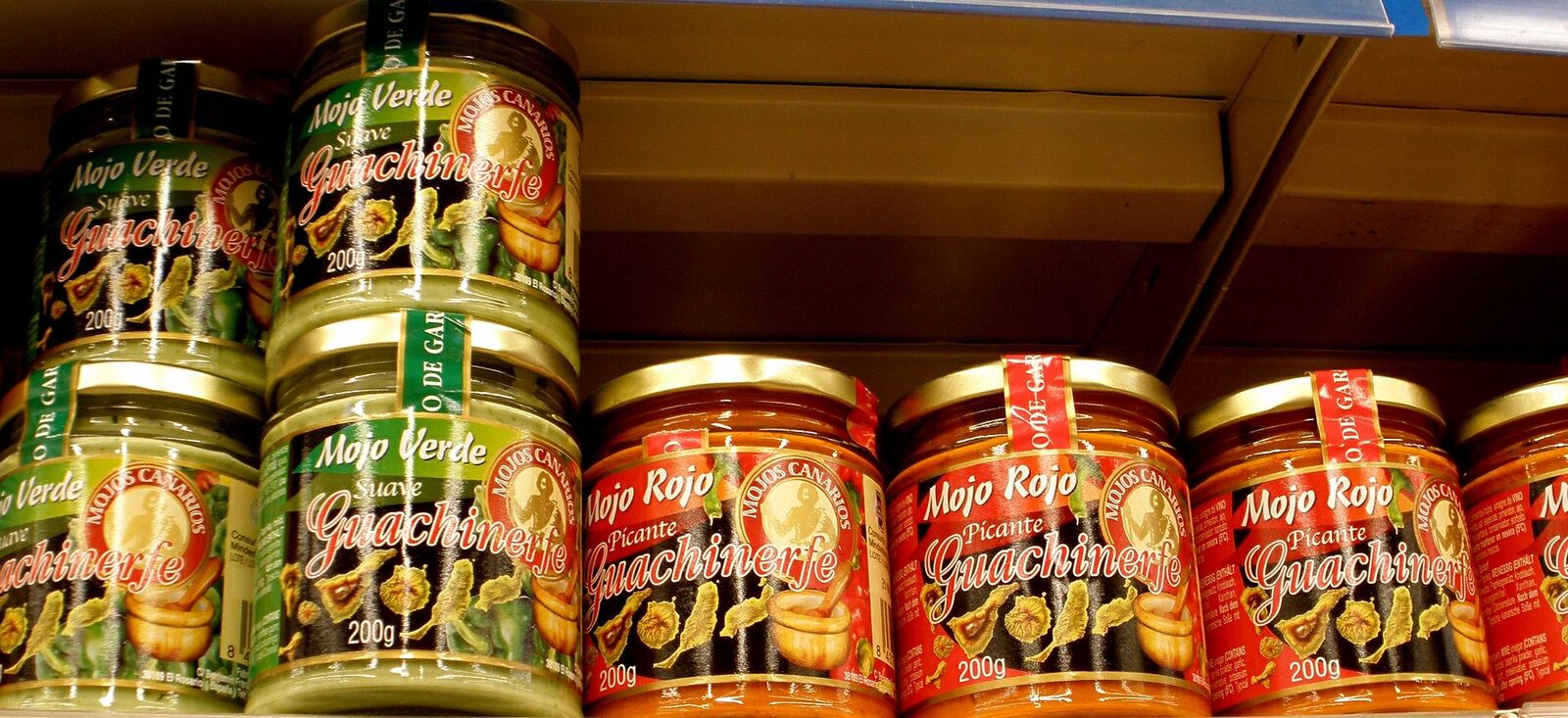
The rule of thumb on the island: mojo rojo with potatoes, meat and salted fish, mojo verde with fresh fish. In practice most tables get a small dish of each and you mix as you go. Both keep for a week or two in the fridge in a sealed jar and travel well as a souvenir from the Teguise market.
Gofio
Gofio is toasted-grain flour, and it is the oldest food on the island. The pre-Hispanic Canarians (the Majos on Lanzarote) ground roasted barley between basalt stones to make it, mixed it with goat’s milk and honey, and ate it as a daily staple. After Spanish colonisation in the 15th century corn (millo) arrived from the Americas and became the dominant grain. Today most gofio is a wheat-corn mix, with chickpea and lupin versions still made on Fuerteventura.
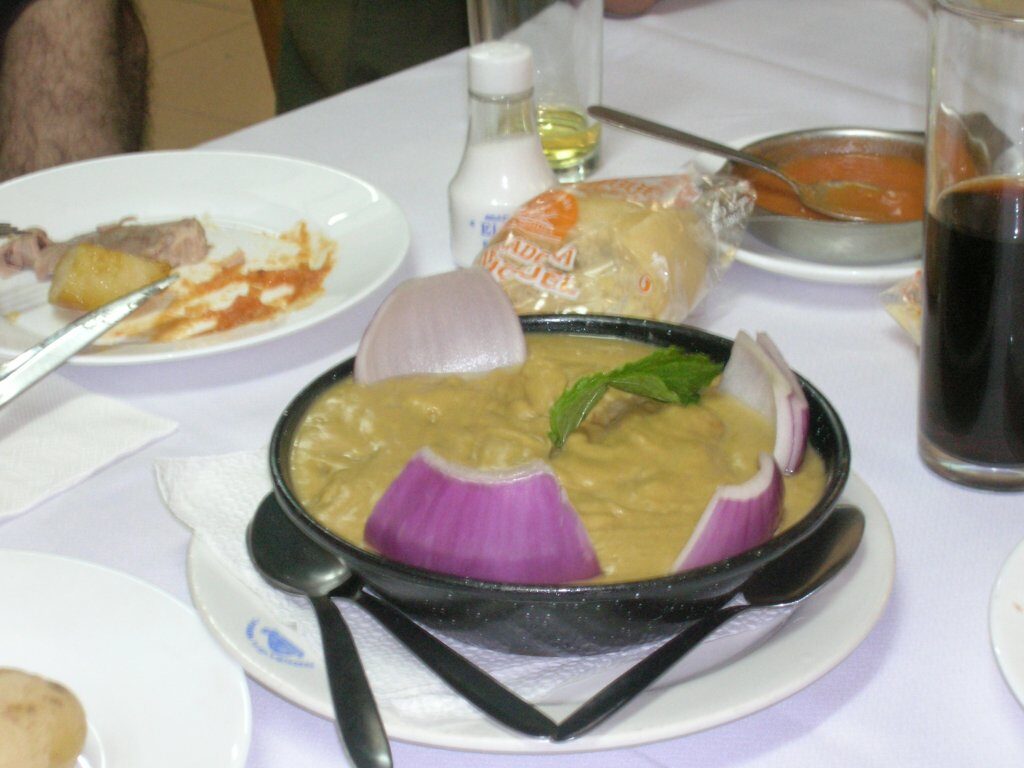
Two preparations you will see on menus. Gofio escaldado is the flour whipped into hot fish broth with onion to a hummus-like puree, eaten as a starter with raw onion on top. Pella de gofio is a kneaded ball of gofio, water and salt that gets sliced like bread and served alongside sancocho on Good Friday. Most Canarian breakfasts also still involve a spoonful stirred into milk or coffee.
Cherne and sancocho
The cherne is the local name for the Atlantic wreckfish (Polyprion americanus), a chunky white member of the grouper family found in deep Atlantic water from the Canaries up to Norway. The flesh is dense, white and close in texture to cod, and it is the fish at the centre of Canarian Easter cooking.
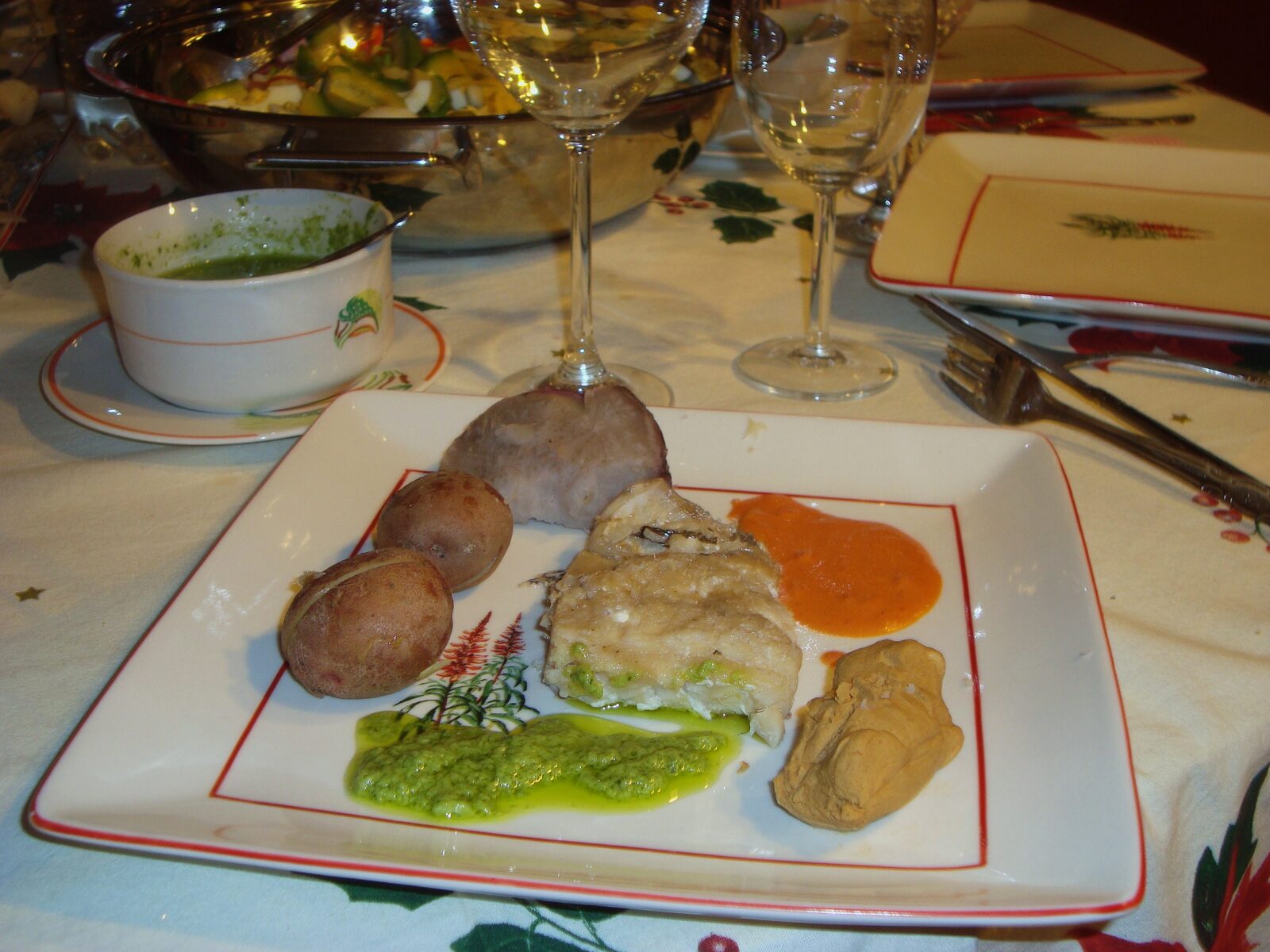
Sancocho canario is the Good Friday dish. Salted cherne soaked in fresh water for two days with the water changed four times a day, then boiled with potatoes and orange-fleshed batata (sweet potato), and served on a plate with mojo rojo and a slice of pella de gofio. It is eaten outside Holy Week too but the Easter version is the one most island families build the weekend around. If you are here in March or April, almost every Canarian restaurant runs it as a special.
Vieja
The vieja (Sparisoma cretense) is the most characteristic Canarian fish and the one most visitors miss because the name does not translate cleanly. It is a parrotfish, with strong fused teeth and bright sex-differentiated colouring (males grey-green, females grey, red and yellow), and the largest specimens in the Atlantic are caught in the waters off Lanzarote and Fuerteventura. The meat is delicate, slightly sweet and closer to seafood than to most white fish.
The classic preparation is vieja a la espalda, butterflied open, oven-roasted skin-side down and finished with a garlic-and-parsley oil. It also turns up grilled whole and in caldo de pescado. Order it at any seafood-led restaurant in El Golfo, Arrieta or Orzola and you are eating the dish locals queue for.
Conejo en salmorejo
The Canarian salmorejo has nothing to do with the cold tomato soup from Córdoba. Here it is a rabbit dish. Pieces of rabbit are marinated for between four and twelve hours in a sauce of crushed garlic, paprika, cumin, olive oil, white wine vinegar, white wine, bay, rosemary and thyme, then browned in a pan and simmered slowly until tender. Served with papas arrugadas, the marinade reduced to a glossy sauce over the top.
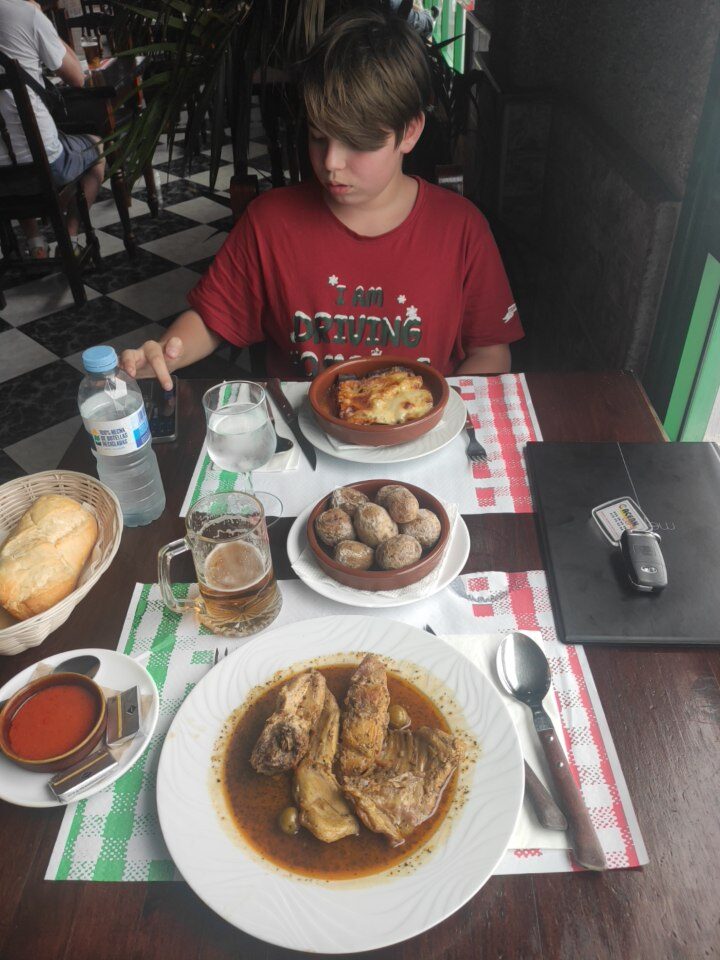
Rabbit was introduced by Spanish settlers and adapted well to the volcanic terrain, where it has been a cheap protein for centuries. The dish is on most traditional menus on the island and pairs well with a glass of Listán Negro from La Geria.
Queso de cabra: Lanzarote’s cheese scene
A small but quietly serious cheese island. The famous Canarian goat cheese with a Protected Designation of Origin is Queso Majorero, which is Fuerteventura’s, not Lanzarote’s, and the distinction matters at the cheese counter. Lanzarote has its own producers and they have been collecting national prizes.
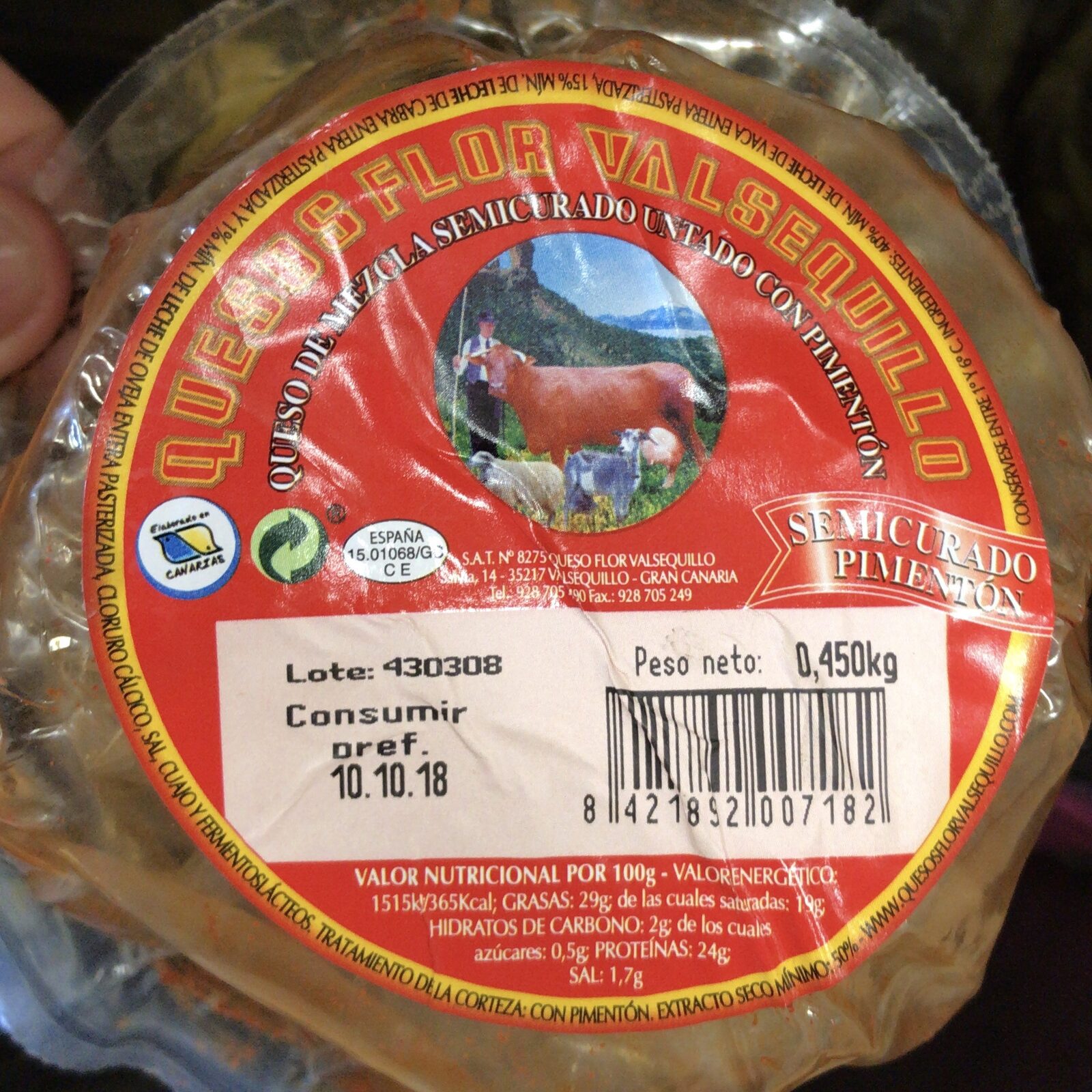
Finca de Uga, in the village of Uga at the foot of La Geria, was set up in late 2006 and works with around 300 Majorera goats, 300 Canary sheep and 30 Jersey cows. Their aged cow’s milk cheese, Don Nicolás, was named Best Cheese of Spain in 2024 after winning Best Cheese of the Canaries in 2023. You can buy the full range at the Stratvs bodega shop in La Geria.
Quesería Montaña Blanca is the small goat-milk dairy in San Bartolomé. They make fresh, soft, semi-cured and cured goat cheeses, sold either plain or rolled in paprika, gofio, curry or Provençal herbs. The cured-with-paprika version is the souvenir most guests carry home.
For the easiest tasting, order queso de cabra asado: a slab of semi-cured goat cheese pan-grilled until the surface browns, with a bowl of mojo verde on the side and a drizzle of palm honey. It is the most Canarian way to start a meal.
Bienmesabe, frangollo and truchas de batata
Three desserts that turn up across the Canaries and on most Lanzarote menus.
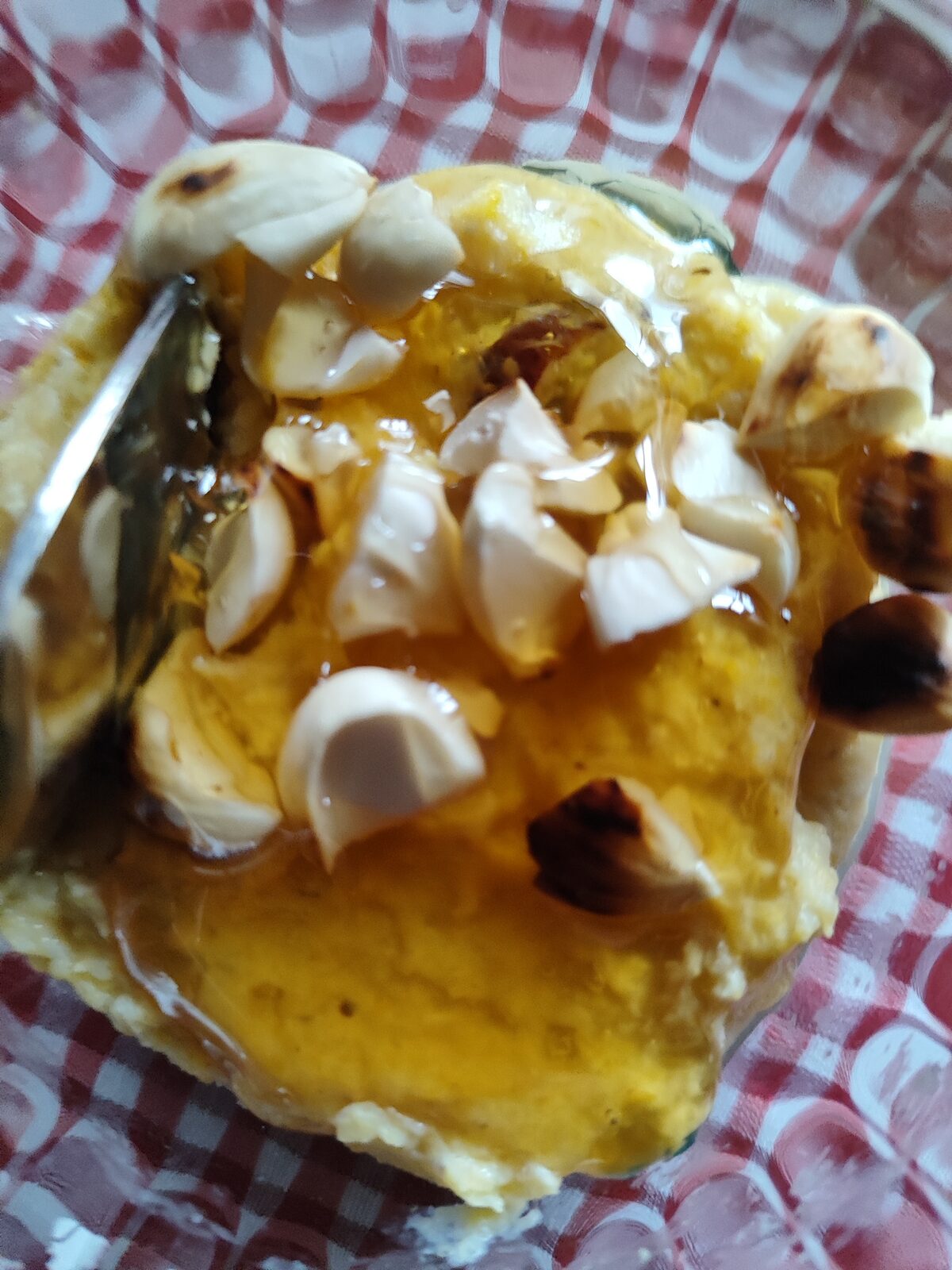
Bienmesabe literally means “tastes good to me”. A thick almond-and-honey cream made from ground almonds, honey, sugar and egg yolks. Its roots go back to Nazari Al-Andalus, where Moorish kitchens made a similar sweet, and it crossed to the Canaries with Spanish settlers. La Palma still has the strongest tradition and exports it across the archipelago. It is usually served as a topping for vanilla ice cream or stirred into yoghurt.
Frangollo is a creamy pudding of corn flour (millo, the Canarian word for maize), milk, sugar, lemon zest, raisins, almonds and cinnamon, set into a small bowl. The name comes from the Latin frangere, to break, after the milling step. It is eaten across the year but turns up most at Christmas. Sweet, comforting, closer to rice pudding than to anything baked.
Truchas de batata are small sweet pastries shaped like a Cornish pasty, filled with mashed sweet potato, sugar, almonds and lemon zest, or with cabello de ángel (pumpkin jam). They are the Canarian Christmas dessert and you will see trays of them in every bakery in Arrecife and Costa Teguise from late November through early January.
What to drink
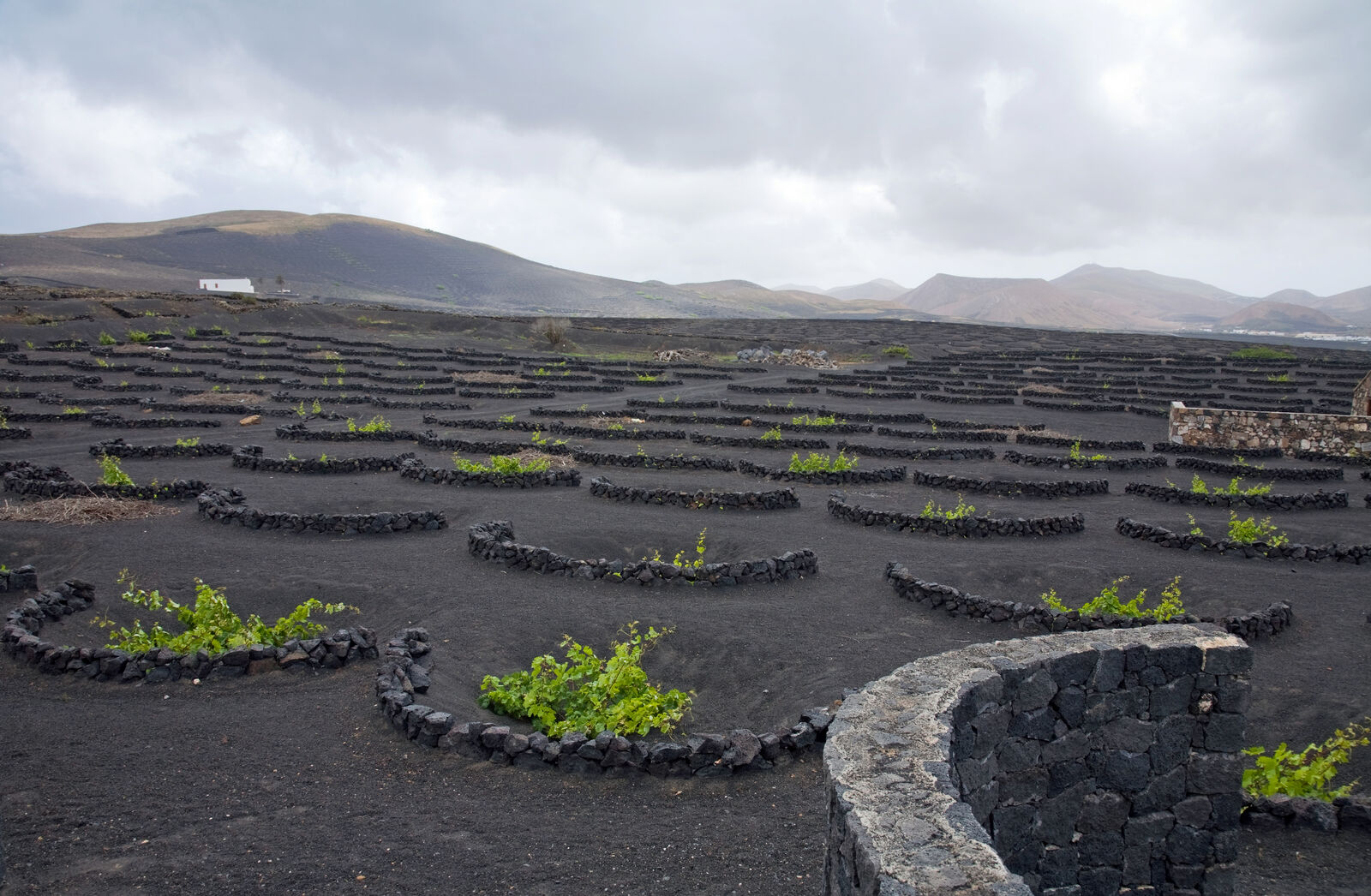
Malvasía Volcánica is the wine to focus on. It is the white grape that grows almost exclusively on Lanzarote, in the pits of black volcanic ash in La Geria, and produces dry, mineral whites with a saline finish that tastes of the place. The appellation is D.O. Lanzarote, set up in 1993, and covers about 1,900 hectares of vineyard across Yaiza, Tías, Tinajo, San Bartolomé and Teguise. Listán Negro is the main red, lighter and slightly smoky.
Ron miel is the Canarian honey rum, given a Geographic Designation in 2005 with a minimum 2% honey by volume. Arehucas in Arucas on Gran Canaria is the dominant producer. The distillery opened in 1884 and is one of the oldest in Spain. Served cold in a small glass after dinner. Soft, sweet, slightly medicinal.
Barraquito is the Canarian coffee cocktail, and it is a Tenerife invention from mid-20th century Santa Cruz. A layered glass of condensed milk at the bottom, then a shot of Licor 43, then espresso, then steamed milk, with cinnamon and a strip of lemon peel on top. Ask for it as a “barraquito” in Lanzarote and you will get the simpler version with just condensed milk and milk; ask for “barraquito especial” to get the layered Licor 43 original.
Flor de Sal de Janubio
The single Lanzarote ingredient most likely to end up in your suitcase. The Salinas de Janubio sit on the southwest coast, a few kilometres north of Playa Blanca, where the 1730 Timanfaya eruption sealed a coastal lagoon. In 1895 the Janubio families built the largest artisanal salt flats in the Canaries on the back of it, and they are the only ones still in full commercial operation today. They produce about 75% of all the salt made in the Canary Islands, with a season that runs roughly May to October when the sun does the evaporation work.
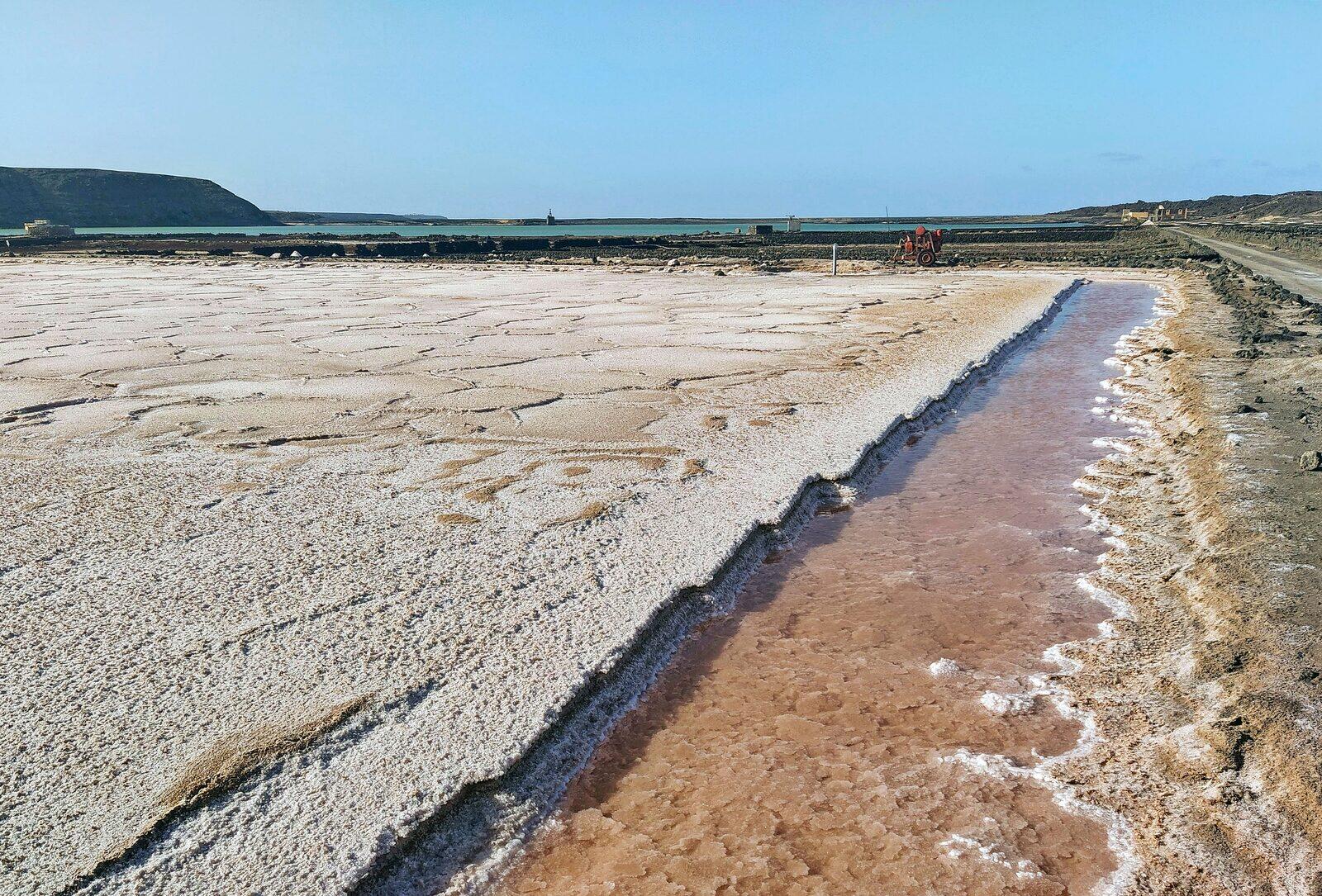
The flagship is Flor de Sal, the thin crust of salt that forms on the surface of the pans on calm mornings, harvested by hand and dried on its own. It won the Grand Gold Medal at Agrocanarias in 2019 and is reliably microplastic-free thanks to the natural lagoon barrier. Buy it at the on-site shop, at the Teguise market, or through salinasdejanubio.com if you want it shipped. It is the easiest way to taste the island on a plate back home.
Where to actually try this food in Costa Teguise
A full restaurants post is in the works, but a quick orientation. Pueblo Marinero and the seafront around Playa de las Cucharas have the highest concentration of restaurants and most of them serve at least a few Canarian classics: papas con mojo, croquettes, grilled cheese, fresh fish. For sancocho, conejo en salmorejo and vieja the better picks tend to be the smaller restaurants inland in San Bartolomé, Teguise town and the fishing villages of Arrieta and Orzola. We send guests to the Teguise Sunday market (09:00 to 14:00) for cheese, mojo, gofio and salt to stock the villa kitchen, and the new Lidl at Calle Las Piteras 201B (a 5 minute walk from Casa Los Alisios, opened in August 2025) covers the everyday basics.
If you would rather cook a Canarian meal yourself, the villa kitchen is fully equipped, the best things to do in Costa Teguise post lists the closest food shops and bakeries, and the top things to see in Lanzarote guide covers the markets and bodegas worth a stop on a slow drive.
Image credits
- Papas arrugadas con mojo by Tamorlan on Wikimedia Commons, CC-BY-SA 3.0.
- Mojo rojo y verde by Zarateman on Wikimedia Commons, CC0 1.0 Public Domain.
- Sancocho canario by Canario1 on Wikimedia Commons, CC-BY-SA 4.0.
- Conejo en salmorejo by Fry72 on Wikimedia Commons, CC-BY-SA 4.0.
- Canarian cheese by Triplecaña on Wikimedia Commons, CC-BY-SA 4.0.
- Gofio escaldado by barraquito on Wikimedia Commons, CC-BY-SA 2.0.
- Frangollo by Mentxuwiki on Wikimedia Commons, CC-BY-SA 4.0.
- Salinas de Janubio by Alberto-g-rovi on Wikimedia Commons, CC-BY 4.0.
Frequently Asked Questions
- What is the typical food of Lanzarote?
- The everyday Canarian classics: papas arrugadas (salt-boiled wrinkly potatoes) with mojo rojo and mojo verde, sancocho (salted cherne with sweet potato), conejo en salmorejo (marinated rabbit), gofio (toasted-grain flour), grilled goat cheese with mojo, and Malvasía Volcánica wine from La Geria. Dessert is usually bienmesabe, frangollo or truchas de batata.
- What is mojo sauce made of?
- Mojo rojo is built on red pepper, garlic, paprika, cumin, olive oil, vinegar and salt. Mojo verde swaps in green pepper plus coriander or parsley. Rojo goes with meat and potatoes, verde with fish. The word comes from the Portuguese molho, sauce, and the two mojos are the foundation of almost every Canarian plate.
- Is queso majorero from Lanzarote?
- No. Queso Majorero is Fuerteventura's protected-origin goat cheese, not Lanzarote's. Lanzarote has its own producers, including Finca de Uga in the village of Uga (whose Don Nicolás aged cow's milk cheese was named Best Cheese of Spain in 2024) and the small goat-milk dairy Quesería Montaña Blanca in San Bartolomé.
- What wine should I drink in Lanzarote?
- Malvasía Volcánica, a white grape that grows only in the Canary Islands and almost entirely in La Geria. Ask for the seco (dry) version at any bodega in the valley. Listán Negro is the main red. Most of the island's bottles carry the D.O. Lanzarote appellation and come from vines planted in pits of black volcanic ash.
- Where can I buy local food in Lanzarote?
- The Teguise Sunday market (09:00 to 14:00) is the biggest, with stalls for cheese, mojo, gofio, salt and wine. Bodegas in La Geria sell their own bottles. Salinas de Janubio sells Flor de Sal direct at the salt flats and online. Spar and Lidl in Costa Teguise carry the everyday basics for self-catering.
Planning your trip? Book Casa Los Alisios


.jpg)