Lanzarote or Tenerife: Honest Comparison for 2026
Lanzarote and Tenerife are the two Canary Islands that come up most often when northern Europeans plan a winter sun week. They share an ocean, a time zone and similar flight times, but they are not interchangeable. One is small, dry and shaped by a single architect’s vision. The other is large, varied, and home to the highest peak in Spain.
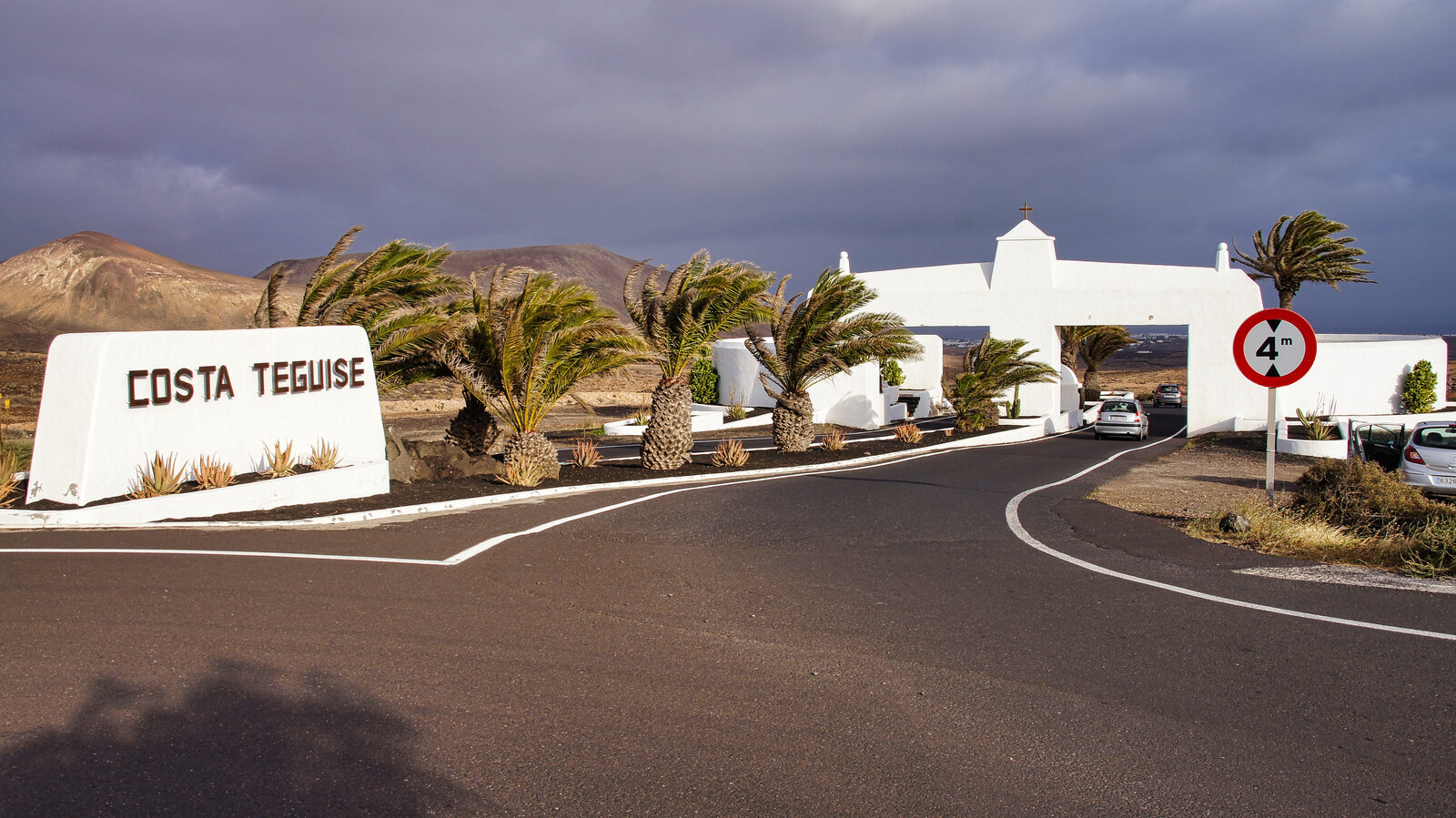
We live in Costa Teguise and host Casa Los Alisios. Guests often arrive having spent months on travel forums comparing the two before booking. This is the comparison we wish those forums had given them, written from the Lanzarote side but trying to be fair to Tenerife, which we visit a few times a year.
Quick comparison: Lanzarote vs Tenerife
| Lanzarote | Tenerife | |
|---|---|---|
| Area | 846 km² | 2,034 km² |
| Length end to end | 60 km | 80 km |
| Population (2024) | 163,230 | 955,063 |
| Tourists in 2024 | 3.3 million | 7.4 million |
| Highest point | Peñas del Chache (672 m) | Mount Teide (3,715 m) |
| Airports | 1 (ACE) | 2 (TFS south, TFN north) |
| Flight from London | ~4 h 14 min | ~4 h 27 min |
| Driving end to end | 1 hour | 2 hours plus |
| Climate | Drier, ~150 mm rain, 20–29°C | More rainfall, microclimates, 18–26°C |
| Sand colour | Mostly blonde / golden | Mostly black volcanic, with one big golden exception |
| Signature site | Timanfaya National Park, La Geria wine country | Mount Teide National Park, Anaga laurel forest |
| UNESCO status | Whole-island Biosphere Reserve (1993) | Teide National Park World Heritage Site (2007) |
| Building height rule | No higher than two storeys (Manrique principle) | No island-wide rule, high-rise hotels common in the south |
| Best for | Slow weeks, design lovers, calm beaches, low-key family stays | Variety, hiking Teide, big resort experiences, waterparks |
How do Lanzarote and Tenerife compare in size?
Tenerife is two and a half times larger. At 2,034 km² it is the biggest of the Canary Islands; Lanzarote at 846 km² is the fourth largest. Population follows: 955,063 people live on Tenerife, six times more than the 163,230 on Lanzarote.
That ratio shapes the holiday. On Lanzarote you can drive end to end in an hour. From Costa Teguise to Famara is 20 minutes, to Timanfaya 30 minutes, to Playa Blanca 35 minutes. On Tenerife the same kind of drives take two to three times longer. Crossing from Los Cristianos in the south to the Anaga Rural Park in the northeast takes most of a morning. If your idea of a holiday is a low-effort base with everything in short range, Lanzarote wins. If you want a road-trip island with two coastlines and a real difference between north and south, Tenerife rewards you for the extra driving.
Which has the warmer, sunnier climate?
Lanzarote is the warmer, drier island. Summer averages run around 29°C, winter around 20°C. Tenerife averages 26°C in summer and 18°C in winter, with more humidity and noticeably more rainfall. Lanzarote sits 125 km off the Saharan coast and feels it: arid, scrubby, and short on cloud cover.
Tenerife’s climate is more complicated than a single number. The south coast (Costa Adeje, Los Cristianos) is dry and sunny on most days. The north (Puerto de la Cruz, La Laguna, the Anaga peninsula) is cooler, greener, and often under cloud carried up by the trade winds. The Anaga laurel forest gets around 900 mm of rain plus fog drip a year and looks like Madeira, not the Sahara. This is part of Tenerife’s appeal if you like microclimates and hiking. It is the opposite of what Lanzarote offers.
Which has the better beaches?
The answer depends on what kind of beach you want.
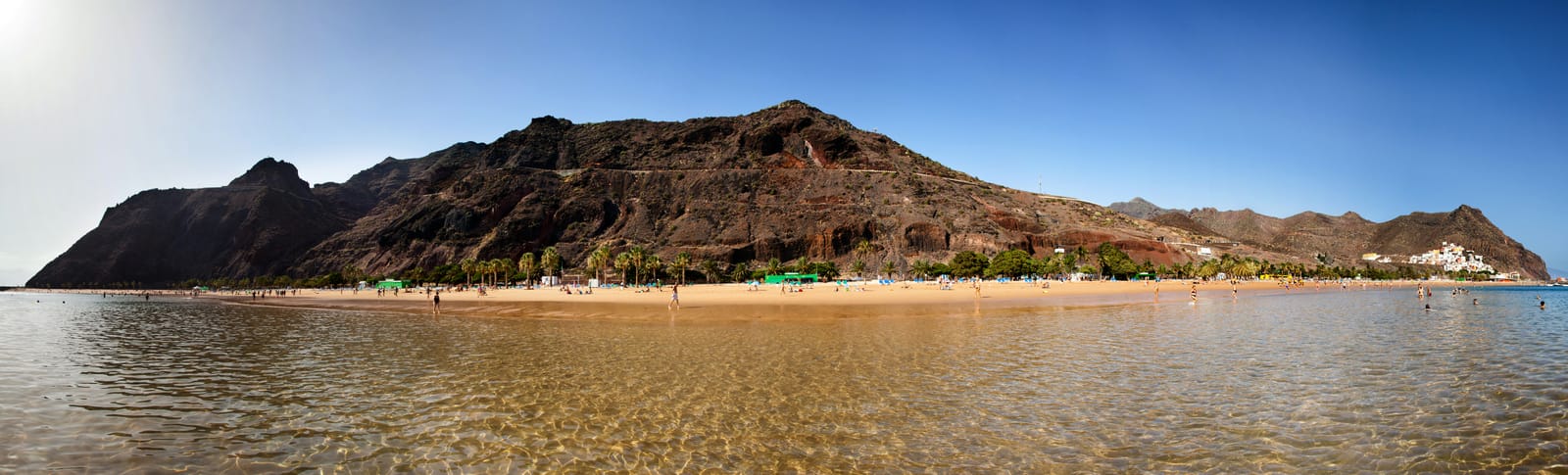
Tenerife is mostly black volcanic sand. That includes the popular beaches in Los Cristianos, Las Américas and Puerto de la Cruz. The one big exception is Playa de Las Teresitas on the northeast coast, where around 270,000 tonnes of golden sand were shipped in from the Sahara in 1973 to create a 1.3 km artificial beach with a breakwater for calm swimming. It is the most photographed beach on the island and one of the few golden options.
Lanzarote has more blonde-sand bays for its size. Famara is a 6 km blonde-sand crescent on the north coast, the surf beach. Playa Blanca in the south has a string of calm white-sand coves including Papagayo. Costa Teguise has five small bays in 2 km, including Playa del Jablillo and Playa El Ancla, both shallow and good for kids. None of them are 1.3 km long like Las Teresitas, but you do not need to drive 40 minutes from your hotel to find them.
For sunbathing volume on long sand, Tenerife south wins. For variety in a short walk and calmer water with kids, Lanzarote’s east coast wins.
What about Mount Teide vs Timanfaya and La Geria?
This is where the two islands diverge most. Tenerife has Mount Teide. Lanzarote has the Manrique landscape.
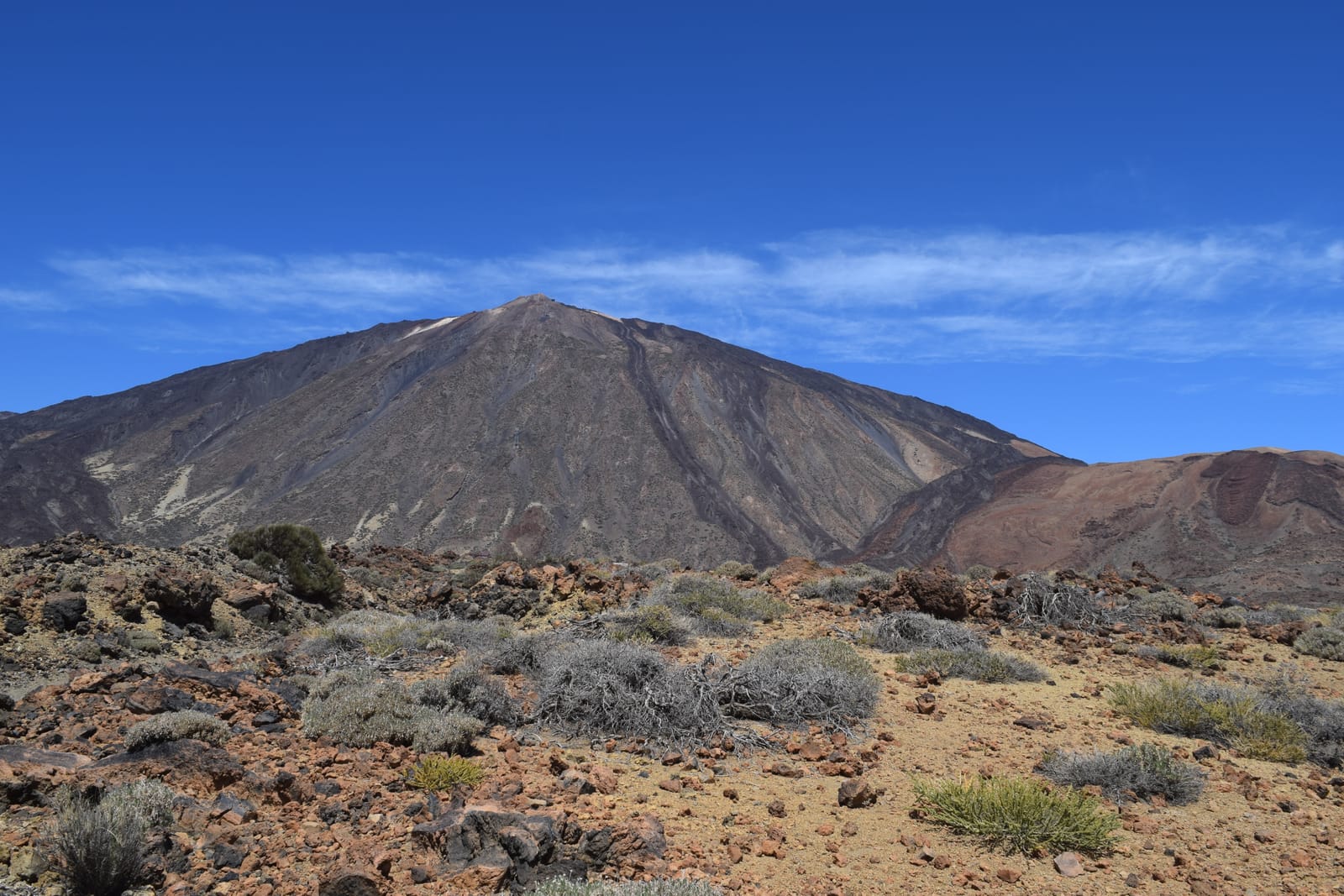
Mount Teide is 3,715 m, the highest peak in Spain and the third-tallest volcano in the world measured from its ocean-floor base. The summit is reachable by cable car (with a permit for the final 200 m) and the Las Cañadas caldera around it sits at 2,100 m, a flat plateau of dust and pumice. Teide National Park is the most visited national park in Spain and Europe, drawing over 5 million visitors in 2024. UNESCO listed it as a World Heritage Site in 2007.
Lanzarote does not have a Teide. The highest point, Peñas del Chache, is 672 m. What Lanzarote has instead is a landscape designed by César Manrique (1919–1992), the artist and architect who shaped the island’s tourism from the 1960s on. He pushed through a rule that no building should be higher than two storeys and that none should be painted anything but white. He built attractions into volcanic tubes and caves: Jameos del Agua, Cueva de los Verdes, Jardín de Cactus, Mirador del Río. On 7 October 1993, the year after his death, UNESCO declared Lanzarote a Biosphere Reserve. It was the first whole inhabited island to be given the status.
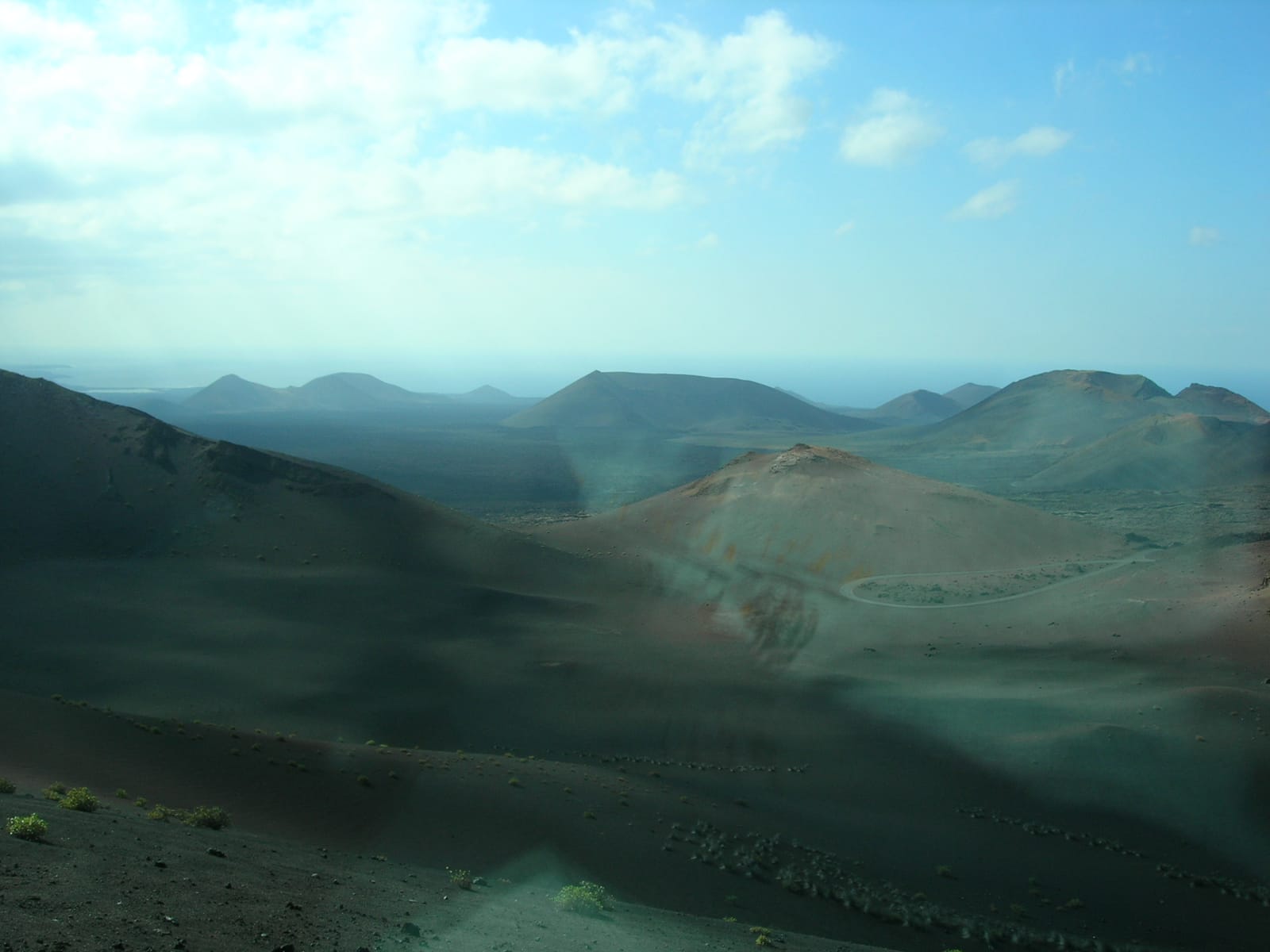
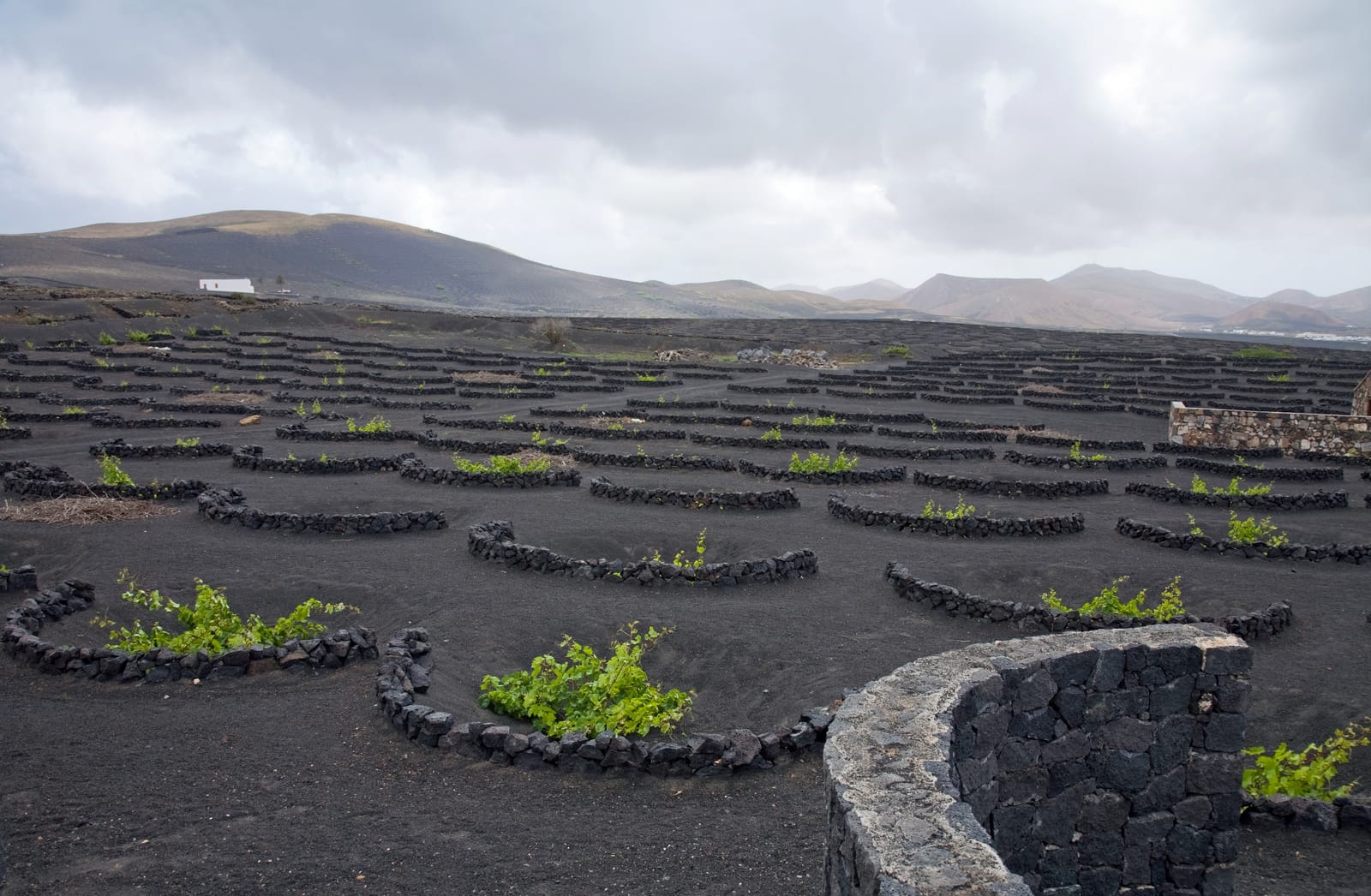
Add the Timanfaya National Park with its 1730s eruption fields and the La Geria wine region where vines grow in single-vine pits dug into black lapilli, and Lanzarote’s signature site list reads differently from Tenerife’s. Teide is taller and more dramatic. Manrique’s island is smaller and more curated.
Which is better for families?
Tenerife for breadth, Lanzarote for ease.
Tenerife has the heaviest concentration of family attractions in the Canaries. Siam Park, south of Los Cristianos, has been voted the world’s best water park by TripAdvisor users for ten years running, most recently in 2024. Loro Parque in Puerto de la Cruz combines aquarium, zoo and live animal shows. There are dolphin trips, jeep safaris, and a Teide cable car at the high end. If your family wants a different big day out for a week and you do not mind driving 30 to 60 minutes between them, Tenerife is hard to beat.
Lanzarote runs a smaller list at a smaller scale. Aquapark Costa Teguise covers the water-slides itch. Rancho Texas does animal shows and pony rides. The Manrique sites are more cultural-trip than thrill-park. The win is that everything is 30 minutes’ drive from a single base. With small kids and buggies that matters: less time in the car, more time at the beach. The Costa Teguise promenade is buggy-friendly end to end, which a lot of Tenerife resorts are not.
For Casa Los Alisios specifically, the villa sleeps six in three bedrooms with a pool, padel and tennis on the same residential complex, so the kids-busy-while-parents-rest balance is set up before you arrive.
Which feels less crowded?
Tenerife had 7.4 million tourists in 2024 against Lanzarote’s 3.3 million. On a per-square-kilometre basis the visitor density is similar, but the concentration is different. Tenerife’s south coast (Adeje, Arona) packs holidaymakers into a 20 km strip; in three Tenerife municipalities, foreign-born residents now outnumber locals. In April 2024, around 200,000 Canarians joined protests against the tourism model, and Los Cristianos saw 230 sunbeds defaced with anti-tourism graffiti in December 2024. The pressure is real and visible.
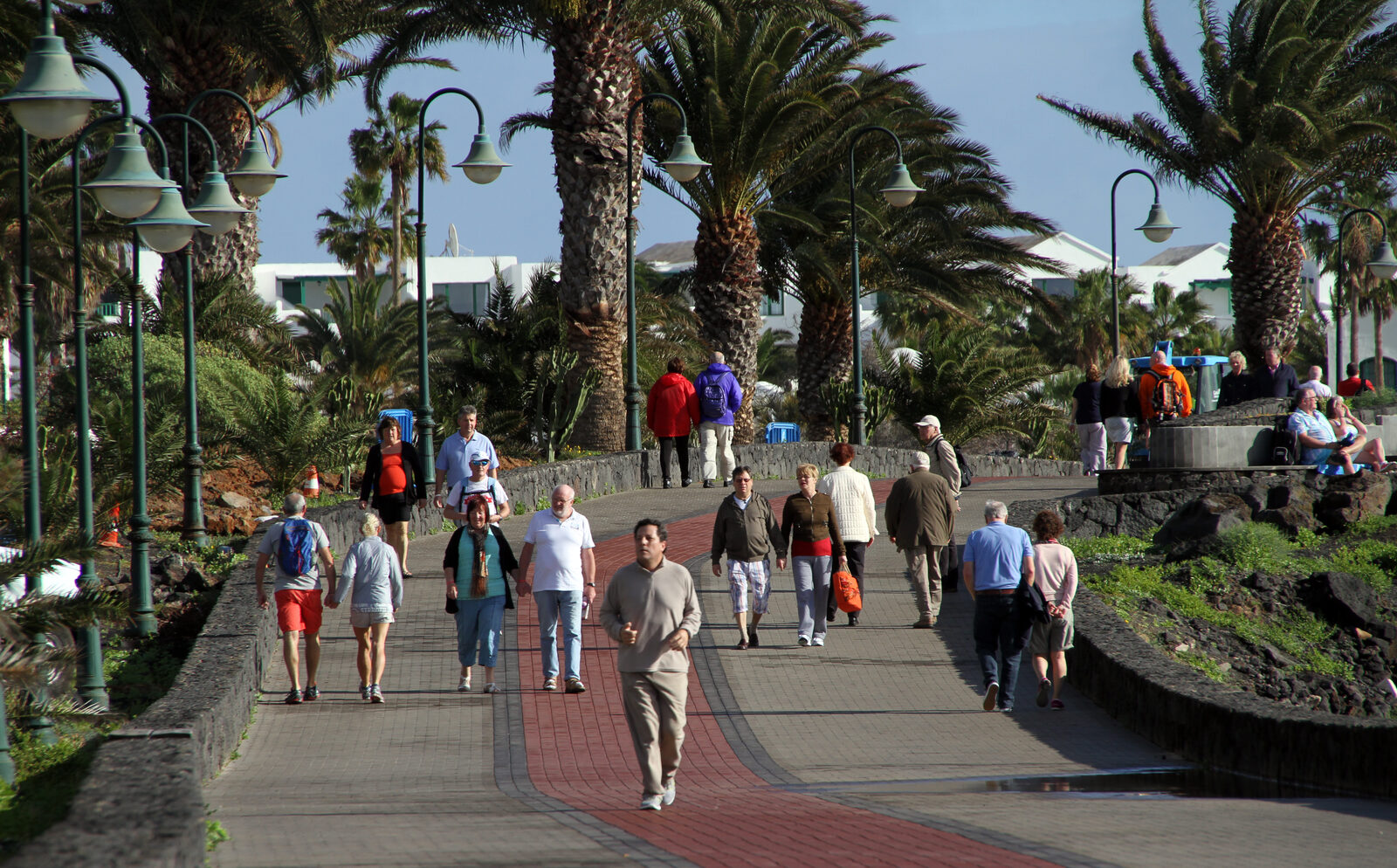
Lanzarote has growth pressure too — tourist numbers hit record highs in 2024 — but the Manrique-era cap on building height keeps resorts low-rise and dispersed. Walking through Costa Teguise, Playa Blanca or Puerto del Carmen feels different from walking through Los Cristianos or Las Américas. Fewer high-rises, smaller crowds in any given square, fewer all-night clubs. Whether that is a feature or a bug depends on what you came for.
How easy is it to get to each island?
Both are easy. Lanzarote has one airport (ACE, César Manrique-Lanzarote) just outside Arrecife, 15 minutes from Costa Teguise. Tenerife has two: TFS in the south, used by most charter and budget carriers; TFN in the north, used for inter-island flights and most peninsular Spain routes. From London the flight is 4 hours 14 minutes to ACE, 4 hours 27 minutes to TFS. From northern Germany, Ireland and the Benelux countries the gap is similar.
If you are coming with bikes, surfboards or a long bag, the single-airport advantage on Lanzarote is real. One taxi or rental car queue, no risk of arriving at the wrong airport for your hotel transfer. Tenerife’s TFS-vs-TFN split catches first-time visitors out, especially in winter when the north can be cloudy and the south sunny.
Can you visit both on the same trip?
You can, but not as a day trip. There is no direct passenger ferry between Lanzarote and Tenerife. The shortest hop is a Binter Canarias flight from ACE to TFN, around 50 minutes; some routings go via Gran Canaria and take longer. For a 10-to-14-day Canaries holiday it is feasible to split: 4 nights on Lanzarote, 6 to 8 on Tenerife, or the other way round.
The cleaner two-island combo from Lanzarote is Lanzarote plus Fuerteventura via the Playa Blanca-Corralejo ferry, which takes 25 to 35 minutes and runs around 24 sailings a day. That is a same-day option. Tenerife is a real flight and a real packing-up move.
Verdict: which Canary should you pick?
Pick Tenerife if you want Mount Teide, a wide range of attractions for a family of mixed ages, microclimates that let you go from desert to laurel forest in an hour, and the scale of a bigger island. Be prepared for crowds and longer drives.
Pick Lanzarote if you want a slower week, a single airport, a compact island where everything is half an hour away, the Manrique design language, and beaches you can walk to from your villa. Be prepared for a smaller list of standalone attractions.
For most guests who book us, the answer is Lanzarote, because they have already decided they want the slower version. If you have not decided yet, ask yourself one question: do you want to do a lot of things in a week, or do you want to do a few things slowly? That is the real Lanzarote vs Tenerife question.
Either way, our top things to see in Lanzarote, the Costa Teguise vs Puerto del Carmen comparison and the Costa Teguise vs Playa Blanca families guide are the next reads.
Frequently Asked Questions
- Is Lanzarote or Tenerife better for a family holiday?
- Tenerife if you want maximum variety: [Siam Park](https://www.siampark.net/en/), [Loro Parque](https://www.loroparque.com/en/), Mount Teide, two coastlines and dozens of resort towns. Lanzarote if you want a calmer week: one airport, short drives between everything, a smaller [Aquapark Costa Teguise](https://www.aquaparkcostateguise.com/), and beaches with proper kid depth like [Playa del Jablillo](/blog/best-beaches-costa-teguise/) on the Costa Teguise promenade. Tenerife is the busier choice. Lanzarote is the slower one.
- Which has better beaches, Lanzarote or Tenerife?
- Different beaches for different people. Tenerife is mostly black volcanic sand on both coasts, with one famous golden exception, [Playa de Las Teresitas](https://www.hellocanaryislands.com/beaches/tenerife/las-teresitas/), where the sand was shipped in from the Sahara in 1973. Lanzarote has more blonde-sand bays, including the five small beaches of Costa Teguise and the long calm crescents of Playa Blanca in the south. For swimming with small kids, the Costa Teguise promenade beats most of what Tenerife south offers.
- Which is warmer, Lanzarote or Tenerife?
- Lanzarote, by a degree or two. Summer averages run around 29°C on Lanzarote and 26°C on Tenerife, with winter at 20°C and 18°C respectively. Lanzarote also gets less rain, around 150 mm a year, because it sits closer to the Sahara. Tenerife's north and the [Anaga laurel forest](https://www.hellocanaryislands.com/nature-spaces/tenerife/anaga-rural-park/) can be cool, cloudy and wet even when the south is in shorts.
- How long is the flight to Lanzarote vs Tenerife?
- From London, Lanzarote (ACE) is about 4 hours 14 minutes, Tenerife South (TFS) about 4 hours 27 minutes. From most northern European hubs the gap is similar: 10 to 15 minutes longer to Tenerife. Both islands have direct flights from dozens of UK, German and Irish airports through the winter.
- Can I visit both Lanzarote and Tenerife on one trip?
- Yes, but plan it. Ferries do not run directly between the two; the shortest route is a Binter inter-island flight, around 50 minutes from ACE to TFN. Split a 10-to-14-day trip 4 nights on one island, 6 to 8 on the other, and treat the move as a half-day. Lanzarote is more compact and easier to fit into a shorter half. Most travellers pick one or the other for a week.
Planning your trip? Book Casa Los Alisios