Learn to Surf in Lanzarote: A Beginner's Guide
Lanzarote has surf on most of its coastline, but almost nobody learns anywhere except Famara. There is a reason for that, and it is not marketing. Playa de Famara breaks over sand. Most of the island’s other decent waves break over lava reef, which is an unforgiving surface to fall onto while you are still working out where to put your feet.
We host at Casa Los Alisios in Costa Teguise, and Famara is the drive we recommend most often to guests who arrive saying they have always wanted to try surfing. It is close enough to do before lunch and come back for the afternoon. This is what we tell them before they book, including why the beaches on our own doorstep are not the answer.
Why is Famara the beginner beach?
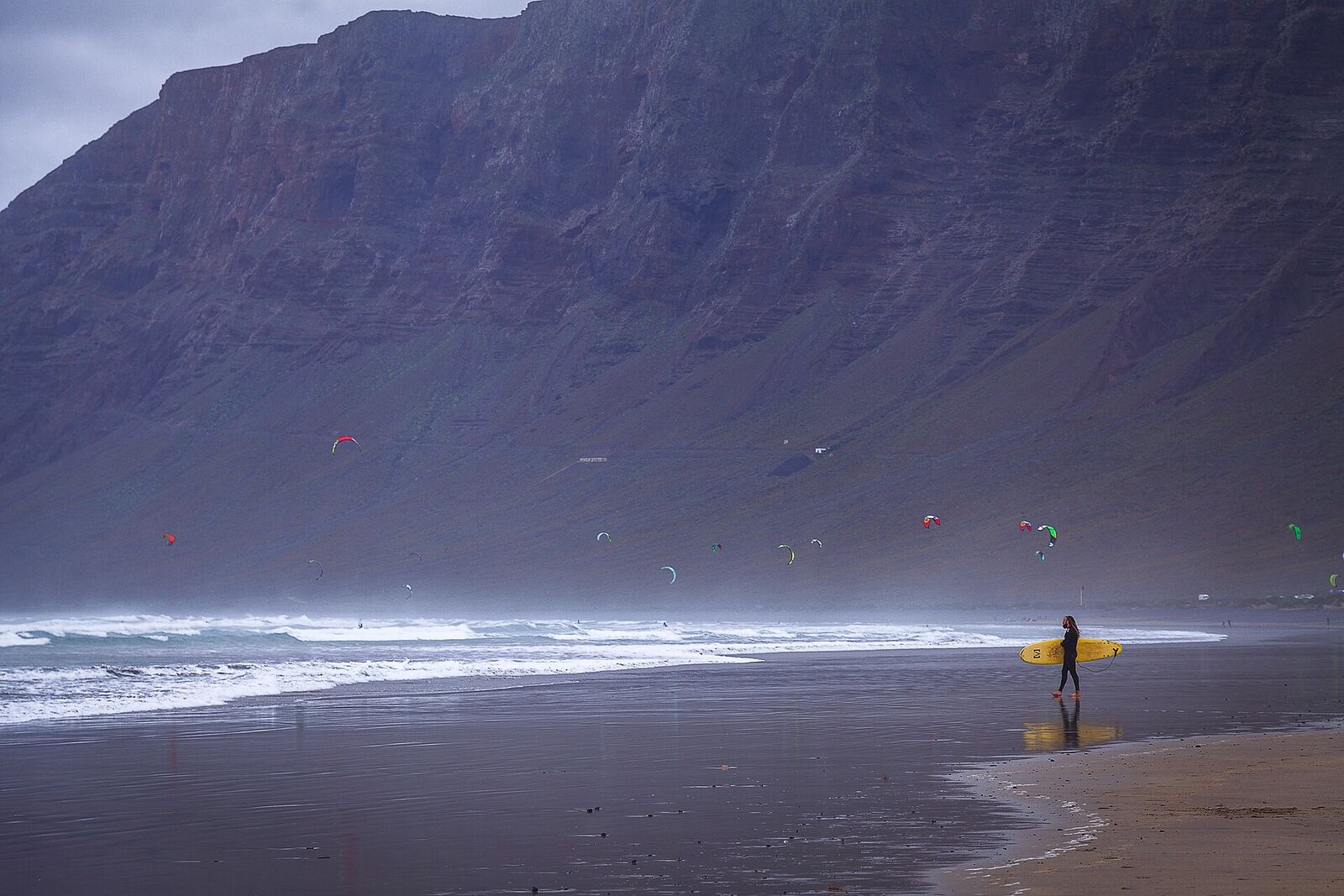
Playa de Famara runs 6,000 m along the northwest coast, according to the official Lanzarote tourism board, backed by the Risco de Famara cliffs. Those cliffs rise to 671 m at Peñas del Chache, the highest point on the island, and they do most of the work: they shelter the bay from the prevailing wind for a good part of the morning.
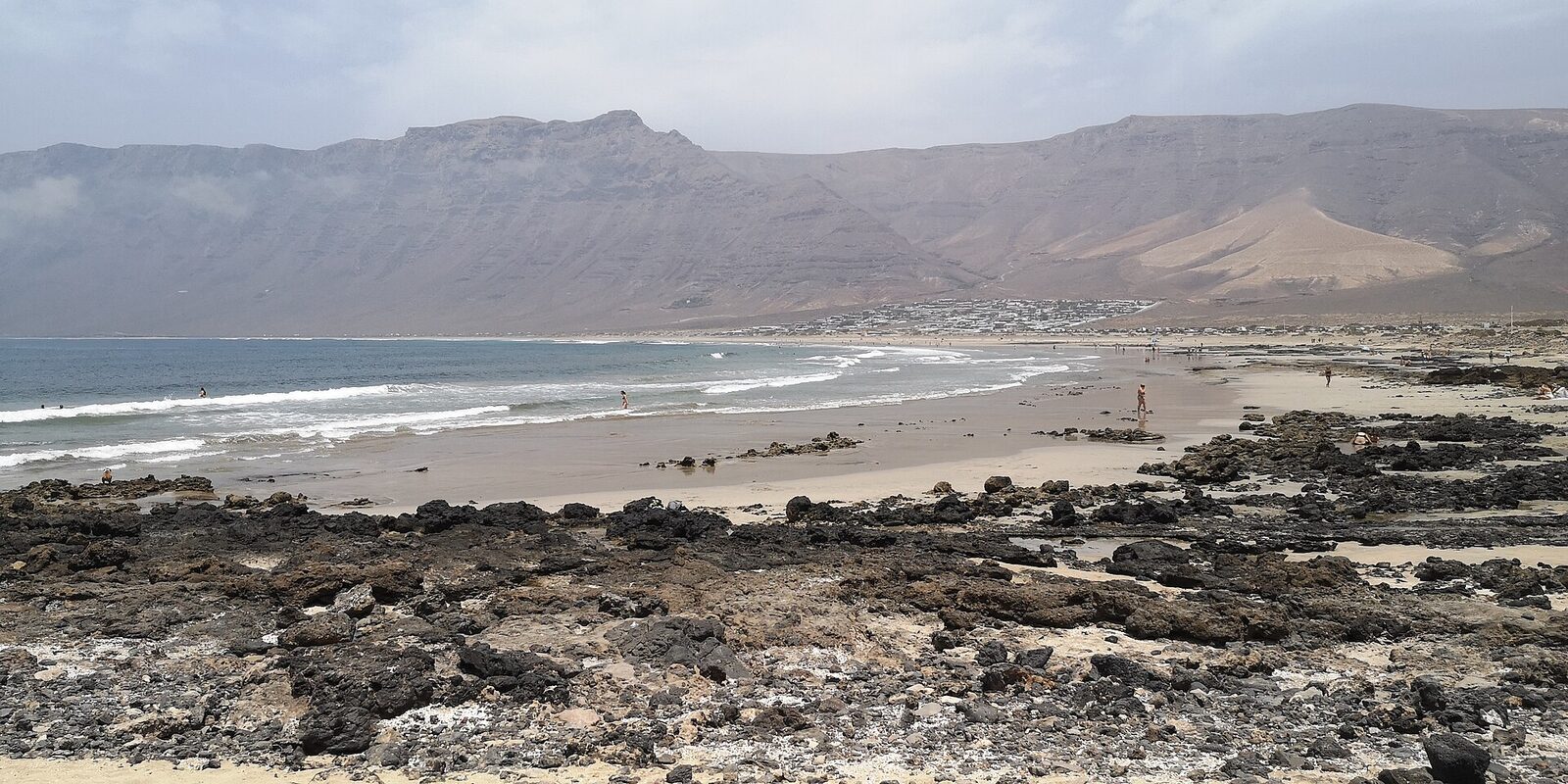
The important detail for a first lesson is underneath you rather than around you. Famara is a beach break with a sand bottom. When you fall, and you will fall for the whole first session, you land on sand. Compare that with La Santa or the reefs further west, where the wave quality is higher and the consequences of a bad fall are completely different.
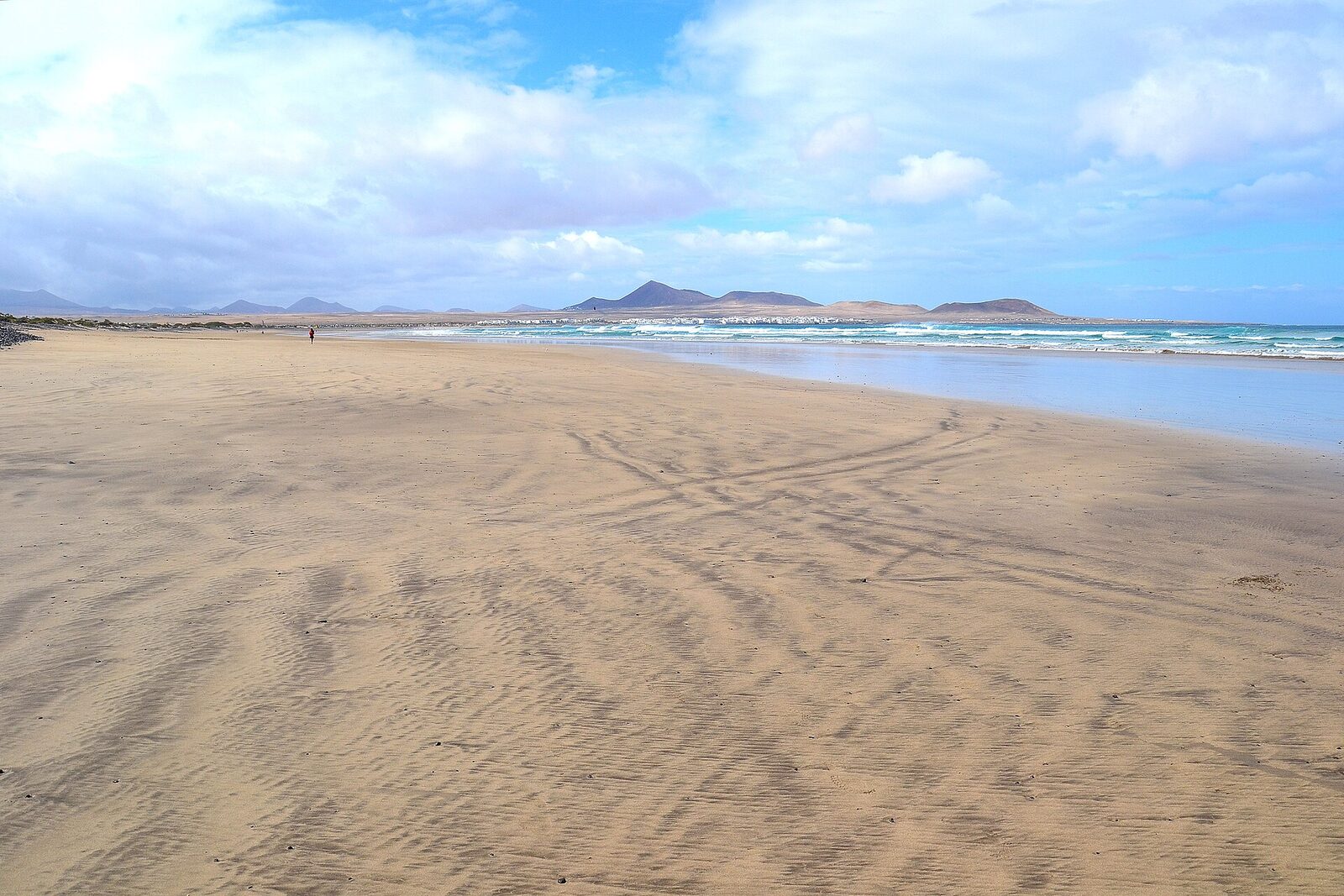
The village end of the bay, next to Caleta de Famara, is where the schools cluster. The middle of the bay picks up much more North Atlantic swell, which is why experienced surfers walk away from the village and beginners do not.
How far is Famara from Costa Teguise?
Twenty minutes by car from the villa. You cross the middle of the island past Teguise town, drop down the LZ-402, and the whole bay opens up in front of you with La Graciosa sitting off the end of it.
Get directions from Casa Los Alisios
If you would rather not drive, two schools solve it for you. Lanzarote Surf includes round trip transport from your accommodation in the lesson price, and Red Star Surf includes a free hotel transfer on its 4 hour option. Worth asking when you book, because it turns a driving day into a collected day.
Which tide should a beginner surf?
Low tide. This is the single most useful thing to know before you turn up.
Red Star Surf’s spot guide puts it plainly: Famara works best around low tide for beginners, when the waves close out and produce foam. Foam is what you learn on. It pushes you, it is forgiving, and it does not require you to time a drop down a steep face.
Mid to high tide is the opposite. The waves hold up into longer rideable walls, which is exactly what an intermediate surfer wants and exactly what will keep a first timer pinned in the shorebreak. Schools already know this and time their sessions around it, which is another argument for a lesson over a board rental.
When is the best time of year to learn?
Sea temperature at Famara peaks at 22 to 24°C around 12 September and bottoms out at 17 to 19°C about 24 February, according to Surf Forecast. That gives you two useful windows.
Late spring through early autumn is the beginner season. Swell is smaller and more consistent, the water is warm enough that a shorty is plenty, and the whitewater at the village end is about as friendly as an Atlantic beach gets.
Winter is when Famara earns its reputation, and that reputation is not a beginner one. The same swells that draw experienced surfers to the island from November onwards turn the beginner zone into something you should be looking at rather than paddling into.
For a month by month view of conditions across the island, our guide to the best time to visit Costa Teguise breaks down wind and water by season.
Which surf school should you book?
Four schools in and around Caleta de Famara publish beginner options. Prices below are taken from each school’s own site.
| School | Beginner price | Duration | Included |
|---|---|---|---|
| Lanzarote Surf | €50 group, €70 full day | 2 h / 4 h | Board, wetsuit, liability insurance, round trip transport |
| Famara Surf Academy | €50 single, €140 for 3, €220 for 5 | 2 h each | Board, wetsuit, instructor, insurance, GoPro video |
| Calima Surf | From €50 per person | Not stated | Camps from €195 include accommodation |
| Red Star Surf | Quoted at booking | 2 h / 4 h | Board, wetsuit; 4 h adds video analysis and transfer |
A few things worth knowing before you pick. Lanzarote Surf says it has been operating in Caleta de Famara for 30 years and takes children from 8 years old. Famara Surf Academy includes a GoPro video of your session and adds video analysis from three lessons onwards, which is genuinely useful because almost nobody can feel what their back foot is doing on day one. Calima Surf runs day camps for ages 8 to 16 and junior summer camps for 13 to 17, so it is the one to look at if the lesson is really for the kids. Red Star Surf does not publish prices on its lesson page and quotes at booking, though it advertises savings of up to 20% on multi lesson bookings.
Book the multi lesson pack if you have the days. One session teaches you to stand up in foam. Three or five is where people start actually surfing.
What does a first lesson involve?
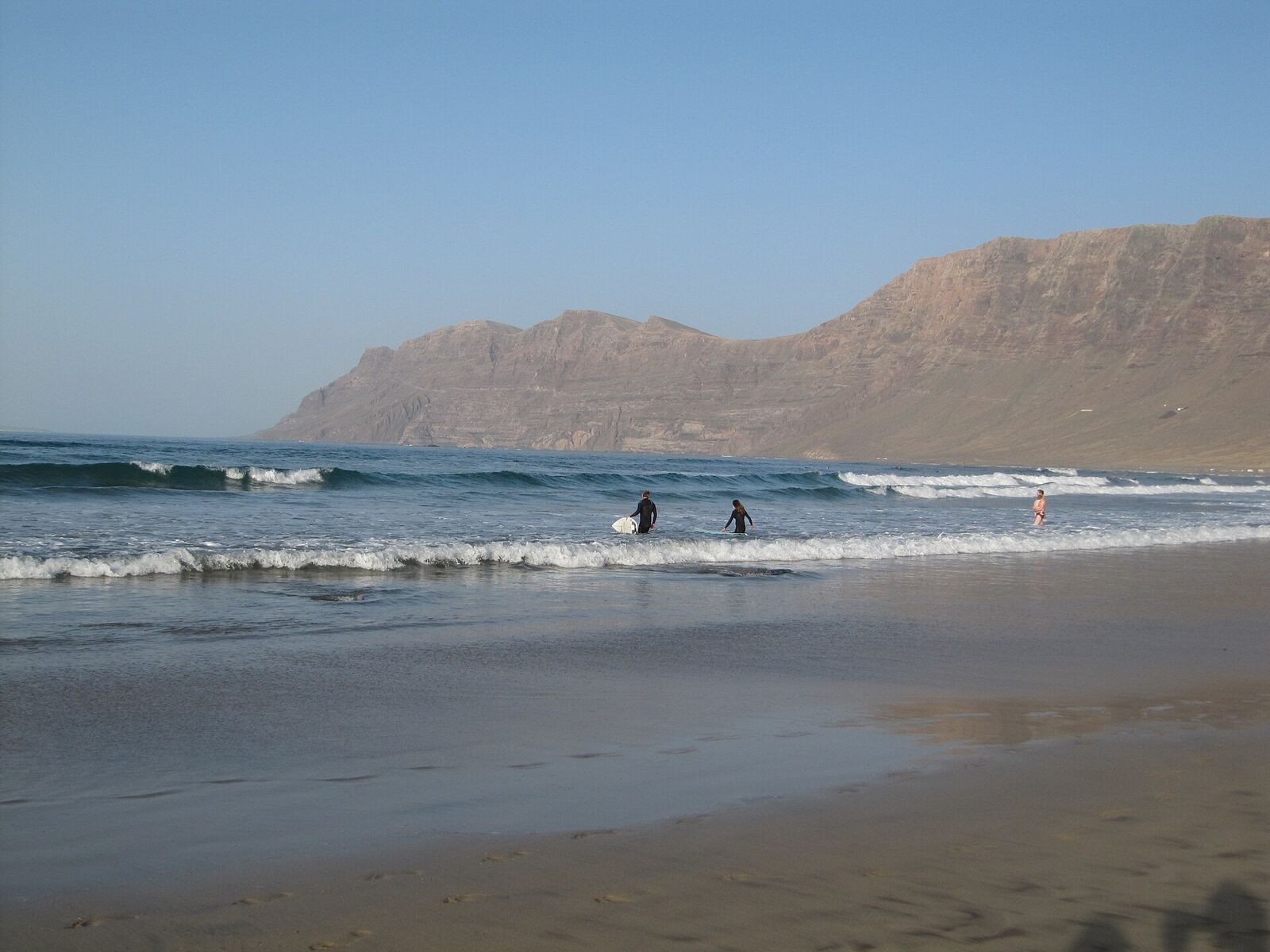
Roughly the same shape everywhere. A safety briefing on the sand covering rips, other surfers and how to fall off a board without the board coming back at you. Then dry runs on the sand: paddling position, the pop up, where your feet land. Then an hour or so in the whitewater with an instructor pushing you into waves.
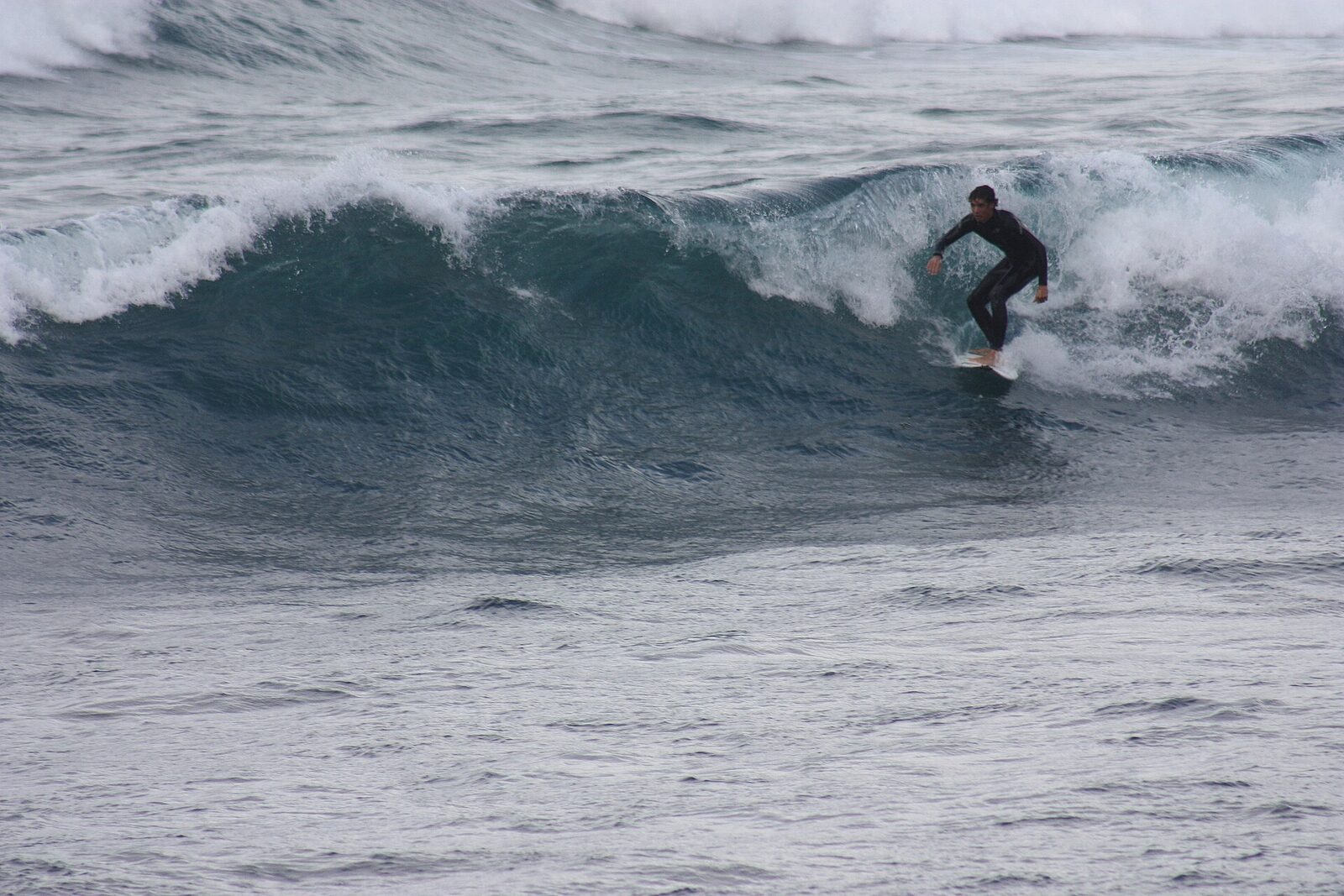
You will stand up. Most people do, on a soft top board that floats far better than anything you will see the locals riding. What you will not do is turn, or ride an unbroken wave, or look anything like the surfer in the photo at the top of this page. That is normal and it is not a reason to skip the second lesson.
What should you bring?
The school supplies the board and the wetsuit, so the list is short.
- Swimwear to go under the wetsuit. Put it on before you leave the villa.
- A towel and a change of clothes. Changing facilities at the beach are limited.
- Reef safe sun cream. You are face down on a board under reflected light for two hours, and the back of your legs will find out.
- Water and something to eat. There are cafes in Caleta de Famara, but a 2 hour session leaves you hungrier than you expect.
- A second layer for after. The wind at Famara picks up through the afternoon and you come out of the water wet.
On wetsuits, if you are surfing outside the school and renting your own gear: a shorty or 2 mm top covers summer dawn sessions, and late February wants a 4/3 mm suit, or a 3/2 mm with 3 mm boots.
What can go wrong?
The honest answer is size. Red Star Surf’s spot guide lists strong rips on bigger swells as the hazard at Famara, and that is the thing to respect. The bay has no reef and no rocks in the beginner zone, but a 6 km beach absorbing North Atlantic swell moves a lot of water, and that water has to go back out somewhere.
Two rules cover most of it. Book a lesson rather than renting a board for your first few sessions, because the instructor is reading the water while you are concentrating on your feet. And if you turn up and the waves look big, believe your eyes. Famara on a winter swell is a spectator activity for anyone who learned to surf last week.
Can you surf in Costa Teguise itself?
No, and it is worth saying plainly because guests book here assuming the two things come together. Costa Teguise is not a surf town. The east coast sits sheltered from the Atlantic swell that makes Famara work, and what reaches these beaches is shorebreak, not something you would carry a board out for.
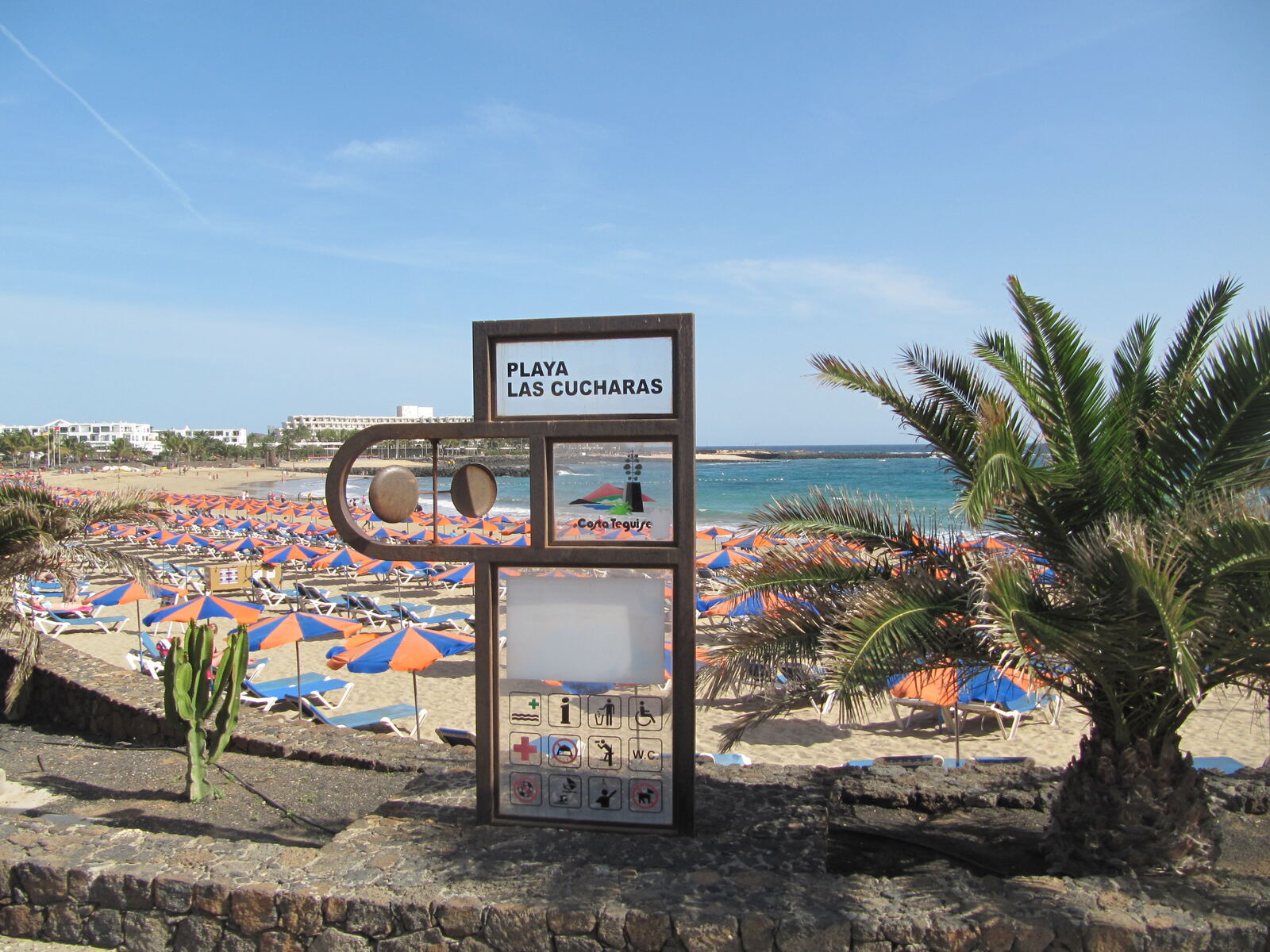
What Costa Teguise has instead is wind, reliably. Las Cucharas is the best windsurfing bay on the island, covered in our windsurfing in Costa Teguise guide, with schools directly on the beach. Paddlesurf works here for exactly the reason surfing does not: the bays are sheltered and the water is usually flat.
That is also why surf schools with a Costa Teguise address do not teach in Costa Teguise. Volcano Surf School, based at C. la Corvina 8, says its instructor picks the most suitable beach each day according to student level and the wind and wave conditions. In practice, that means the van goes to Famara.
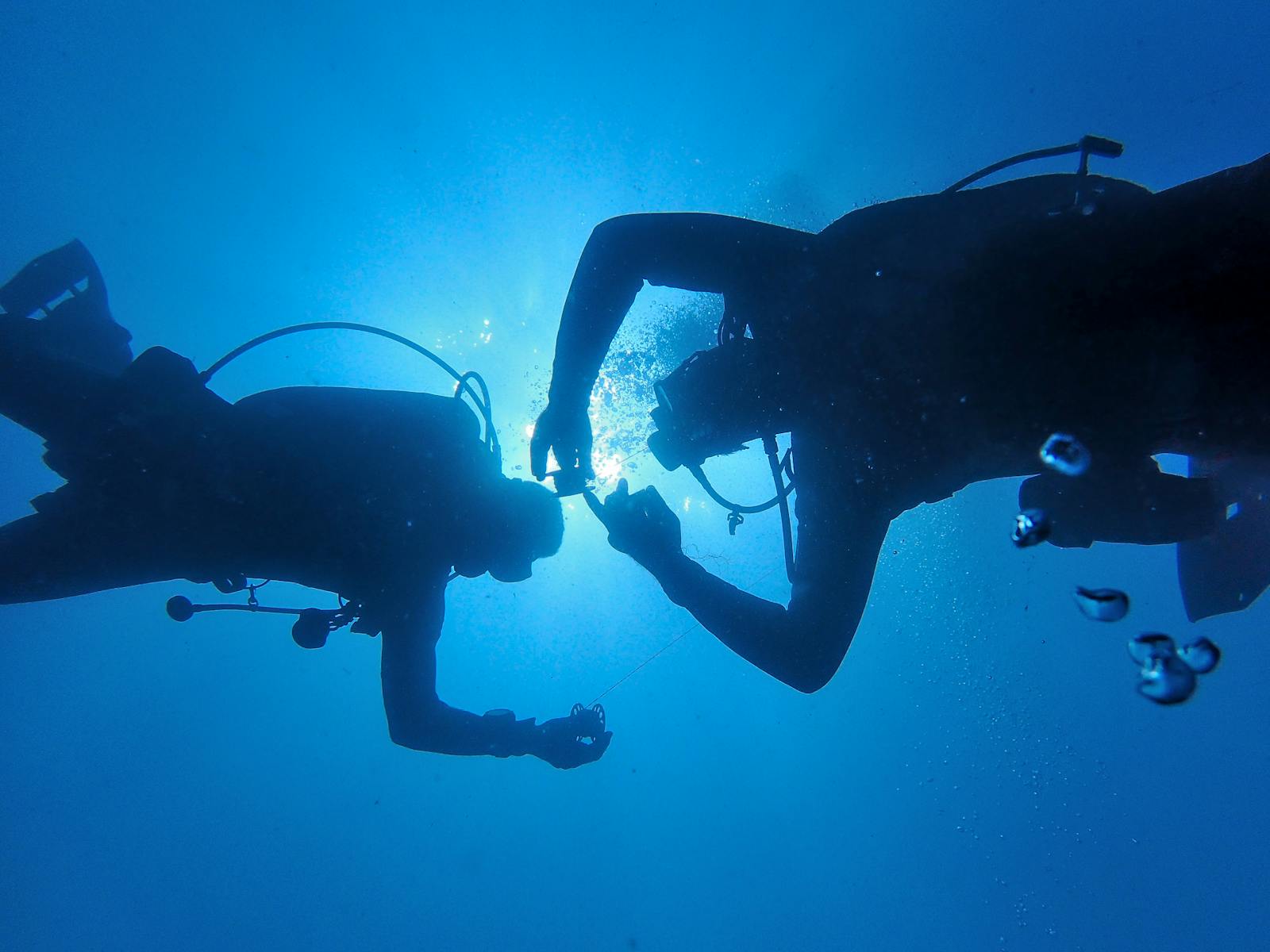
So the split is simple, and it works in your favour. Sleep and eat on the sheltered east coast, drive 20 minutes northwest on the mornings you want waves. If the surf is too big when you get there, the coastline back home offers some of the best snorkelling spots in Lanzarote and the dive centres in Costa Teguise run all week.
Famara is worth a visit even on days you have no intention of getting wet. The cliffs behind the bay are where the Famara Total Trail is run each August, and the cliff road above the village is one of the better drives on the island.
How does a surf trip fit around a villa base?
Reasonably well, if you plan around the tide rather than the clock. A low tide morning lesson has you back in Costa Teguise by early afternoon with the rest of the day intact.
At Casa Los Alisios there is a hose outside to rinse salt off gear and a secure storage room to keep boards and wetsuits out of the sun, which matters more than it sounds after three days of surfing. The beaches at our end of the island are the calm sort: Playa El Ancla is a 10 minute walk and is where you go to swim off aching shoulders rather than to catch anything.
If you have never surfed and you are coming to Lanzarote, book two lessons in the first half of your stay. One tells you whether you like it. The second is the one where it starts to click, and having days left afterwards is what turns it into a holiday you repeat.
Frequently Asked Questions
- Where do you learn to surf in Lanzarote?
- Playa de Famara on the northwest coast. It is a 6 km beach break over a sand bottom, which means no reef under the whitewater where beginners spend their first lessons, and almost every surf school on the island teaches here. The east coast resorts, Costa Teguise included, are sheltered from the Atlantic swell and are windsurf and paddlesurf territory rather than surf.
- How much does a surf lesson cost in Lanzarote?
- About €50 for a 2 hour group lesson including board and wetsuit. Lanzarote Surf charges €50 for a 2 hour class and €70 for 4 hours. Famara Surf Academy sells single lessons at €50, three for €140 and five for €220. Calima Surf lists beginner lessons from €50 per person. Private lessons start around €150.
- Which tide is best for beginners at Famara?
- Low tide. Red Star Surf's own spot guide says Famara works best for beginners around low tide, when the waves close out and produce the foam that learners need. Mid to high tide holds the waves up into longer walls, which suits surfers who can already stand and turn.
- What wetsuit do you need to surf in Lanzarote?
- In summer a shorty or a 2 mm neoprene top is enough, mainly for dawn sessions or windy afternoons. Sea temperature at Famara peaks at 22 to 24°C around 12 September. In late February it drops to 17 to 19°C, which calls for a 4/3 mm wetsuit, or a 3/2 mm suit with 3 mm boots. Schools include a wetsuit in the lesson price.
- Is Famara safe for beginners?
- In small swell, yes. The bottom is sand rather than reef, and schools run lessons in the whitewater close to shore. The risk is size: Red Star Surf lists strong rips on bigger swells as the main hazard at Famara. On big winter days the beach is not a beginner venue, which is the single best reason to book a lesson rather than rent a board and guess.
Planning your trip? Book Casa Los Alisios