Open Water Swimming in Lanzarote: 2026 Race Calendar and Training Spots
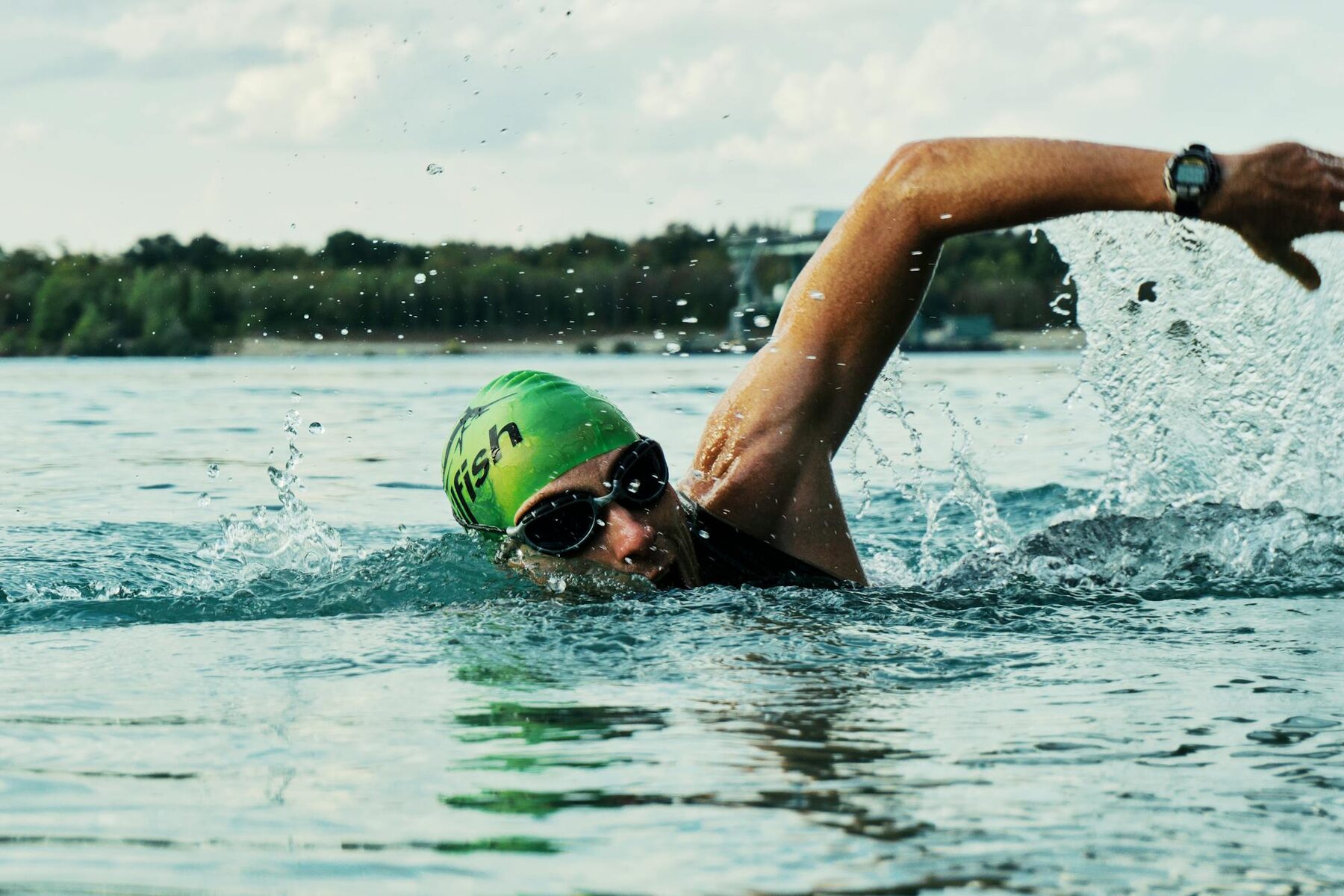
Lanzarote is one of the most consistent open water swimming destinations in Europe. Sea temperature stays between 18 C in February and 24 C in October, the trade wind drops to nothing in early summer mornings, and the island calendar carries at least seven recurring races between April and October, including a 15 km crossing to Fuerteventura. This is the guide we give to guests at Casa Los Alisios who arrive with a wetsuit and a goggle case and want to know what’s actually swimmable from the door and which races to enter.
We host the villa in Costa Teguise, a 10 minute walk from Playa El Ancla and 20 minutes from Playa del Jablillo, two of the calmest training bays on the east coast. Most of our swim guests come for either the Sailfish Lanzarote Open Water in May or the Travesía a Nado El Río crossing to La Graciosa in September. A few of the strongest target the La Bocaina crossing in October.
What’s open water swimming like in Lanzarote?
The island sits in clean Atlantic water on the same volcanic shelf as the rest of the Canary Islands. Sea temperature runs from about 18 C in February and March to 23 to 24 C in September and October. Visibility is typically 15 to 25 m, dropping a little in winter swells. The east and south coasts (Costa Teguise, Arrecife, Puerto del Carmen, Playa Blanca) are sheltered from the prevailing northeast trade wind and carry almost all of the race calendar. The north and west (Famara, La Santa) are surf coasts and not where you swim.
The water is cold enough that most people wear a 3 mm or 5 mm wetsuit from December through May and skins from June through November. The wind picks up in the afternoon, so morning sessions before 11:00 are usually the calmest. Sea life you’ll cross paths with is the same species mix as the dive sites, which we covered in the scuba diving and snorkeling guide: salemas, parrotfish, ornate wrasse and the occasional octopus or cuttlefish along the rocky edges.
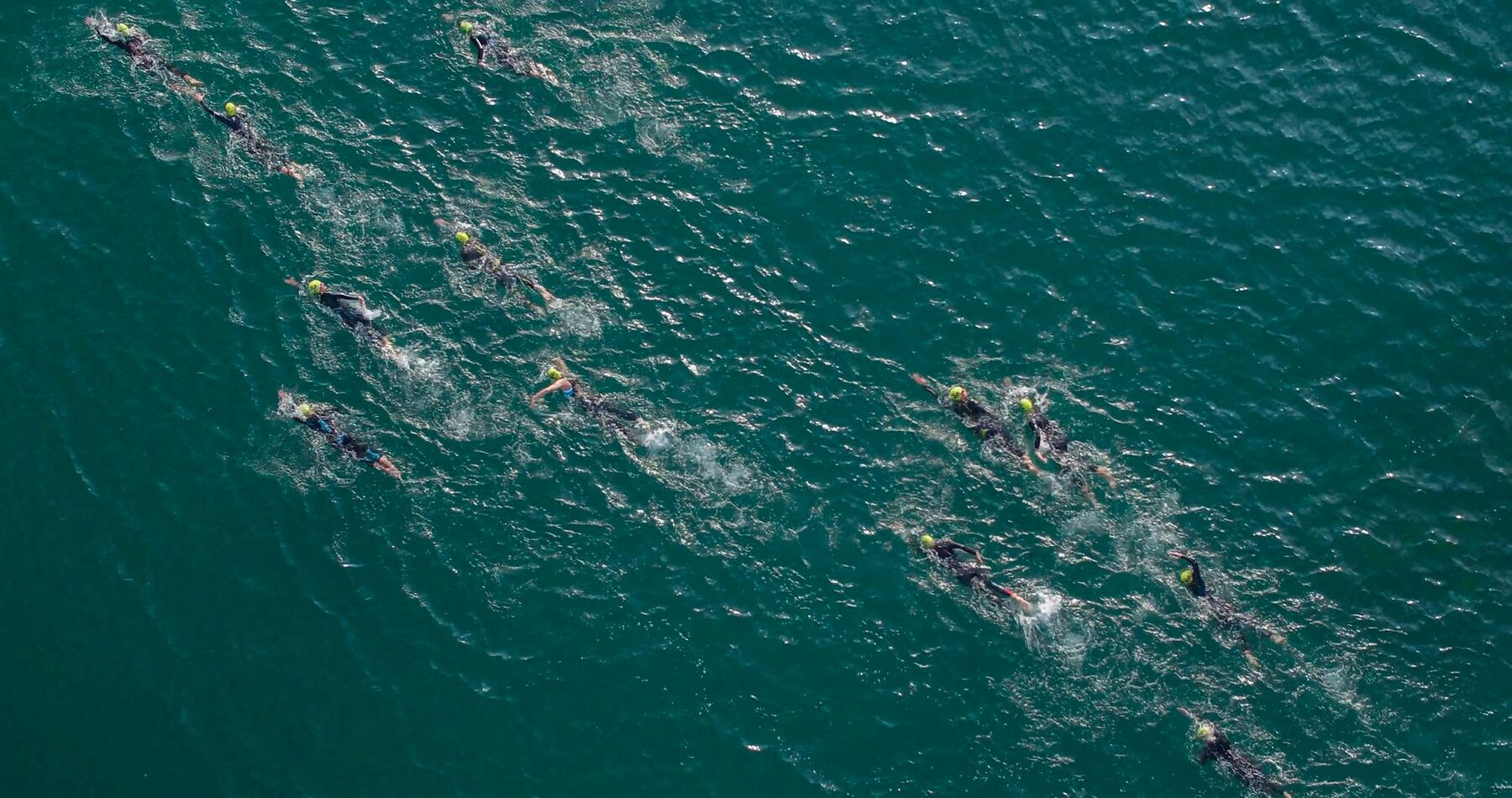
Swim from the door: training spots near Costa Teguise
A 50 m Olympic pool and three sheltered bays inside walking distance of the villa cover all training needs.
Playa El Ancla is a 10 minute walk from Casa Los Alisios. The cove is sheltered by two rocky walls and a natural reef across the mouth, which keeps swell out even when the trade wind is up everywhere else. Entry is over rock rather than sand, so neoprene boots or fins help. Good for 500 m to 1 km loops along the rocky edges and one of our favourite sunrise spots.
Playa del Jablillo is a 20 minute walk further along the promenade. An artificial stone sea wall cuts off almost all swell, the bottom is sandy, and the maximum depth in the bay is about 6 m. It is the calmest of the three bays and the easiest place for a first open water swim. Every dive school in town teaches in here.
Playa de Las Cucharas is the main town beach, 40 minutes’ walk from the villa or a 5 minute drive with parking next to the sand. The bay is open to swell and trade wind, which makes it the closest local approximation of race conditions. Triathletes use it for longer pace work and sea-state practice. The full beach picture is in our best beaches in Costa Teguise guide.
Olympic pool at Barceló Lanzarote Active Resort. 5 minutes’ walk from Casa Los Alisios. A 50 m by 25 m heated pool, 10 lanes, 2.10 m depth, with starting blocks, backstroke flags, lifeguard on duty and a training shop on site. Open daily from 7:00 to 20:00. Lap swimming in a shared lane is 7 EUR per hour for non-Barceló guests (3.50 EUR if you are staying at Barceló Lanzarote Active Resort or Barceló Teguise Beach). A private lane rental is 31 to 45 EUR per hour depending on season and time slot. Swim caps are mandatory and the minimum age is 8. Lane bookings go through [email protected] 72 hours in advance for private lanes; for lap-swim drop-ins, ask the manager on duty. Pool tariffs and conditions PDF.
The combination of a 50 m heated pool, El Ancla a few minutes further along the coast, and Jablillo for the calm-water sea swim is what makes Costa Teguise the pragmatic training base on the island.
Get directions from Casa Los Alisios
Get directions from Casa Los Alisios
The 2026 Lanzarote open water race calendar
Seven recurring races, ordered by date. Five are organised on Lanzarote, one is the cross-strait swim to Fuerteventura via Lobos, and one is a Fuerteventura race that most Lanzarote-based swimmers also enter.
GraciOWSa: April 10 to 12
A weekend swim camp on La Graciosa, the small island off the north coast. Two days of guided swims along the El Río channel and the protected coves of the Chinijo Archipelago, with two distance options each day at roughly 5 km and 2.5 km. The 2026 edition runs Friday 10 to Sunday 12 April, with packet pickup on Friday evening and swims on Saturday and Sunday morning. It is run by Swim Wanderer and includes accommodation in Caleta del Sebo. Pricing was 165 EUR without lodging and 235 EUR with lodging at the time of writing, capped at a small field. This is the gentle, social end of the calendar, useful as a season-opener.
Sailfish Lanzarote Open Water: May 16
The biggest single-day swim race in Lanzarote, held on Playa Grande in Puerto del Carmen. The 2026 date is confirmed for Saturday 16 May and the event runs three distances of approximately 1.9 km, 3.8 km and 5 km, with three age groups (Master, Junior, Infantil) and a children’s circuit. Wetsuits are normally allowed at this date as water temperature is around 19 to 20 C. Registration is through the official site. Puerto del Carmen is 20 minutes by car from Costa Teguise.
Get directions from Casa Los Alisios
Travesía a Nado San Juan RCNA: June 27
A summer race organised by the Real Club Náutico de Arrecife on the night of San Juan. The course rounds the Islote de La Fermina in front of the club, crosses Playa de El Reducto and finishes back at the club ramp. Distances of 2 km, 1.4 km and 800 m, plus a kids’ circuit. The XXI edition in 2025 capped at 350 swimmers and counted toward the Copa Canaria de Aguas Abiertas. Arrecife is 15 minutes by car from the villa.
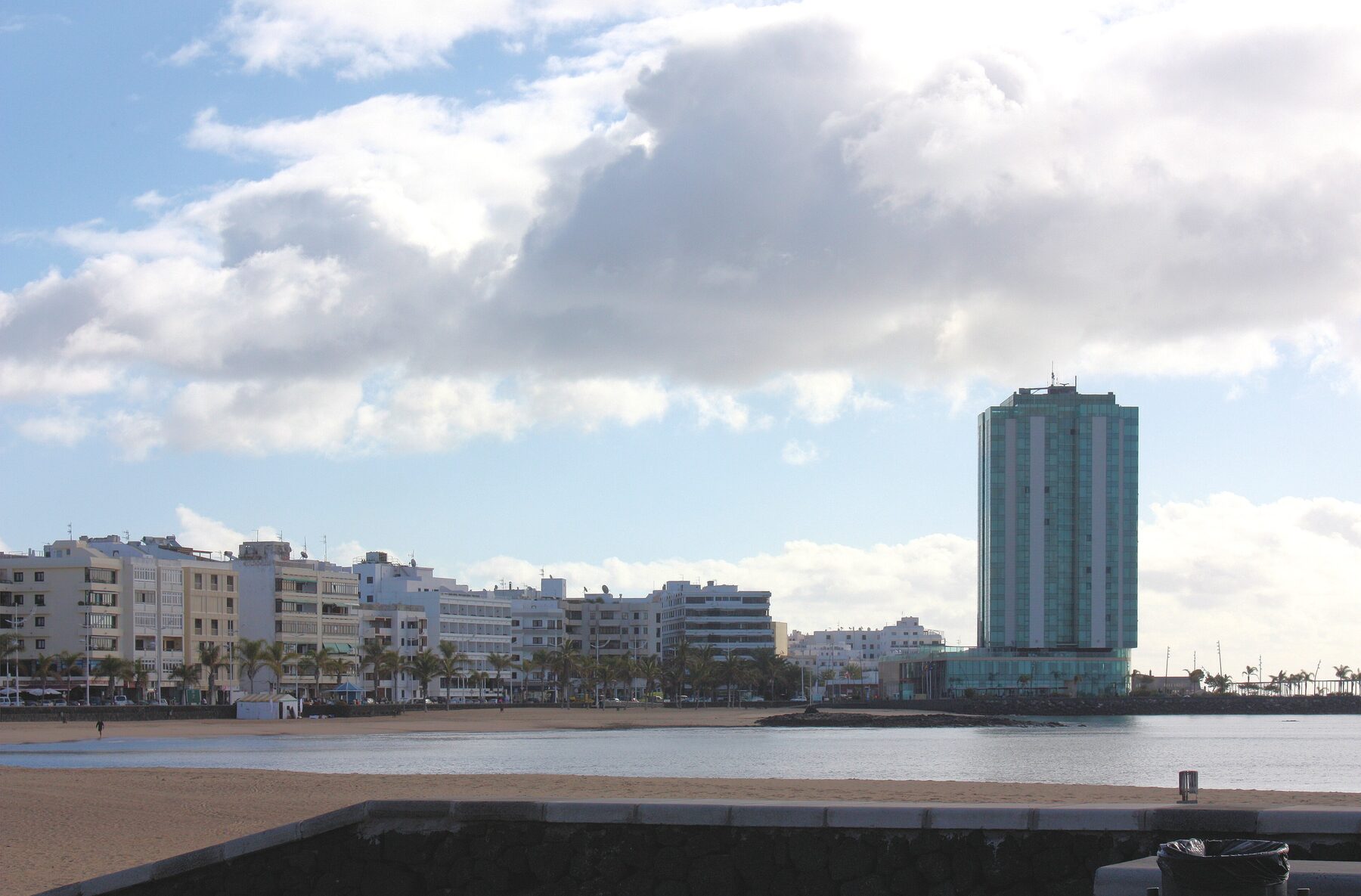
Copa de Aguas Abiertas Lanzarote: July to October circuit
A points-scoring island championship organised by the Cabildo de Lanzarote. The 2025 edition ran five stages between July and October and the 2026 calendar follows the same pattern; the Cabildo publishes confirmed dates closer to the summer. The recurring stages:
- Travesía El Reducto (Arrecife, late July, around 1.6 km / 800 m / 400 m, usually free).
- Travesía La Tiñosa (Puerto del Carmen, early August, 3 km / 1.5 km / 800 m).
- Travesía San Ginés (Arrecife, late August, 1.2 km / 800 m / 400 m, the night swim of the city’s patron-saint week).
- EMMAX Playa Honda (Playa Honda, early September, 4 km / 1.2 km / 800 m, near the airport).
- Travesía Alejandro Candela (Las Marinas, October, 2 km / 800 m / 4×200 m relay).
The five stages together are how local swimmers build a season. Most are free or under 10 EUR to enter and limited to a few hundred starters.
Travesía a Nado El Río: September 19
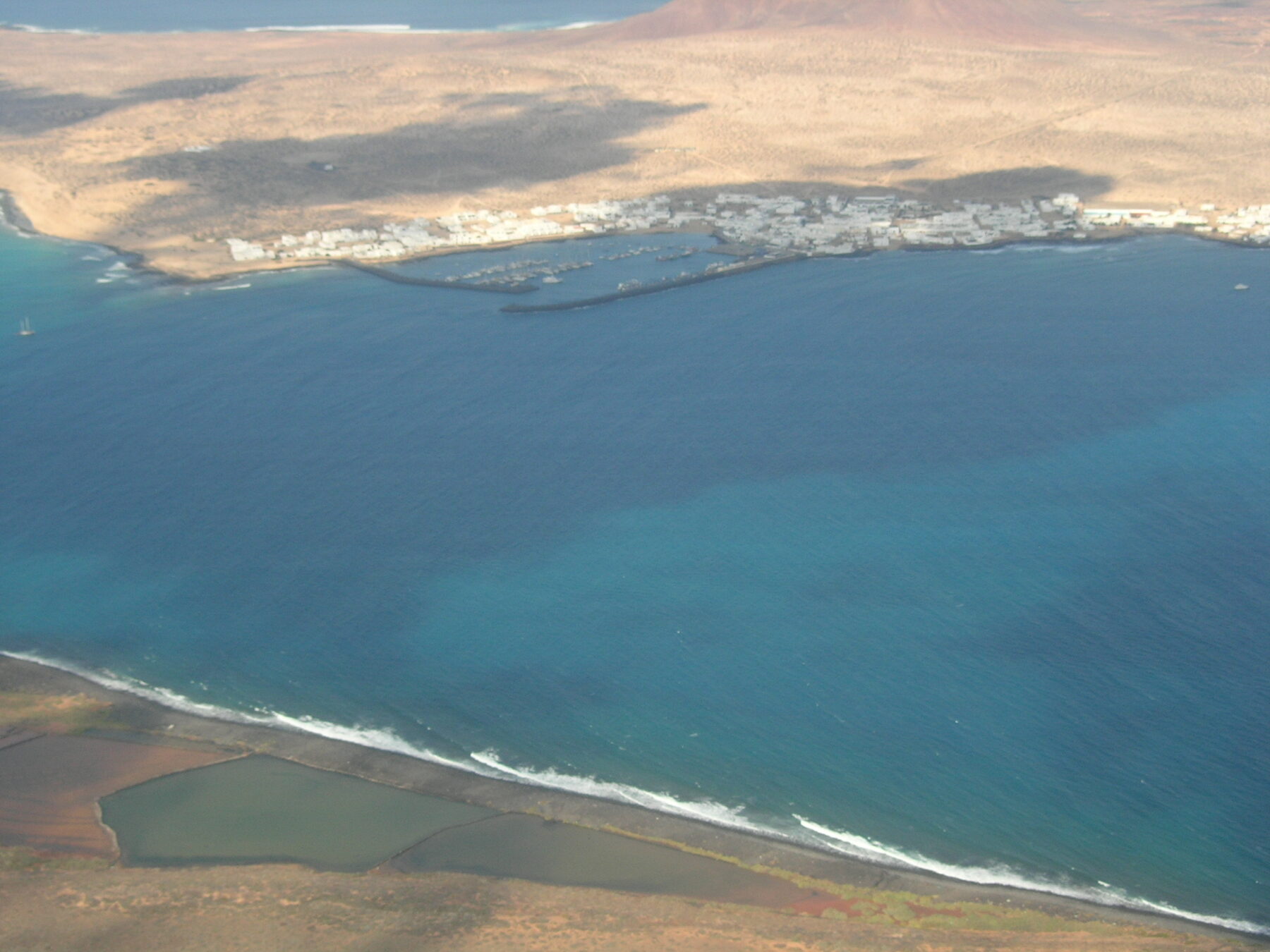
The classic Lanzarote crossing. From Playa de Bajo del Risco at the foot of the Famara cliffs, across the El Río strait to the pier at Caleta del Sebo on La Graciosa, 2,600 metres of open water inside the Chinijo Archipelago marine reserve, the largest in Spain. The 2026 edition is on Saturday 19 September. Registration opens on 17 June 2026 through the Cabildo de Lanzarote. There is a one-hour time limit from the first finisher and a hard cap on numbers; the field fills inside a few hours of registration opening. Entry is normally free.
The logistics: drive to Órzola the night before or take the early ferry over with Líneas Romero or Biosfera Express, pick up the bib in Caleta del Sebo, get bussed and boated to the start at Bajo del Risco, swim back. Most swimmers stay on La Graciosa for the rest of the weekend. The strait runs about 1.1 km wide at its narrowest point but the race line is angled across the channel.
Get directions from Casa Los Alisios
Travesía Internacional La Bocaina: October
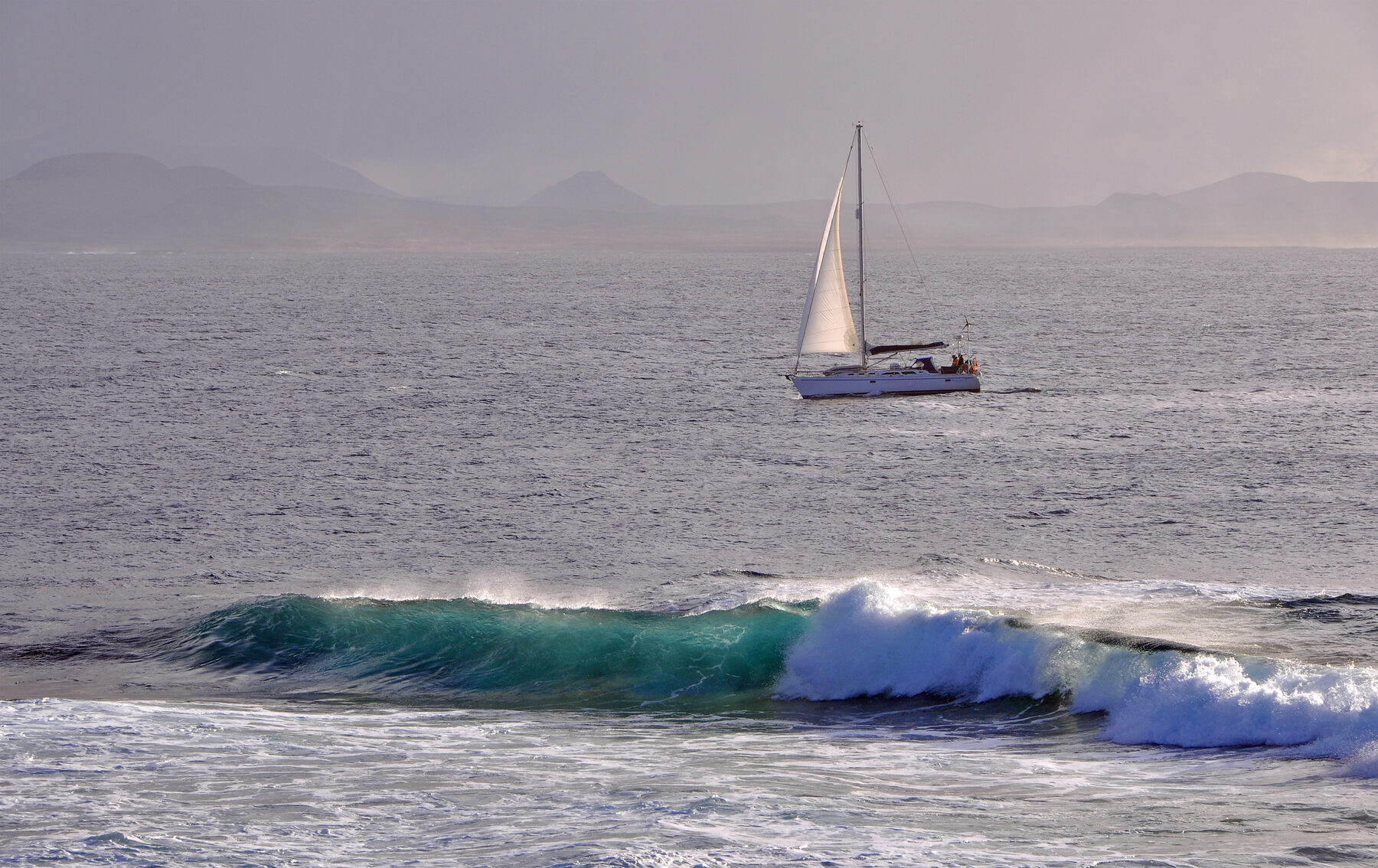
The big one. A 15 km crossing from Playa Blanca on the south tip of Lanzarote to Corralejo on the north coast of Fuerteventura, swimming around the uninhabited Isla de Lobos on the way. The strait is called La Bocaina and it separates the two islands; on a calm day the channel is glassy and Lobos sits roughly halfway between the two ports. The race is organised by the Asociación Cultural y Deportiva Aguas Abiertas de Lanzarote and runs each October. Around 100 swimmers usually start, in solo and relay categories. Registration and current dates go through B15 Active, the events arm that runs the race. Playa Blanca is 50 minutes by car from Costa Teguise.
Get directions from Casa Los Alisios
Travesía a Nado Isla de Lobos: October
The Fuerteventura companion swim, 3.5 km from Lobos back to Corralejo across the same Bocaina channel that the longer race traverses. Run by Club Deportivo Herbania (also on Instagram) every October, usually mid-month, and the 2025 edition pulled around 280 swimmers. A lot of Lanzarote-based athletes do this one, the boat to Lobos goes from Corralejo, which means a 25 to 35 minute ferry from Playa Blanca the day before. It’s a useful warm-up for the full Bocaina crossing or a standalone target.
Practical notes for the trip
Wetsuit rules. Most local races follow the FINA-style cutoffs: wetsuits allowed up to 24.5 C, mandatory below 18 C, and a wetsuit decision goes out the week before. May and June races nearly always allow wetsuits. By late September the water is around 23 C and several events go skins only.
Bring goggles for sun. The Atlantic light off Lanzarote is hard. Mirrored or dark goggles for any swim after 09:00 save a lot of squinting and make it easier to sight off coastal rock.
Sighting and swell. El Ancla and Jablillo are calm enough that sighting is easy. Las Cucharas and any point on the north and west coasts can carry significant swell, so save those for when you have race fitness or a buddy boat.
Acclimate before a race. Even strong pool swimmers find the first 100 m of cold open water uncomfortable. Two or three sessions in the actual sea before race day is the difference between a calm start and a panic start.
Pair with cycling or running. A lot of guests build a triathlon training week here. The cycling routes are covered in our road cycling guide from Costa Teguise, the trail running calendar centres on the Famara Total Trail, and the headline event is the Ironman Lanzarote race week in late May.
Why Casa Los Alisios works for swim trips
Three things tend to matter for swim guests, and the villa covers all three:
- Sea swim from the door. Playa El Ancla is 10 minutes’ walk through quiet residential streets and a short dirt path. Jablillo is another 10 minutes along the promenade. You can finish a 6 am swim and be back in the kitchen with a coffee before most people are up.
- Gear storage and parking. Wetsuits, fins, pull buoys and bike kit go in the locked storage room, parking is at the front door for loading on race day, and the villa is on one level with no stairs to drag wet gear up.
- Kitchen and supermarket. Spar is 3 minutes’ walk for race-week nutrition, Lidl is 10 minutes for the bigger shop. The full kitchen makes carb loading and post-race recovery food much easier than restaurants.
Race week is May (Sailfish) and the second half of September (El Río) and the first half of October (Bocaina). Those weeks book out earliest, so plan ahead. For the calendar overview of everything else worth doing on the island, our top things to see in Lanzarote guide is the place to start.
Image credits
- Hero and race-day photos courtesy of Pexels (free to use, no attribution required).
- “Salinas del Río” channel view by Enric on Wikimedia Commons, CC-BY-SA 4.0.
- Bocaina strait aerial by Marc Ryckaert on Wikimedia Commons, CC-BY 3.0.
- Playa del Reducto by Dguendel on Wikimedia Commons, CC-BY 4.0.


Frequently Asked Questions
- When can I swim outdoors in Lanzarote?
- Every month. Sea temperature runs from about 18 C in February and March to 23 to 24 C in September and October. Most swimmers wear a 3 mm wetsuit from December through May and skins from June through November. The trade wind drops the air temperature in the afternoon, so morning sessions before 11:00 are usually the calmest, especially on the east coast around Costa Teguise and Arrecife.
- What is the biggest open water swim in Lanzarote?
- The Travesía Internacional La Bocaina, a 15 km crossing from Playa Blanca in the south of Lanzarote to Corralejo on the north coast of Fuerteventura, swimming around the uninhabited Isla de Lobos on the way. It takes place each October and is organised by the Asociación Cultural y Deportiva Aguas Abiertas de Lanzarote. The crossing pulls swimmers from across Spain and abroad and is one of the longer open-sea events on the Spanish calendar.
- How long is the El Río swim from Lanzarote to La Graciosa?
- 2,600 metres from Playa de Bajo del Risco on the north tip of Lanzarote to the pier at Caleta del Sebo on La Graciosa. The 2026 edition is on Saturday 19 September. Registration opens 17 June 2026 through the Cabildo de Lanzarote at lanzarotedeportes.com/tnelrio. There is a one-hour time limit after the first swimmer touches the pier and the swim is held inside the Chinijo Archipelago marine reserve, the largest in Spain.
- Where can I train for an open water swim near Costa Teguise?
- Three sheltered bays inside a 40 minute walk from Casa Los Alisios. Playa El Ancla (10 min walk) is a small rocky cove with a natural reef across the mouth, sheltered from the trade wind, good for 500 m to 1 km loops along the rocky edges. Playa del Jablillo (20 min walk) has an artificial sea wall and a sandy bottom, calmest of the three and the easiest for first sea swims. Playa de Las Cucharas (40 min walk) is open to swell and used by triathletes for longer pace work.
- Do I need a wetsuit to race open water in Lanzarote?
- It depends on the water temperature on race day. The standard FINA-style rules used at most local races allow wetsuits up to 24.5 C and require them when water drops below about 18 C. In practice that means wetsuits are normal at the May races (Sailfish Lanzarote, El Río in early years) and often optional or banned at the late September and October events when sea temperature is at its peak. Each event publishes a wetsuit decision the week before based on the actual reading.
Planning your trip? Book Casa Los Alisios